Tag Archives: Donald Trump

Anti-Immigrant Blitz Burns

Protester in cloud of chemical spray in Broadview — Chicago Tribune photo

By Casey Bukro

Ethics AdviceLine for Journalists

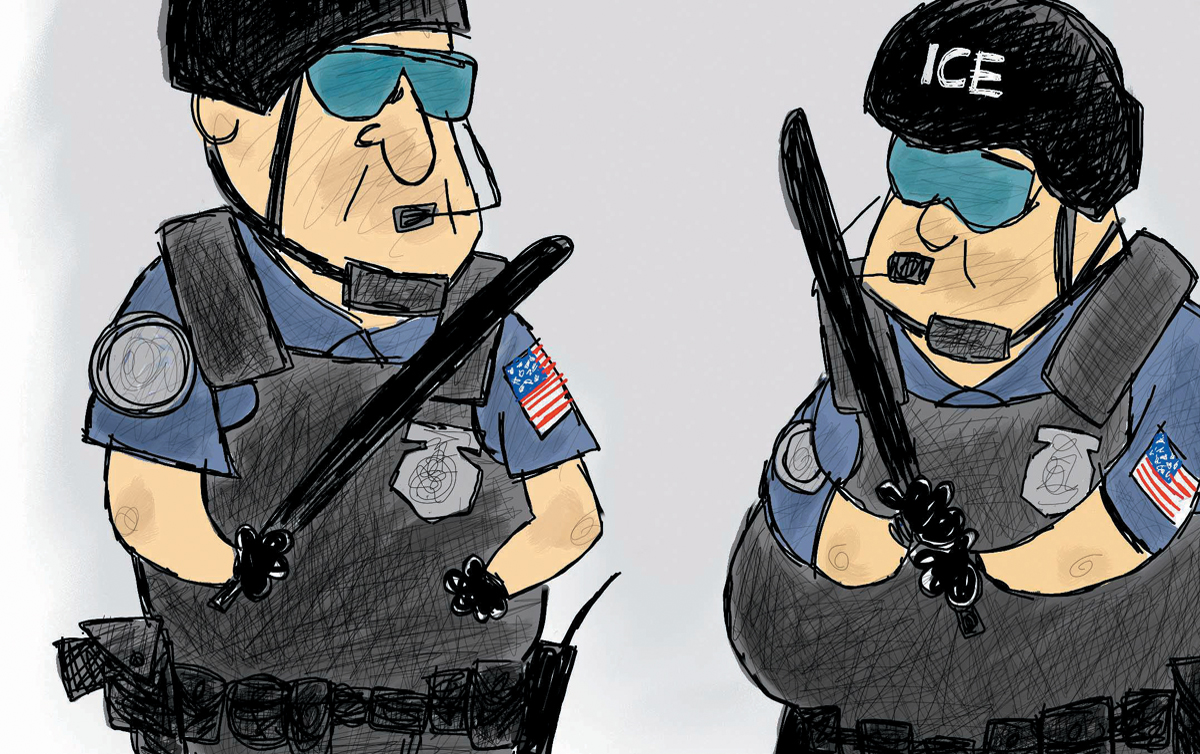
Immigrants in America, once a haven for such people, are now targets of federal crackdowns ordered by the Trump administration in sometime violent sweeps by masked and unidentified men.

The mass detention policy beginning on July 8 indiscriminately locked up immigrants who are contesting government attempts to deport them, which has been declared illegal by dozens of federal judges, according to Politico. Millions of immigrants are targeted.

In Los Angeles, Portland, Washington, D.C., Memphis and Chicago, federal troops and the National Guard were mobilized in the crackdown, which was highly controversial, unpopular, and in some cases challenged by shouting demonstrators.

How they look

“Dozens of federal agents took individuals into custody during a winding patrol Sunday through downtown Chicago,” the Chicago Sun-Times reported, “and a top U.S. Border Patrol official told WBEZ (broadcasting station) the agents were arresting people based on ‘how they look.’”

Passersby shouted at the agents, telling them to go home and “ICE sucks,” referring to U.S. Immigration and Customs Enforcement, one of the agencies in the deportation blitz. One person shouted “thank you!”, while another said sarcastically, “Real patriotic guys. Real patriotic.”

About two dozen protesters followed the agents, chanting “ICE go home!”

Illinois governor protests

On social media, Illinois Gov. JB Pritzker noted the agents were carrying large weapons in downtown Chicago while wearing camouflage and masks.

“This is not making anybody safer – it’s a show of intimidation, instilling fear in our communities and hurting our businesses,” said the Democratic governor.

Newsweek reported that ICE arrested more than 2,200 undocumented migrants in a single day.

Faced with increasing hostility, the U.S. Department of Homeland issued a statement saying: “Despite ongoing attacks and villainization of our brave U.S. Immigration and Customs Enforcement (ICE) officers, ICE continues to arrest the worst of the worst criminal illegal aliens across the country. Over the past two days, criminal Illegal aliens arrested by ICE have prior convictions for crimes including sexual conduct with a minor under 14, indecency with a child, criminally negligent DUI, homicide, drug charges, aggravated assault with a deadly weapon, theft, burglary and battery.”

Opposing politicians are comparing ICE to the Nazi Gestapo, secret police and slave patrols, said an agency official.

Collateral damage

In the first 50 days of the Trump administration, immigration officials arrested more than 32,000 migrants living in the United States without legal status. But these included 8,718 persons who were considered “collateral damage” and not immigration violators.

One of the most heated clashes with ICE agents came in Broadview, a village of 7,998 residents 12 miles west of downtown Chicago, where a federal deportation center is located. ICE agents used chemical irritants to fend off protesters at the processing center.

“We are experiencing an immediate health safety crisis,” Broadview Police Chief Thomas Mills said at a news conference. “The deployment of tear gas, pepper spray, mace and rubber bullets by ICE near the processing center in the Village of Broadview is creating a dangerous situation for the community and all first responders.”

Broadview Mayor Katrina Thompson said gas clouds released by the agents irritate people within 200 to 700 feet, but “the wind can carry it further.”

Three criminal investigations

Broadview officials asked ICE to stop using chemical sprays on protesters and said three criminal investigations were launched in the suburb against ICE agents.

Several federal officials, including two Illinois U.S. senators, sent a letter to the Department of Homeland Security asking for information about the fatal shooting of an alleged undocumented immigrant, Silverio Villegas-Gonzalez, by ICE officers during a Sept. 12 traffic stop in suburban Franklin Park.

This bulldozer approach to immigration management poses huge consequences for individual lives, torn families, the nation’s economy, labor force, health care, social services and housing.

It is still too early to fully assess the legal and ethical implications of the federal deportation blitz going on in the United States. It all boils down to deportation.

Individual lives

One of the most sensitive aspects is the impact on the lives of individuals, some fearful of what could become of them if they are identified as potential targets, rounded up legally or not, and deported to an uncertain fate in undisclosed places.

Years before the current vigilante-style manhunts for undocumented immigrants, one case came to the Ethics AdviceLine for Journalists that forecast the kind of questions facing journalists and undocumented migrants.

It involved a Rhode Island man who was severely injured on the job, possibly because of faulty equipment.

Undocumented immigrant

“The man is an undocumented immigrant from somewhere in Central America,” wrote David Ozar, an AdviceLine advisor who wrote a report on the query. “The result of the accident is that he lost one leg and part of his rectum, and now has a colostomy. He lives in an assisted living facility and has received some help from workers’ compensation, but nothing from the company.”

Pro Bono lawyers offered to bring suit against the company on behalf of the injured man because of alleged safety violations. The unidentified man wants to pursue that, even at the risk that his identity would become a matter of public record and could result in his deportation.

“He believes that the company was at fault and that other workers at the company are still at risk, as well as other undocumented workers whose safety is taken lightly by their employers because they will not sue if they are injured because of the risk of deportation,” wrote Ozar. If he won the case, the injured man might gain funds for medical treatment.

Second reason

But that is not entirely the reason this case was brought to AdviceLine’s attention.

A journalist called, encouraged by an editor, to ask about the newspaper’s ethical responsibilities in this case.

“My first question to the reporter was whether she had discussed all these risks with the man, risks that are obviously multiplied significantly if the story is published, and was she sure he understood them?” wrote Ozar.

The reporter went back to the injured man to make sure he understood the risks he was taking if the story were published.

Increased risk

“He was firm in his desire to have the story published,” Ozar wrote, “in spite of the increased risk of deportation and loss of needed health care, in order to call the public’s attention to the safety issues and the exploitation of undocumented workers by U.S. businesses.”

After further deliberation, the newspaper decided that the issues raised by the story and the human interest slant of a man willing to take risks to help others, a public benefit, “strongly supported a decision to publish if the harm to this man did not clearly outweigh it,” and the man approved.

Not discussed, said Ozar, but worth considering in such cases, was whether the newspaper’s editors should ethically decline to publish such a story because they believed the risks to the victim were too great, even if the injured man wanted it published.

Ethics is a balancing act, where the facts in each case have more or less weight that tips a decision one way or another.

The Society of Professional Journalists code of ethics encourages journalists to “minimize harm.”

**************************************************************************

The Ethics AdviceLine for Journalists was founded in 2001 by the Chicago Headline Club (Chicago professional chapter of the Society of Professional Journalists) and Loyola University Chicago Center for Ethics and Social Justice. It partnered with the Medill School of Journalism at Northwestern University in 2013. It is a free service.

Professional journalists are invited to contact the Ethics AdviceLine for Journalists for guidance on ethics. Call 866-DILEMMA or ethicsadvicelineforjournalists.org.

Political Endorsements Wane

http://www.tomliberman.com image

By Casey Bukro

Ethics AdviceLine for Journalists

The freelancer who contacted the Ethics AdviceLine for Journalists was troubled at learning that the Los Angeles Times and The Washington Post had stopped endorsing presidential candidates prior to the last election.

“I realize a newspaper isn’t necessarily required to issue a presidential endorsement, but both papers have a long history of doing so, so the decision not to do one is clearly a deviation from the norm, and I’d expect that would require a valid and ethical reason. So far, the reasons provided by both publications are far from transparent or satisfactory.”

The anguished journalist admitted the endorsement issue is “weighing heavily on me since I’ve already become incredibly disillusioned with my own industry over coverage of this election…. I fear the news media already has and continues to fail its responsibility to upholding democracy.”

A retreat

Clearly, the journalist is upset at seeing a retreat from an historic media responsibility for leading public opinion at a time when parts of the media industry are redefining themselves. And give her credit for taking journalism and its responsibilities seriously.

The endorsement issue captured national attention during a wild election campaign involving a candidate known to punish those deemed disloyal to him, sowing an undercurrent of fear and caution in the media.

But this was happening at a time when political endorsements are not as common as we might think.

Once ubiquitous

“While such plugs were once ubiquitous, they’ve faded in recent decades,” reported mentalfloss.com. It said a survey by Editor & Publisher “showed that by 1996, almost 70 percent of newspapers weren’t endorsing presidential candidates….”

“Part of this is probably a reluctance to engage in partisan politics, but it also probably speaks to the decline of the newspaper as a central aspect of Americans’ lives.

“With so many avenues available for voters to get to know the candidates, it seems rather quaint to think of anyone voting how an editor tells them to.”

Social media impact

That’s another way social media changed the way journalism and the American public operate.

Two highly circulated newspapers, USA Today and The Wall Street Journal, do not endorse political candidates. The last time WSJ endorsed a candidate was in 1928, plugging for Herbert Hoover, considered “the soundest proposition for those with a financial stake in the country.” A disastrous stock market crash soon followed, souring The Journal on endorsements.

“Big headlines popped up in media circles…when the billionaire owners of The Washington Post and Los Angeles Times blocked editorials that would have endorsed Kamala Harris,” wrote Rick Edmonds of the Poynter Institute in an article explaining “why newspaper presidential endorsements have become an endangered species.”

Resignations

The blocked editorials resulted in resignations at the Times and an angry petition from opinion writers at the Post. The Times admitted losing thousands of readers because of their decision.

“I had already been looking at regional papers, where the steady move away from taking sides in presidential elections has become an epidemic,” wrote Edmonds.

“Independent, locally owned organizations dominate the shrinking list of holdouts,” said Edmonds. “Here, too, disengagement is becoming a trend.”

Murky

That included the Minnesota Star Tribune, which published an explanation, said Edmonds, “that reads, to me, as many such do: murky and excuse-filled.”

The shadow of presidential reprisals hovers over media, along with deep public distrust of media. Among Edmonds’ reasons for ending political handicapping is one that touches on public perceptions. 

“No matters how many times the clarification is offered that an editorial board and the newsroom operate separately, many readers don’t see the distinction or don’t believe there is one.”

Ethics issue

This becomes solidly a media ethics issue.

Other issues Edmonds cited include pinched staffs and space, a belief that readers don’t want editors telling them what to think and the argument that regional papers don’t speak with authority on national matters.

The New York Times among national newspapers still endorses political candidates.

Partly from the public blowback from blocking endorsements, the owners at The Washington Post and the Los Angeles Times issued statements.

Tip scales

Jeff Bezos, owner of The Washington Post, said: “Presidential endorsements do nothing to tip scales of an election. No undecided voters in Pennsylvania are doing to say, ‘I’m going with Newspaper A’s endorsement.’ None. What presidential endorsements actually do is create a perception of bias. A perception of non-independence.”

Similarly, Times owner Dr. Patrick Soon- Shiong, said in an interview: “The process was (to decide): how do we actually best inform our readers? And there could be nobody better than us who try to sift the facts from fiction” while leaving it to readers to make their own final decisions. He feared picking a candidate would create deeper divisions in a nation already deeply divided over politics.

Some writers, like Jerry Moore of The Hill publication, reacted to declining political endorsements by saying: “What took them so long?” He thinks they have “outlived their purpose.”

Muddy waters

Political endorsements “muddy the waters of a newspaper’s independence,” he wrote. “A candidate favored by editorial board members becomes ‘their’ candidate moving forward.”

While “some journalists are calling it a betrayal of democratic responsibility,” writes David Artavia in yahoo!news.

That was exactly the point raised by Tara, the freelancer who came to the Ethics AdviceLine for Journalists looking for advice.

Providing facts

The AdviceLine advisor, David Craig, wrote in his report on the case: “We discussed her question but also two broader issues: the more general practice of newspaper endorsements of presidential candidates, beyond the two instances she raised. And her concern about whether (apart from editorial page choices) the normal approach to news reporting of just providing the facts – and the conventional frameworks of journalism ethics – work in what she saw as abnormal times with a threat to democracy if Donald Trump were re-elected.

“I told her I thought the decisions by the Times and Post owners were questionable from the standpoint of the principle of the (Society of Professional Journalists) code of being accountable and transparent, especially since the decision not to endorse was different from the recent past for these publications and came so close to the election.

After backlash

“I think they should have better explained the decisions both internally and externally, though Post owner Jeff Bezos did publish an opinion piece explaining his decision after backlash. I also told her I thought they violated the principle of acting independently by blocking the editorial boards from endorsement.

“She said she felt more comfortable about how she had understood the ethics of the decisions after hearing my perspective, which was essentially in line with hers.”

As for the broader issue of newspaper endorsements, Craig “noted my concern about possible negative impact on audience trust given the widespread distrust of news media today and perceptions of bias.”

Hold to principles

Addressing the broader concerns about the state of journalism, Craig urged the freelancer “to hold to the SPJ code’s principles of seeking truth, minimizing harm, acting independently and being accountable and transparent because they are not just journalism principles but human principles.

“Although there was no specific decision at issue here, it was evident she takes these matters very seriously, and she appreciated getting to talk about them.”

*********************************************************************************

The Ethics AdviceLine for Journalists was founded in 2001 by the Chicago Headline Club (Chicago professional chapter of the Society of Professional Journalists) and Loyola University Chicago Center for Ethics and Social Justice. It partnered with the Medill School of Journalism at Northwestern University in 2013. It is a free service.

Professional journalists are invited to contact the Ethics AdviceLine for Journalists for guidance on ethics. Call 866-DILEMMA or ethicsadvicelineforjournalists.org.
Using The “L” Word

Using the “L” word: Daniel Dale explains that a lie is a false statement made intentionally.

“If we journalists are going to present ourselves as arbiters of truth, we have to stick to what we know is true,” he writes. “And that means not calling something a lie when we don’t have a reasonable certainty that Trump’s intention is deception.”

Comey Hype Warning

Comey hype warning: Margaret Sullivan warns against a media “swoonfest” as the fired FBI director embarks on a tour to promote his anti-Trump memoir.

“The conflict-addicted media love a high-profile fight, and Comey vs. Trump continues to be a classic steel cage match,” she writes. “That is fine, as long as some critical distance is brought to bear.”

Mistake Feeds “Fake News” Charges

Brian Ross mistake feeds “fake news” charges: Vivian Wang quotes ethics expert Kathleen Culver saying “this error plays right into the hands of people who callously try to say that news media all just lie.” ABC News suspends Ross. Culver calls for wider assessment.

Publish unverified documents? Consider these ethical questions

By David Craig

BuzzFeed’s decision last week to publish a 35-page dossier containing allegations about President-elect Donald Trump’s relationships with Russia has prompted a great deal of discussion among journalists and journalism organizations about the ethics of the decision.

A number of those weighing in – such Washington Post media columnist Margaret Sullivan and Poynter Institute for Media Studies ethicist Kelly McBride – have argued that BuzzFeed was out of line for publishing unverified information. But some – including Watergate reporter and now CNN analyst Carl Bernstein and Columbia Journalism Review managing editor Vanessa M. Gezari – supported the decision.

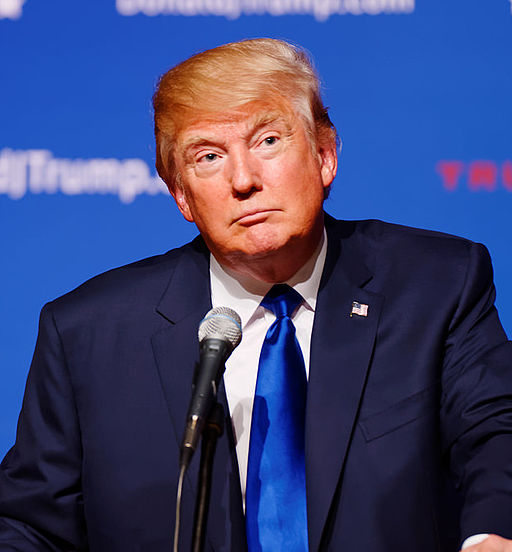
donald_trump_august_19_2015
BuzzFeed has defended its publication of a dossier including unverified allegations against Donald Trump. Photo by Michael Vadon [CC BY-SA 2.0], via Wikimedia Commons
I think the fact that thoughtful people have landed on different sides is evidence of the fact that there are multiple ethical considerations involved, some of them potentially conflicting. Although verification is at the core of ethical journalism, exceptional situations like this one may arise where the decision on publishing is not so easy, particularly if the documents have surfaced in some official setting.

I have been thinking beyond this situation to similar ones that may arise in the future and the ethical questions involved.

Below is a list of questions I’m suggesting to help in thinking through the ethical issues in these situations. I have grouped the questions under the headings of the principles of the Society of Professional Journalists ethics code, as well as other considerations – public relevance and journalistic purpose – that relate to the mission of journalism.

In writing these questions, I’m inspired by some lists that Poynter has done to help journalists in other areas of ethical decision-making such as going off the record and, recently, using Facebook Live. Two co-authors and I also raised some of these issues in a question list in an academic study on data journalism.

I welcome any comments from readers on how these questions might be used or revised.

Questions to consider in deciding on whether and how to publish unverified documents involving public officials:

Public relevance and journalistic purpose

Have the documents been discussed or used in any official settings (e.g. intelligence briefings, committee hearings)? Have they otherwise been discussed on the record by any public officials?

Is there a compelling reason for the public to know about the information in the documents?

Seeking truth and reporting it

Have you or others tried to verify the information? Where verification has been possible for specific pieces of information, has the information proved to be true?

Are the sources of the documents reliable? Why or why not?

Acting independently

Is your decision to publish based on your own independent judgment of the ethics of publishing or on competitive pressures or other considerations?

Minimizing harm

If the documents contain sensitive allegations, what potential harms could result if you release the documents in their entirety or publish those details and they prove to be false or impossible to verify?

If potential harm is a valid concern if you release the documents in their entirety or report details such as these, how could you minimize harm (e.g. redacting some details, summarizing)?

Being accountable and transparent

Are you explaining the process you used in your decision-making including any conflicting ethical considerations and the ethical reasons for making the decision you did?

Are you explaining any efforts you made to verify the content of the documents and the outcome of those efforts?

By thinking through these questions, journalists can uphold the importance of verification while also considering when and how to report on unverified documents there may be a compelling reason for the public to see.

Daley News: Preserving Disorder in Trump’s Washington

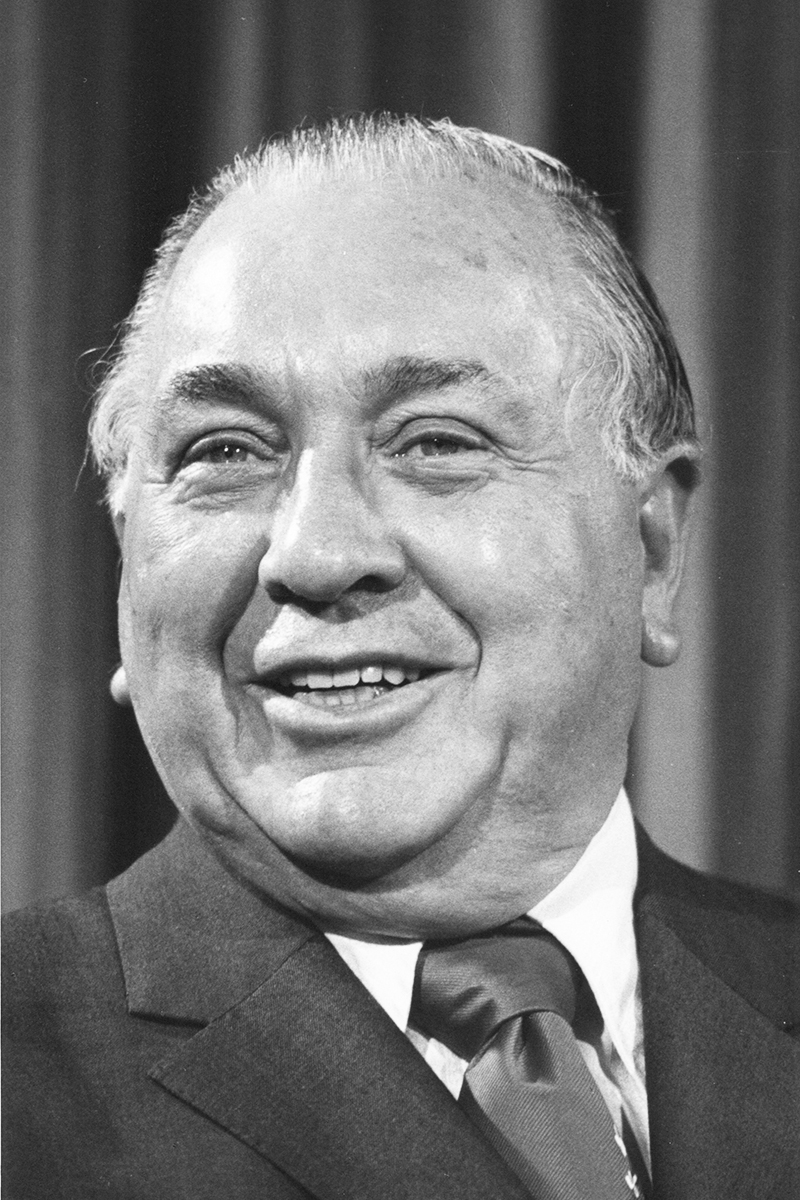
Richard J. Daley.
Chicago Mayor Richard J. Daley, in an official photo by Laszlo Kondor. (University of Illinois Library Archives)

By Casey Bukro

Powerful men often have a way with words, although not always in the way we might expect.

Mayor Richard J. Daley of Chicago was famous for malapropisms, often saying the opposite of what he meant. He was Chicago’s powerful mayor for 21 years, and an example for journalists taking measure of Donald J. Trump.

Daley was the undisputed Democratic kingmaker in Illinois and beyond until his death in 1976, both feared and respected. Daley was a force in John F. Kennedy’s 1960 presidential victory, leaving lingering hints of vote fraud. A dressing down by Daley could leave his underlings in pools of sweat.

But his speech was sometimes tangled and mangled, often while he was agitated or angry. Such as the time he was talking about the battle being waged by police against street violence during the 1968 Democratic National Convention.

“Gentlemen, get the thing straight once and for all,” the mayor said. “The policeman isn’t there to create disorder; the policeman is there to preserve disorder.”

Continue reading Daley News: Preserving Disorder in Trump’s Washington

Fake News Trumps True News

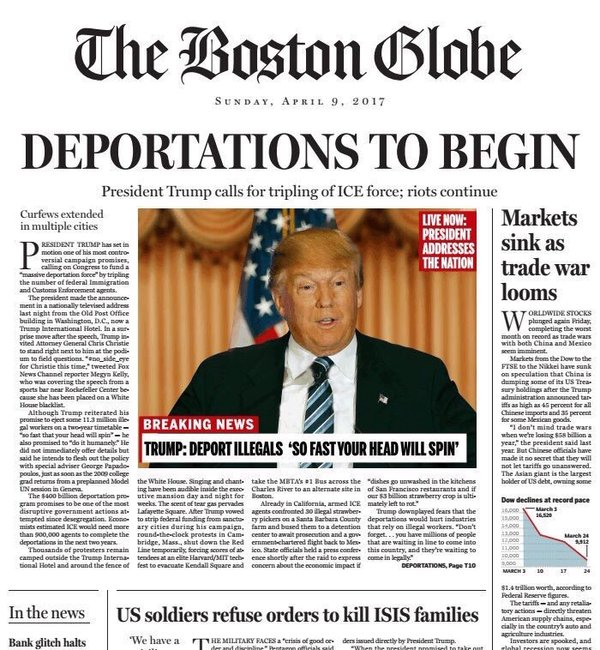
Boston Globe fake news page.
The Boston Globe publishes fake news as an editiorial-page spoof in April, 2016.

By Casey Bukro

Fake news might have proved more interesting to readers than the factual stuff.

This sobering thought has churned angst over whether social-media falsehoods contributed to Donald Trump’s presidential victory, not to mention whether the upset win could have been foreseen.

News consumers tend to believe reports that support their personal beliefs — an effect that psychologists call confirmation bias. People like to believe they’re right. In the election run-up, they clicked their way across the internet to prove it.

As President-elect Trump selects the people who’ll help him govern, observers are picking through the rubble trying to understand the forces behind a Republican victory. Here our concern is news-media accuracy and ethics.

Let’s start with something basic. What is fake news?

“Pure fiction,” says Jackie Spinner, assistant professor of journalism at Columbia College Chicago, appearing on WTTW-Channel 11 in Chicago in a “Chicago Tonight” program devoted to separating fact from fiction in internet news feeds.

“It’s something made up,” adds Spinner. “It’s fake.”

But as the WTTW program points out, “fake news is on the rise, and it’s real news.” Some false reports, such as campaign endorsements from Pope Francis, survived many a news cycle.
Continue reading Fake News Trumps True News

In Trump’s Locker Room Culture, Billy Bush Caught the Fungus

By Casey Bukro

Usually, a journalist at the center of an explosive story would be congratulated. Not Billy Bush.

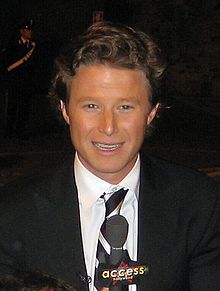
Billy Bush.
Billy Bush suspended in wake of Donald Trump making lewd comments. Wikimedia photo

He’s the one cackling and giggling in the background of the 2005 tape as Donald Trump brags about kissing and groping beautiful women. “I just start kissing them,” Trump says. “It’s like a magnet. I just kiss. I don’t even wait.”

Egged on by Bush, Trump adds the remark about grabbing women by the genitals, using an obscene term, saying, “I can do anything.”

Released on the eve of the 2016 elections, the tape has been played countless times as commentators speculate about its likely impact on Trump’s chances of being elected president as the GOP contender.

No need to wonder about Bush, Trump’s enabler in that episode. NBC suspended him as a co-host of the “Today” show.

Bush was co-anchor of “Access Hollywood” at the time the tape was made. NBCUniveral Television Distribution, with NBC-owned station KNBC, has been solely responsible for producing “Access Hollywood” since 2004.

Bush was a rising star until the video train wreck. It might be a stretch to call him a journalist.

Television personalities often consider themselves entertainers or performers who want to put on a show. Brian Williams, for example, gave himself credit for doing things he did not do, making his reports more exciting until NBC learned of his fabrications, then suspended and reassigned him. Makes you wonder if these guys ever heard of journalism ethics.

William Hall “Billy” Bush is the nephew of former President George H.W. Bush and cousin of former President George W. Bush and former Florida Gov. John Ellis “Jeb” Bush.

The website MediaShift says Bush’s story “should serve as a cautionary tale for our modern age of journalism, where social media and reality television have oblitered the line between reporting the news and becoming part of it.”
Continue reading In Trump’s Locker Room Culture, Billy Bush Caught the Fungus

Melania Trump ‘Plagiarism’: Cribbing From Michelle Obama

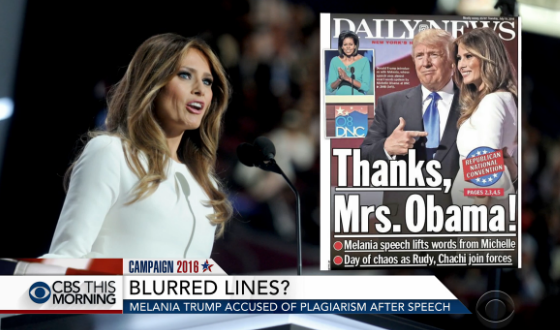
Melania Trump
Melania Trump, speaking at Republican National Convention, is accused of plagiarism. “CBS This Morning” image.


By Casey Bukro

Politicians are a notoriously slippery tribe. Almost by definition they are seen as shifty and two-faced. A 2013 poll found Congress less popular than cockroaches and traffic jams.

So what explains the umbrage over Melania Trump’s warmup speech at the Republican National Convention, extolling Trump family values and virtues of her husband, Donald, the Republican nominee for president?

“From a young age, my parents impressed on me the values that you work hard for what you want in life, that your word is your bond and you do what you say and keep your promise, that you treat people with respect,” said Trump to warm applause.

By the next day, political writers were pointing out that passage and others were almost exactly what First Lady Michelle Obama said at the 2008 Democratic National Convention.

“Plagiarism,” declared David Brooks, New York Times political columnist, during PBS-National Public Radio convention coverage. Others called it a “ripoff” or more politely “borrowing” or “cribbing.”
Continue reading Melania Trump ‘Plagiarism’: Cribbing From Michelle Obama