Everyone is in favor of ethics, until you get into the details. That’s when the fights break out.
This is something the Online News Association is likely to learn as it makes its way through a project called the Build Your Own Ethics Code. Journalists are invited to crowdsource and document their ethical practices.
Can Stock Photo
I have some personal experience in this realm. Back in 1972, I was national professional development committee chairman for Sigma Delta Chi, later named the Society of Professional Journalists.
The public, then as now, tended to have a low opinion of journalists. A public opinion poll in 1972 showed only 19 percent of the public had confidence in the press. Garbage collectors ranked higher.
Hoping to counteract that, delegates at the 1972 convention in Dallas adopted a resolution asking the group to do something about that low image of American journalists. That resolution was sent to my committee.
We decided to write a code of ethics reflecting SDX values and standards, acting on a constitutional mandate to inform the public as part of journalism’s role in a democracy. We wanted to show that journalists do have standards, and can act in an ethical manner.
It’s hard to be good and ethical. Sometimes it comes at a cost.
Amelia Pang, metro reporter for Epoch Times in New York, discovered this when she called the Ethics AdviceLine for Journalists in 2012 and asked a question that AdviceLine gets sometimes:
When calling a news source, is it necessary for reporter to admit to being a reporter? That is, not say that she is a reporter, unless asked?
It is a question that arises among young reporters, those learning the ropes or those who work for organizations without printed standards or spelled out ethical guidelines that can leave a reporter wondering what to do.
In Pang’s case, she called AdviceLine on advice from a colleague.
“I am doing an article about a controversial homeless shelter in New York City,” Pang told AdviceLine adviser Hugh Miller, an assistant professor of philosophy who teaches ethics at Loyola University Chicago.
“The shelter is located in a very rich area, therefore many residents have been quite unhappy about it. The shelter has received a lot of bad press since they opened last year, and now they are reluctant to talk to any media.”
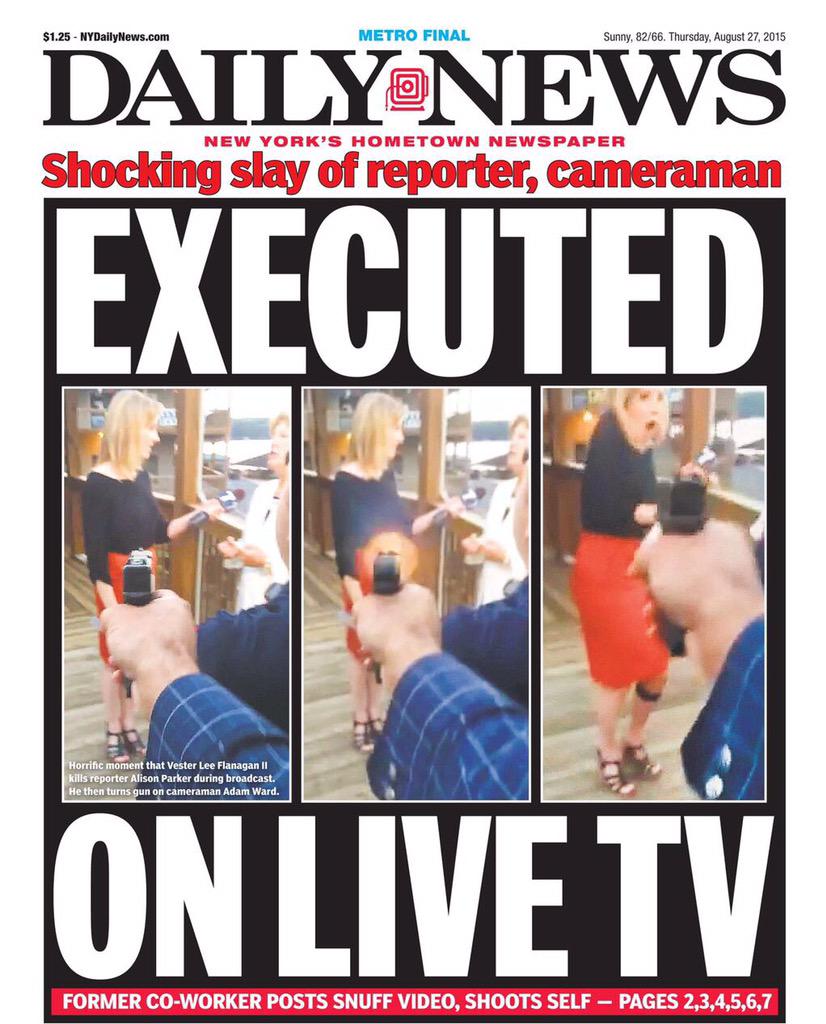
Killing the messenger takes new meaning when you see it live, in living color, as happened in the deaths of a Virginia television news reporter and her cameraman.
WDBJ correspondent Alison Parker was conducting an on-air interview in a Moneta, Va., shopping center when she and the photographer, Adam Ward, were shot and killed by a disgruntled former colleague who also videotaped the attack and put it on social media.
The New York Daily News gave the murders front-page display, in very graphic detail than some TV outlets shunned.
Killings on video are increasingly common these days. Journalists are among those targeted now, becoming victims and not just reporters of events. Parker and Ward’s names are now added to a list that included James Foley and Daniel Pearl.
Tech-savvy killers use social media and the internet these days to show their crimes.
The Islamic State group released a video in 2014 showing Foley, clad in an orange gown, kneeling on the ground next to a man dressed in black holding a knife. Foley makes a short statement and then is decapitated.
In 2002, Pearl, a correspondent for The Wall Street Journal, disappeared while on assignment in Karachi, Pakistan. Video shown around the world via the Internet showed Arab extremists cutting his throat, then decapitating the reporter.
In this world of social media, terrorists don’t need reporters to tell their message. Terrorists can do that themselves now, and one way of doing that is killing reporters.
Charlie Hebdo, the French satire newspaper, published a cartoon of a drowned 3-year-old boy and showed why codes of ethics should warn against satirical cruelty.
Satire can be cruel, inspiring or infuriating. Maybe all at once. But are there limits to this form of freedom of expression?
Charlie Hebdo clearly touched a nerve by joking about the boy lying facedown in the surf of a Turkish beach, after drowning with his mother and a brother while attempting to flee war-torn Syria, becoming a stark symbol of Europe’s growing migrant crisis.
The cartoon was based on photos of the boy, first described as Aylan Kurdi and corrected later as Alan Kurdi.
“The haunting photograph of 3-year-old Aylan Kurdi, the Syrian boy whose lifeless body washed up on a Turkish beach last week, has been inescapable; even if you’ve just seen it once, it’s an image you can’t forget,” wrote Carolyn O’Hara, managing editor of The Week magazine.
O’Hara compared it with other grim photos of the past that forced the world to confront some tragic realities, such as the the 1972 photo of a naked Vietnamese girl screaming in agony from napalm burns, the 1993 image of a vulture stalking a starving Sudanese toddler and the hooded Abu Ghraib prisoner with outstretched arms.
It could be argued that these images served a greater purpose. Can the same be said about Charlie Hebdo?
Freelancing is a tough way to make a living – even tougher as downsized journalists turn to freelancing.
For writers specializing in health care, it’s especially challenging because of the ethics issues faced in navigating the cross connections between clients who want stories written for them or about them. Or both.
“Ethical guidelines for subspecialties may vary,” Tara Haelle in an email exchange with the Ethics AdviceLine for Journalists.
A freelancer herself, Haelle traced the obstacles in a story that appeared on the Association of Health Care Journalists website.
Tara Haelle
Haelle calls it the conflict-of-interest maze: “Ensuring that work for one client doesn’t create a conflict for another, present or future.” Though that might sound simple, Haelle said it isn’t because freelancers work for companies, journalism publications, universities and foundations or as consultants.
Haelle went to several sources, asking how she can avoid ethical conflicts of interests under the conditions in which she works and found that ethical guidelines vary. One source said “there’s no clear answer.” Another said journalists should “decide for ourselves what we think is ethical behavior.”
That sounded like a challenge for the Ethics AdviceLine for Journalists, which has a staff of five university ethicists to answer questions of the kind posed by Haelle.
One of them, David Ozar, is professor of social and professional ethics in the department of philosophy at Loyola University Chicago. AdviceLine asked Ozar to read Haelle’s story and offer his perspective on how he would have answered her call for guidance on ethics.
Kathy English, Toronto Star public editor (Toronto Star photo by Lucas Oleniuk)
By Casey Bukro
I’m a sucker for stories about news ombudsmen, or public editors or readers representatives, even though they are branded these days. I can’t help myself. It’s a compulsion, an addiction.
Think about it: An ombudsman might walk up to the top boss and tell him he’s wrong. She might pick through the details of a complicated story, then defend a reporter for doing a thankless, difficult or even dangerous job, or discover that a reporter did not go far enough to find the truth, and then say so publicly.
It’s almost heroic.
I suppose I also admire ombudsmen because what they do is so idealistic: speaking up without fear or favor, letting the chips fall where they may.
Maybe that’s why there are only about 20 of them working at American news outlets today, according to a Politico article, “The State of the Ombudsman in 2015.” That’s about half as many as a decade ago, according to USA Today.
Still, ombudsmen in the U.S. and elsewhere trudge on.
Kathy English, public editor of the Toronto Star in Canada, recently wrote an article titled, “So what does the public editor do?” Readers had asked her to explain her job, which she’s done for eight years.
GamerGate from its beginning a year ago seemed touched by lunacy, and that was borne out when bomb threats forced the abrupt closure of a video-game program in Miami.
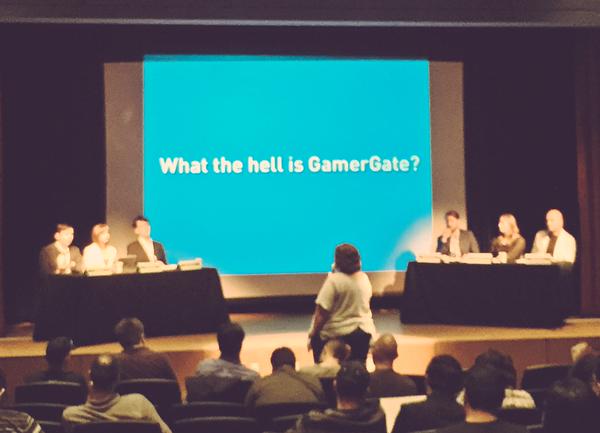
The Society of Professional Journalists event AirPlay aimed to pin down the social-media campaign GamerGate – whether it’s about journalism ethics and accurate reporting about the video-game industry, attacks on women in the male-dominated industry, or resistance to political correctness and censorship. Or something else.
The conference goal was to “make a good gaming press better, or a bad gaming press good,” said Michael Koretzky, an SPJ regional director who organized and moderated. The conference “concocted some novel yet practical ideas for achieving that,” he said, such as an SPJ award for games journalism or recruiting games media critics.
A Twitter feed and hashtag and a YouTube channel suggest the event provoked lively discussion. SPJ secretary/treasurer Lynn Walsh said “if mainstream media jumps on this, it should be done well and ethically.”
Topics included plagiarism, fabrication, anonymity, fair reporting and the performance of Gamer writers. Koretzky asked about a “troll patrol,” how to vet or write about their social-media statements, and how to expose anonymous digital mischief-makers.
Then it all ground to a halt.
Miami police cleared the building after a series of bomb threats, UPI reported. Breitbart.com reported that the event got 10 bomb threats before police stopped the program and moved participants out of the building and into the streets.
Koretsky said two separate conferences in the building drew about 135 participants, of which about 60 attended the AirPlay event.
AirPlay was supposed to teach us something about GamerGate. AdviceLine asked Koretzky what the abbreviated conference taught him.
“I learned I was right about one thing,” Koretsky responded in an email. “Face-to-face opens minds. As for the bomb threat, it was awesome. It happened only 30 minutes before we ended, and it made @SPJAirPlay trend worldwide.”
Such threats are not new to GamerGate. Earlier this year a bomb threat cleared 300 people from a Washington, D.C., event aimed at GamerGate supporters. And Anita Sarkeesian, creator of a video series of pop-culture critiques, canceled an appearance at Utah State University last year because of the threat of a mass shooting.
AdviceLine asked Koretzky if continued threats of violence prove that some of those GamerGate folks really are nuts.
“I knew some GGers were nuts from the get-go,” he said. “But I learned just how many aren’t. I’d say it’s 50-50 &ndash which might offend both sides. But really, that’s a ringing GG endorsement, since so many folks told me the stat was 100 percent.”
And what else did he learn from the event?
“I’ve been talking to some gaming journalists post-AirPlay about why it wasn’t covered. Interestingly, the reporters are cool, editors are not. So once again, it’s age more than philosophy.”
As for his next move, Koretzky said he’s considering hosting a feminism-and-media debate.
Mark Samenfink, a lifelong gamer, wrote that he was frustrated by the way the Miami GamerGate event ended.
“This feels like a hollow victory,” Samenfink wrote. “But since at least half of the event took place (and was streamed live, worldwide), it’s not completely hollow. I was excited all day, my hype was real, I sat down to watch the debates and was overjoyed by them, but this … it just killed the mood.”
Did the gaming press cover the event?
“No,” said Koretzky, “just the bomb threats, and some not even that. It says more in defense of GG than anything else to date.”
Is GamerGate about ethical violations in video-game journalism?
Or is GamerGate just a smokescreen for harassing women who want to work in the male-dominated gaming industry?
Or is it something else?
A live-streamed debate will sort it out Aug. 15 in Miami.
Elements in the controversy include the $15 billion video game industry, the video game press, game reviewers, developers, commentators and those who sell advertising in gaming magazines. It’s a volatile mixture.
Michael Koretzky, a regional director for the Society of Professional Journalists, organized the conference and will moderate. His region covers Alabama, Georgia, Florida and South Carolina. Sponsors are the region and SPJ Florida.
Q: Did you hear about the new “divorced” Barbie doll in stores now?
A: It comes with all of Ken’s stuff.<
Submitted By: Anonymous
TWEET OF THE DAY
Marriage is mostly about knowing which hand towels you can use and which ones are for the better people who visit your wife’s home.
Credit: @_troyjohnson
From Chicago’s Laugh Factory
By Casey Bukro
A funny thing happened on WTTW’s Chicago Tonight show: they were talking about ethics in comedy and joke stealing.
It’s no laughing matter when comics steal jokes from other comedians. How can you stop it?
The Chicago Tonight program was prompted by a lawsuit filed by Alex Kaseberg, a Winnetka freelance comedy writer, who accuses television talk show host Conan O’Brien of stealing his jokes.
“Plagiarism is a huge deal in journalism,” said Phil Ponce, the moderator. “It’s a career-ender. Why is it not a career-ender in comedy?”
Nobody on the panel of comedy experts laughed.
“There’s a history of joke-stealing” that goes back to vaudeville, answered Anne Libera, director of comedy studies at Columbia College Chicago. Performers sometimes stood backstage and took notes so they could tell the stolen jokes later.
It’s not easy to prove when a joke is stolen, said comedian Dwayne Kennedy. People accuse others of joke-stealing all the time, he said, but “the topic is so broad,” it’s hard to prove.
WBEZ reposted video it credited to YouTube user King-Dubb.
From the Ethics AdviceLine for Journalists archives
By Casey Bukro
Back in 2011, Chicago radio reporter Steve Edwards was covering gang violence and Chicago police for WBEZ when a video surfaced, showing youths menacing a suspect in the back seat of an open police squad car.
Was it ethical to use that video on a WBEZ broadcast?
That’s what Edwards wanted to know when he called the Ethics AdviceLine for Journalists. The video shows two Chicago police officers standing at the parked blue-and-white SUV with the doors open in Chicago’s violence-prone Humboldt Park area. A group of shouting young men, some possibly minors, taunt a suspect cowering in the back seat and trying to cover his face.
Someone tells the photographer, possibly a gang member, “get a close-up.” The photographer posted the video on YouTube and quickly took it down.
Edwards told AdviceLine that WBEZ had been investigating allegations that Chicago police had a history of subjecting gang members to harm by picking them up, then dropping them off in “enemy” gang territory.
The Chicago Police Department told Edwards that it got a complaint about the incident and released this statement:
“The conduct that is alleged does not reflect the behavior and core values of the men and women of the Chicago Police Department nor our commitment to serve the community in a professional manner.” The department said its internal investigations divisions began an investigation.
In 2013, the Chicago Police Department announced that it had dismissed the two police officers involved in the incident, saying the charges included “unlawfully restraining a youth, transporting him without a valid police purpose to the turf of a gang that would threaten him and making a false statement about the incident to an Internal Affairs detective.” Continue reading Ethics of Using Internet Video of Police Conduct→





 TWEET OF THE DAY
 Ethics AdviceLine for Journalists