Shifting Views on Naming Sexual Assault Victims

Media Matters for America illustration
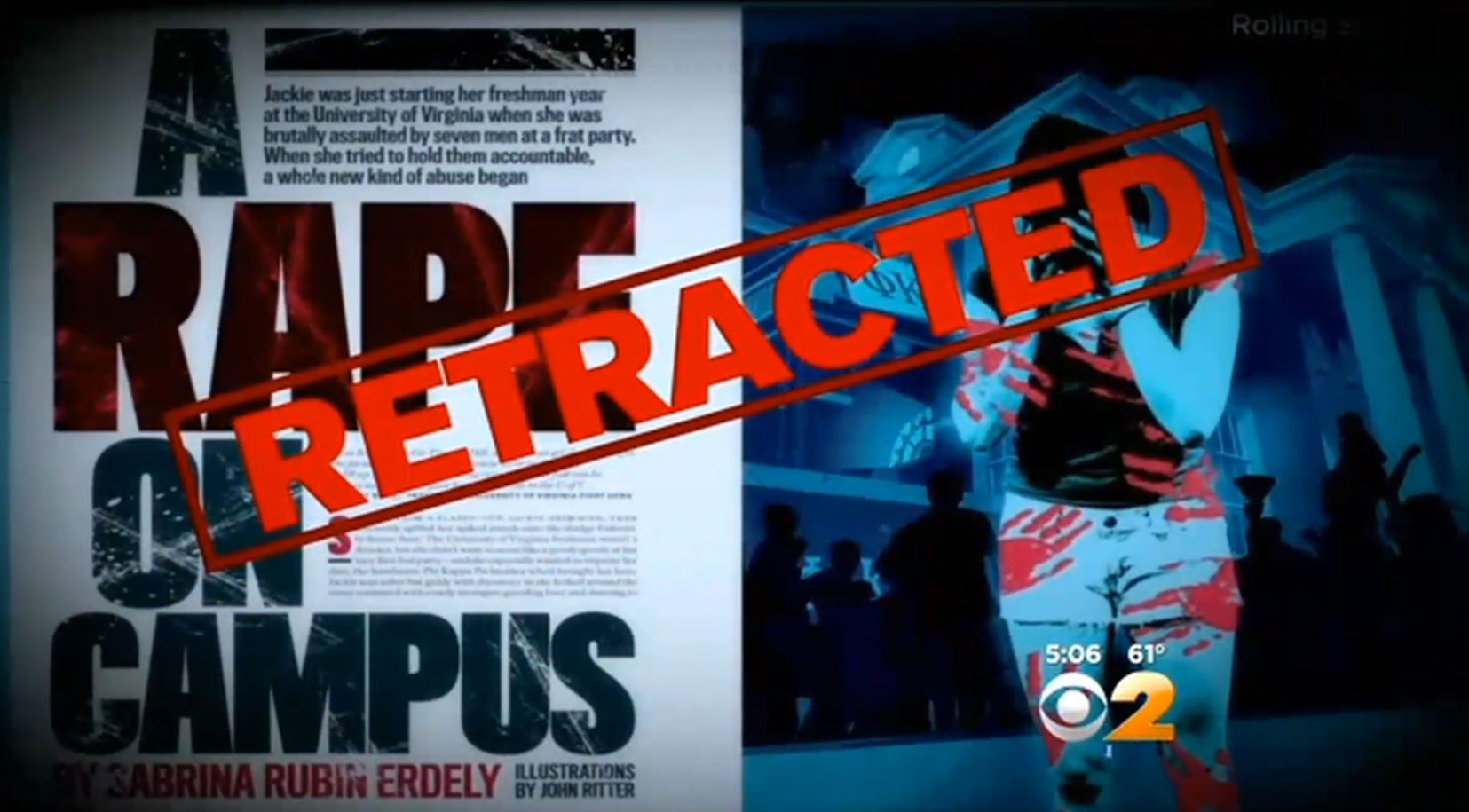
Rolling Stone retracted its 2014 article about an alleged campus rape. (Media Matters for America illustration)

By Casey Bukro

A ban on naming sexual assault victims has been one of the ironclad ethics rules in journalism. Why inflict more pain on an innocent person?

The Society of Professional Journalists code of ethics says: “Be cautious about identifying juvenile suspects or victims of sex crimes.”

Yet even this rule is coming into question as people decide what rules they want to follow.

For example, Stephen J.A. Ward, a media ethicist, points to the trial of Jian Ghomeshi, a former Canadian Broadcasting Co. radio host. Ghomeshi is charged with sexual misconduct involving three women in 2002 and 2003.

One woman insists on being identified. The others’ identities are protected under Canadian law.

“So what should newsrooms do if the complainant insists on being identified?” asks Ward. “It’s a complex legal and ethical decision.”

Ward described how identity bans work under Canadian law. But two trends complicate the issue.

“One trend is the growth of media beyond the mainstream journalism that was the original focus of the ban,” he writes. “Social media, bloggers and others may ignore the ban. The second trend is that some people want to be named” and “may use social media to identify themselves as a complainant.”

Once the name is ‘out there’ in the media world, it’s very difficult to erase.

One of the central rules in journalism ethics is minimizing harm. Ward reasons that this means explaining consequences, to make sure complainants give informed consent to the use of their names.
The problem prompted the Canadian Association of Journalists ethics committee to release guidelines. The committee suggests journalists take specific steps to ensure informed consent:

  • A journalist should explain that, once a complainant’s name is made public, other media likely will use the name too.
  • A journalist should explain that that the name likely will be used on social media, over which the journalist has no control. Individuals on Facebook, Reddit or other social sites will post comments. Some of them “can be vile.”
  • A journalist should explain that, once the name is “out there” in the media world, it’s very difficult to erase.
  • A journalist should not pressure complainants to make their names public.
  • A journalist should explain that, given the nature of search engines, the sex crime report might be the first thing that appears when someone does an Internet search of the complainant’s name. Has the complainant thought about the information being available indefinitely when applying for jobs, entering into relationships or having a family?

The guidelines report also advises journalists to give complainants a day or two to think about their decisions before making their identities public.

“Taking that time up front will almost certainly reduce the likelihood of ‘source remorse’ and the possibility of an unpublishing request later.”

The CAJ report also reminds journalists that they are obligated to tell the whole story, not just the complainant’s viewpoint. The 2014 Rolling Stone magazine story about an alleged campus rape turned out to be bogus because it was based on the allegations of one person. Sex crimes often involve conflicting viewpoints.

The Canadian ethics panel suggested, as an alternative to an “all-or-nothing approach,” considering refusing to share a story through social media channels, not archiving stories that name victims or removing names from a story. But these actions could raise more ethics concerns.

The Bill Cosby case is an example of the complications in alleged sex crimes. Controversy can simmer for decades. Journalists and authorities have been accused of protecting the popular entertainer. Some women kept silent in the belief nobody would believe them. Years later, some identified themselves as women who were allegedly drugged and sexually assaulted.

Years ago, sexual assault was a crime that people hesitated to talk about under social norms. That has changed. Television and the online media discuss and show sexual situations openly. It’s the new norm.

Still, it’s a good idea for journalists to keep in mind the golden rule: Minimize harm.

Edited by Stephen Rynkiewicz
Pope Francis, Trump and Journalism Ethics: Looking for a Hail Mary

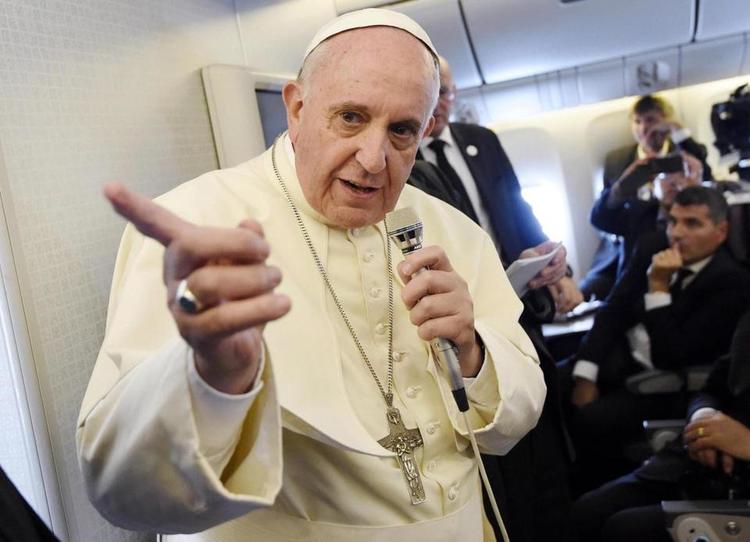
Pope Francis holds an in-flight press conference.

By Casey Bukro

Normally, AdviceLine considers the Society of Professional Journalists’ code of ethics its highest source for guidelines and standards on ethics.

But we’re always willing to be open-minded about new and thoughtful ways to think about ethics and do the right thing in journalism.

Take Pope Francis for example. The pontiff is unusually frank and quotable on his world tours, accompanied by media aboard the papal airliner. He gets involved in current and political issues that some popes might have shunned as too earthly, too secular.

On his way back to Rome from a six-day visit to Mexico, where he is known as Francisco, the pope weighed in on comments by Donald Trump, the Republican presidential hopeful. In a midair press conference, Reuters’ Phil Pullella asked for a response to Trump’s claim that the pope was a pawn in Mexico’s migration politics – an apparent reference to Trump comments on the pope’s trip airing on Fox Business. Pullella noted the candidate’s call to wall off the U.S.-Mexico border.

A transcript indicates the pope did not address Trump’s comments directly, but said that “a person who thinks only about building walls, wherever they may be, and not building bridges, is not Christian.”

Trump said the pope heard only one side of the story. In later comments, the pope clarified: “I say only that this man is not Christian if he has said things like that. We must see if he said things in that way and in this I give the benefit of the doubt.”

So now we have an ethical conundrum. If he is not sure what Trump said, and gives Trump the benefit of the doubt, are media free to tie the “not Christian” remark to Trump? Media reports on the event tend to say the link to Trump is stronger than the pope himself will admit. Trump has vowed to force Mexico to build a wall and increase deportations.

That night, on the PBS News Hour, John Allen, a Boston Globe reporter who covered the event, said it is possible that the pope does not know who Trump is, and was taking the word of reporters that Trump made the remark. Essentially, reporters coached the pope.

Moderator Judy Woodruff rightly pointed out that other politicians have asked for border walls, not just Trump. So was this a media-created conflict?

What should an ethical reporter do?

The answer might lie in the pope’s own comments during another in-flight press conference, when he touched on journalism ethics.

In the wake of the so-called Vatileaks scandal, in which the mainstream press reported on corruption in the Vatican, the pope was asked about his opinion of the importance of a free press in rooting out corruption.

“The professional press must tell everything, without falling into the three most common sins,” the pope responded. The sins he named were:

  • Misinformation – telling half the truth.
  • Calumny – dirtying another person, with or without the truth.
  • Defamation – to take away the good name of a person who has not done anything wrong.

“These are the three defects that are an attack against the professionally of the press,” the pope said. “We need professionally, what’s right. … And on corruption? To see the data well and say it. … If there is corruption, they should say it. And if a journalist, if they are truly professional, gets it wrong, he should excuse himself. Things go very well like this.”

Writer Terry Mattingly, reporting on that in-flight press conference, wrote: “To be honest, I think it would have been interesting to ask the pope to define the line that he sees between ‘calumny’ and ‘defamation.'”

Possibly all three “defects” apply in Trump case, since the controversy appears to stem from information fed to the pope, rather than from his own knowledge. This is a nuance that was not explained in many reports on the incident, although John Allen clarified that in his PBS News Hour appearance. And it could be argued that the pope was telling one side of the story.

The controversy did cast a shadow on the character of a political candidate, intended or not.

In the rough and tumble of American politics, even a pope may be dragged into the fray. It’s possible he was duped into commenting on something he was not familiar. Even a pope should be wary during election time in America.

The SPJ code of ethics says: “Take special care not to misrepresent or oversimplify in promoting, previewing or summarizing a story.”

Pitting the pope against Trump might have been a misrepresentation or oversimplification. How would you have handled the story?

Edited by Stephen Rynkiewicz.

Clinching the Debate: Is Hugging Political Candidates Unethical?

By Casey Bukro

All is fair in love, war and politics. But do they mix?

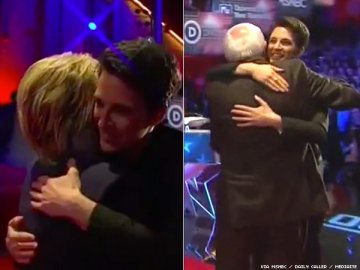
Critics say Rachel Maddow, MSNBC television host and political commentator, crossed a line when she hugged Democratic presidential contenders Bernie Sanders and Hillary Clinton after a televised debate.

Rachel Maddow hugs Hillary Clinton and Bernie Sanders
Rachel Maddow hugs Hillary Clinton and Bernie Sanders.

Maddow says she’s a hugger, and probably will hug again if invited to host another debate regardless of political party.

Conservative Fox News analyst Howard Kurtz is among those who object. “She shouldn’t have been on that stage as moderator,” Kurtz writes on foxnews.com. “She is an unabashedly liberal commentator who rips the Republicans every night on her program. She should not have been put in that position.”

Kurtz acknowledges that Maddow is a smart lady, a Rhodes scholar with deep knowledge of the issues. But as Kurtz sees it, the hugs restrict MSNBC’s efforts to shed its left-wing label and rebrand itself as a news network.

Brit Hume, another political commentator, tweeted about the clutch play, saying “I don’t think I’ve ever seen a moderator do that before.”

Washington Post media critic Erik Wemple shrugs it off.

“Consider the hugs through the prism of journalism ethics,” writes Wemple. “Were they transparent? Yes, there’s a video of the hugs, which took place in front of the cameras; any clandestine backstage moderator-candidate hugging is strictly forbidden. Were they even-handed? Yes, both Sanders and Clinton received hugs of very comparable warmth, duration and hand-pats. Were they prejudicial? Nah, coming at the end of the event, it’s hard to say that the affection received by Maddow influenced the questions, which were solid.

“So, that’s the verdict, considering that there doesn’t appear to be a hug provision in the Society of Professional Journalists’ code of ethics.”

True, the code does not outlaw hugging specifically. But it does warn against conflicts of interest, “real or perceived.” And it urges journalists to “remain free of associations and activities that may compromise integrity or damage credibility.”

Those tenets apply to this case, which is why some journalists might do a double-take at Maddow’s embrace.

In a later blog post, Wemple returns to the debate-ending squeeze. “The industry’s orthodoxy dictates that those with opinions shouldn’t be running such straight-news events. Count me out of that strain of hollow thought. We’ll take Maddow over some ‘objective’ drone every time,” he writes.

Which is to say journalism standards and customs change over time. Lines are drawn and redrawn. And journalists will agree or disagree. It’s the nature of ethics.

That Herman Hupfeld song from the movie “Casablanca” comes to mind, “As Time Goes By.”

“You must remember this, a kiss is just a kiss, a sigh is just a sigh. The fundamental things apply as time goes by.” Nothing there about hugs.

In your view, was Maddow wrong? Leave a reply below.

Edited by Stephen Rynkiewicz.

Professional journalists with ethics questions may contact us at ethicsadvicelineforjournalists.org.

Undercover Investigator Insults Journalists

By Casey Bukro

David R. Daleiden said he misrepresented himself and falsified his identification while investigating Planned Parenthood because that’s what journalists do.

What an insult to journalists! Ethical journalists know that telling lies and deception while covering the news destroys their credibility. Who would believe a journalist who lies, cheats or steals?

That’s why the Society of Professional Journalists code of ethics clearly states: “Avoid undercover or other surreptitious methods of gathering information except when traditional open methods will not yield information vital to the public. Use of such methods should be explained as part of the story.”

True, there’s a qualification. And journalism lore is rife with tales of Hollywood-style derring-do, with reporters pulling off grand deceptions.

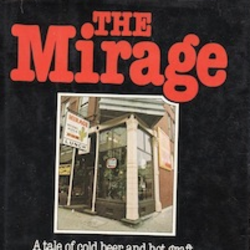
The Mirage tavern, a study in journalism deception.

In 1977, the Chicago Sun-Times bought a tavern and staffed it with reporters and photographers to show the extent of corruption and shakedowns by Chicago city inspectors and others who took $10 or $20 payoffs to ignore safety or health hazards. Then the Sun-Times published a 25-part series that documented the abuses and crimes in the Mirage tavern.

You’ll still get an argument from some journalists who say it was a terrific story and resulted in major city, state and federal reforms. The talk at the time, though, was that the series failed to win a Pulitzer Prize because the investigation was based on deception, and that was wrong.

Continue reading Undercover Investigator Insults Journalists

Police Video: Searching for the Limit to Gruesome

By Casey Bukro

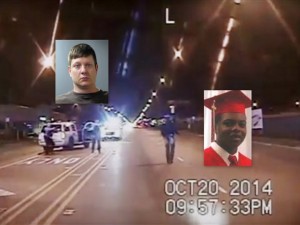
Chicago Police Officer Jason Van Dyke shot 17-year-old Laquan McDonald 16 times, and every second of that fatal shooting was recorded by a police car dashboard camera in the middle of a Chicago street.

That video has been broadcast countless times, showing every twitch of the body and what appear to be puffs rising from McDonald’s body as bullets strike.

Chicago police officer Jason Van Dyke and Laquan McDonald.

It’s gruesome, but it shows exactly what happened. The video is compelling evidence to disprove early police accounts that McDonald, who was black, was walking toward police with a knife in his hand and menacing police.

The video indicates that McDonald was walking away from police when Van Dyke, who is white, opened fire with a barrage that caused McDonald to twirl around, drop on his backside and roll to his right. Van Dyke kept shooting as McDonald lay in the street Oct. 20, 2014.

An autopsy confirmed that McDonald was shot 16 times. Van Dyke was indicted on six counts of first-degree murder and one count of official misconduct.

Police misconduct in shooting deaths in the United States is a major story propelled by television, a visual medium.

The use of phone video or dashboard cameras are recent developments that make it possible to show what happened, rather than rely on police or witness accounts. Technology is playing a bigger role in proving guilt or innocence.

But how many times is it necessary to show McDonald striding toward police, then falling to the ground as Van Dyke shoots him? Sometimes the whole scene is broadcast, sometimes it is edited so that it shows McDonald walking toward police.

Continue reading Police Video: Searching for the Limit to Gruesome

Sean Penn Touts Experiential Journalism on ’60 Minutes’

60 Minutes

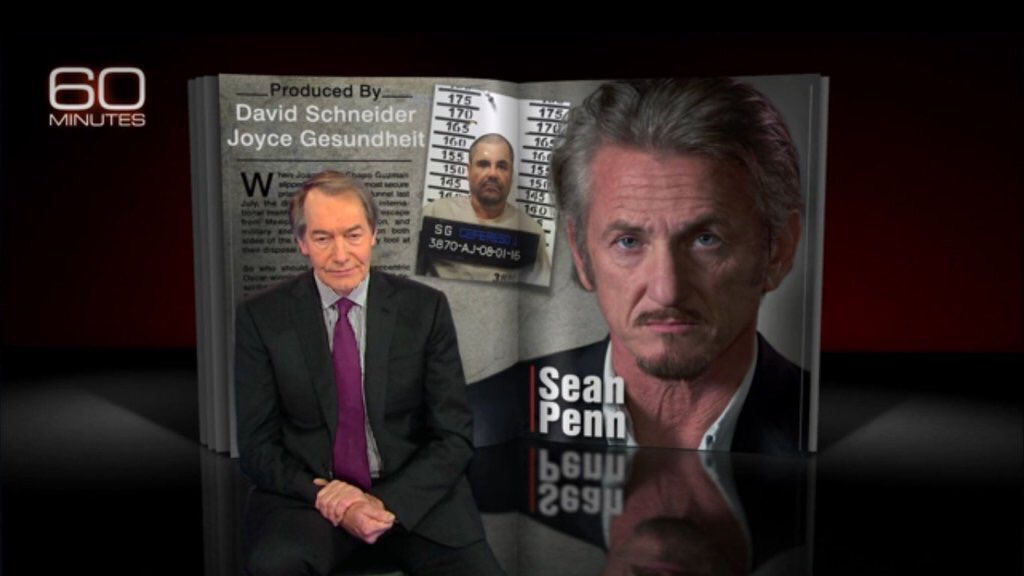
Charlie Rose on CBS’ s “60 Minutes” broadcast.

By Casey Bukro

Sean Penn told “60 Minutes”, the CBS television news magazine, that he was practicing “experiential journalism” when attempting to interview Mexican drug lord Joaquin “El Chapo” Guzman.

Penn admitted he failed. His article, based on an encounter with Guzman in a Mexican jungle and published in Rolling Stone magazine, was intended to spark a public discussion about U.S. policy on the war on drugs.

How could he succeed? When Penn actually had a chance to confront Guzman face to face, instead he asked Guzman if he has visited his mother and whether he knows Columbian drug lord Pablo Escobar. These are not penetrating questions that could trigger public discourse.

What he did was not experiential journalism. He knows the phrase but he doesn’t know what it means.

American Journalism Review uses the phrase to describe “How Virtual Reality Could Depict News in 3D.” In this case, newsrooms attract young users with in-the-round video on the Oculus Rift gaming platform: “Strap them in vision-encompassing helmets and let them experience the news like a video game.”

A Nieman Journalism Lab report names experiential journalism as one of “The Five Es of Journalism in 2016.” Neiman Lab is a Harvard University project aimed at discovering where the news is headed in the Internet age.

“Journalism has always been about more than just the facts,” according to the report. “There is a place for informational news but also for experiences that immerse the audience in the narrative.”  It cites the New York Times’ “Snow Fall” feature, “an attempt at using words, graphics, video and interactivity to have readers feel the story.”

Continue reading Sean Penn Touts Experiential Journalism on ’60 Minutes’

Sean Penn Meets Drug Lord in the Jungle for Rolling Stone

el chapo

Sean Penn shakes hand of Mexican drug lord Joaquin “El Chapo” Guzman. Sean Penn photo.

By Casey Bukro

Once again, Rolling Stone managed to embarrass itself by publishing an account by surly Hollywood star Sean Penn of a jungle trip to interview Mexican drug lord Joaquin “El Chapo” Guzman. Penn reported that he farted but Guzman graciously pretended he did not notice.

Although pairing a Hollywood star with one of the world’s most wanted drug lords probably sounded like a good story idea, it does not get much more exciting than Penn’s faux pas. Guzman mailed a 17-minute videotape with answers to questions Penn sent by BlackBerry messaging after they met.

An article with Penn’s byline says: “Of the many questions I’d sent El Chapo, a cameraman out of frame asks a few of them directly, paraphrases others, softens many and skips some altogether.”

Penn admits: “Without being present, I could neither control the questioning nor prod for elaborations to his responses.”

Rolling Stone calls that an “interview.”

It should know better. The magazine is still recovering from apologizing for its “Rape on Campus” story at University of Virginia, which it later admitted was a “journalistic failure that was avoidable.” The entire story, which proved to be false, was based on an interview with one person. The failures, Rolling Stone editors admitted, included faulty reporting, editing, editorial supervision and fact-checking.

Now it’s Sean Penn in the jungle. Penn said it was his idea to contact Guzman. But the article amounts to a printed “selfie.”

On the Jan. 11 PBS News Hour, moderator Judy Woodruff said “some are questioning the ethics of Rolling Stone’s methods” and “the ethics of interviewing an infamous drug lord.”

The program featured Angela Kocherga, Borderlands News Bureau director for the Arizona State University Cronkite School of Journalism, speaking on the ethics of the Rolling Stone piece.

“It raises very tricky questions about what constitutes journalism,” said Kocherga. “It raised some very troubling issues about access and what constitutes real journalism as opposed to more of a conversation, rather than what they are calling an interview.”

Continue reading Sean Penn Meets Drug Lord in the Jungle for Rolling Stone

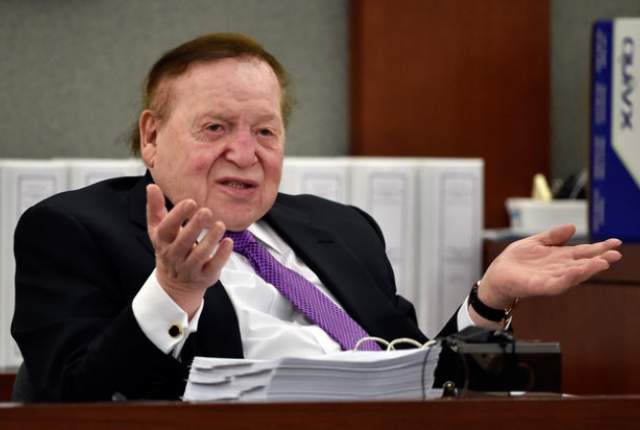
Secret Vegas Deal: Adelson’s Bet on Journalism

Sheldon Adelson
Sheldon Adelson, chairman and CEO of the Las Vegas Sands Corp. Photo by the Las Vegas Review-Journal.

By Casey Bukro

The stealth purchase of the Las Vegas Review-Journal by casino magnate Sheldon Adelson had journalists guessing for a week about the identity of the new owner and had some fuming over a lack of transparency, a prime tenet in media ethics these days.

But why should we be surprised by all this?

Very rich men often play by their own rules and get away with it. Even in media, top executives sometimes believe they are exempt from the ethics standards they hand down to their employees.

Journalists are warned against forming close personal ties with the sources they cover in case of conflicts of interest or an appearance of conflict. Publishers, however, party and play golf with the high and mighty covered by their staffs and call that good business.

They see themselves as business men and women, not journalists. In this case, we’re talking about a businessman in the Las Vegas casino business, where razzle-dazzle is the way the game is played. The house always wins.

Politics makes it more complicated. Adelson reportedly declined mentioning his purchase of the largest Nevada newspaper, even denying it as first, because he did not want it to distract from the fifth GOP presidential debate being held at the time in the Venetian resort hotel casino owned and operated by the Las Vegas Sands Corp., of which Adelson is chairman and CEO.

Clearly, politics took priority. And that might offer a clue into some of the leading questions in Las Vegas these days, such as what does Adelson want, and what does he intend to do with the newspaper?

Continue reading Secret Vegas Deal: Adelson’s Bet on Journalism

What the Ethical Robo-journalist Needs to Know

The ethical rob-journalist.
(Shutterstock photo)

By Casey Bukro

Can machines learn ethics?

The Associated Press already uses an automated platform capable of producing up to 2,000 stories a second. This is especially handy when companies issue quarterly earnings, which can be drudgery for a human reporter who scans the reports for meaningful numbers and statistics.

The robotic journalist crunches those numbers in seconds and spits them out in readable form, not in Pulitzer Prize-winning style but adequate.

Robo-reporting is especially handy for business and sports stories heavy on numbers and scores.

Northwestern University was among the pioneers in using machine learning, or pattern recognition software, to assemble the basics of a news report. A 2009 student project created software to write a headline and story from a baseball game’s box score. Two NU professors in 2010 started a Chicago company, Narrative Science to find commercial uses for the technique.

Stories written by robots have a lot of potential for the news business, and a few issues that need to be hammered out. Like ethics.

Computers, for example, could become plagiarists.

“Just because the information you scrape off the Internet may be accurate, it doesn’t necessarily mean that you have the right to integrate it into the automated stories that you’re creating — at least without credit and permission,” said Tom Kent, Associated Press standards editor, in a Digital Journal article, which cited comments Kent made to the University of Wisconsin Center for Journalism Ethics.

“I think the most pressing ethical concern is teaching algorithms how to assess data and how to organize it for the human eye and the human mind,” said Kent. “If you’re creating a series of financial reports, you might program the algorithm to lead with earnings per share. You might program it to lead with total sales or lead with net income. But all of those decisions are subject — as any journalistic decision is — to criticism.”

Continue reading What the Ethical Robo-journalist Needs to Know

Ethics Scan: Remaining Media Ombudsmen Uphold Standards

By Casey Bukro

Ombudsmen and public editors often are described as a dying breed, yet those who remain clearly take the job seriously.

A 2014 University of Nebraska graduate thesis finds there are about a dozen ombudsmen working now in U.S. news organizations, down from about 40 or 50 earlier in the decade. Internationally, however, the report finds ombudsmen growing in number and popularity.

In these times of job insecurity, ombudsmen seem to be taking more risks than most journalists. But they toil on.

In the U.S., Margaret Sullivan, the New York Times public editor, attracted attention for pointing to a conflict of interest Times editors failed to flag or apparently even to notice in an article titled “The Transformers.”

The article profiled five technology entrepreneurs, including Airbnb CEO Brian Chesky.

Tipped by readers, Sullivan discovered the article was written by the wife of a major investor in Airbnb, and that the writer was not a NYT staffer. The article appeared in T, the style magazine of the Times, and lauded entrepreneurs “harnessing goodness through technology.”

Sullivan came down hard on her employer in an article titled “Conflict of Interest in T Magazine’s Tech Article.”

Among readers who contacted Sullivan about the article, one wrote, “my question is about an undisclosed conflict” in an article that “reads as uncritical P.R.” for Airbnb without disclosing the relationship between the article’s author and the investor in Airbnb.

“This is a case in which the financial conflict is so clear, and the spousal tie so close, that a disclosure would not have been enough. A different writer altogether would have been a far better idea, and, to my mind, the only right one,” Sullivan wrote.

Sullivan found that T Magazine failed to live up to the Times’s high journalistic standards. Online, the article carries a disclosure about the conflict.

In South Africa, news24 reported that complaints to the Press Ombudsman faulted the Sunday Times for information it did not report, rather than what it did report about a tax-collecting agency of the South African government.

The Sunday Times published a series of reports on an alleged rogue unit in the agency accused of running a brothel and spying on President Jacob Zuma. Officials accused in the scheme resigned, but told the ombudsman “there is an alternative narrative” that contradicts the Times reports.” A lawyer said the Times had been selective and unbalanced in its reporting.

The Sunday Times of South Africa is a weekly newspaper. The ombudsman is pondering the case.

Here’s a long, scholarly look at the Press Council of South Africa by Dr. Julie Reid.

Despite the brain-twisting nature of the job, others still step up. ESPN recently named James M. Brady, formerly of the Washington Post, as its public editor. In making the announcement, company officials said his goal would be transparency and advocacy in an increasingly multimedia world.