Avoiding gender-based violence and sex abuse: Dart Center asks leading women journalists to describe their own best practices and personal boundaries.
“Listen to your internal radar,” says Christine Amanpour, CNN correspondent.
Avoiding gender-based violence and sex abuse: Dart Center asks leading women journalists to describe their own best practices and personal boundaries.
“Listen to your internal radar,” says Christine Amanpour, CNN correspondent.
“My view is that we have to keep the long run in mind,” Washington Post Executive Editor Marty Baron tells the Poynter Institute’s Journalism Ethics Summit. Scott Nover reports on trust in the media and other big stories in the Trump presidency.
Reinventing the news business: Civil is building what it hopes to be an open marketplace for journalists with cryptocurrency, writes Mathew Ingram.
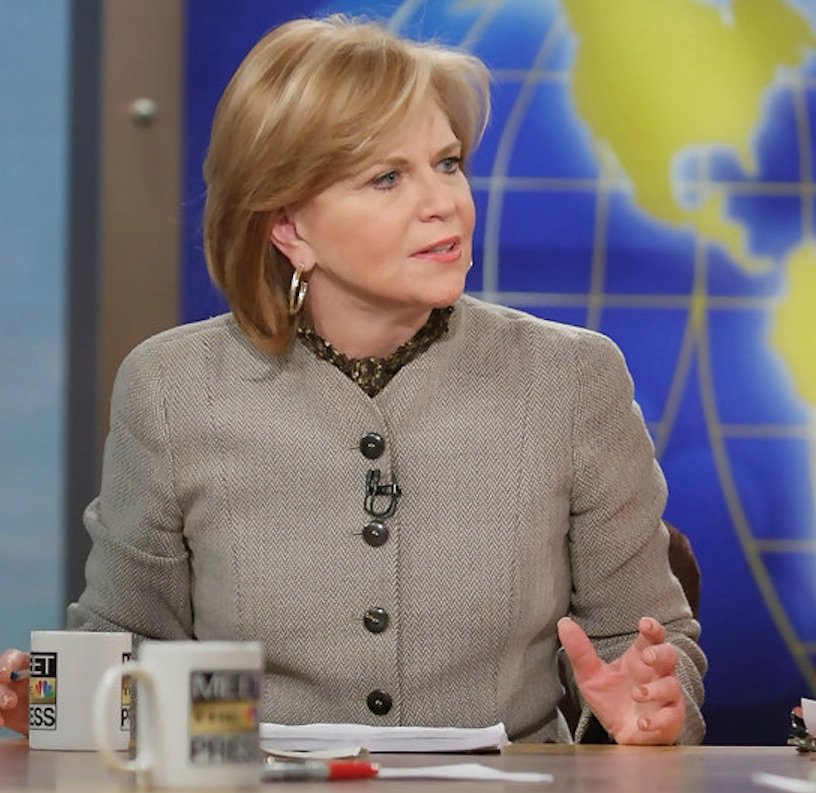
Carol Marin, Chicago journalist
By Casey Bukro
“Fake news began with the cavemen,” asserts Carol Marin, a leading Chicago television and print journalist.
A caveman returned to his cave, telling heroic stories about his exploits. “The demons he killed were enormous,” Marin assured an audience gathered to hear a newsroom ethics panel featuring some of the Chicago region’s best-known journalists. “It has always been a presence in our lives.”
The topic was “Fake News” versus “Real News.” The place was the WGN-TV studie in Chicago.
“Facts matter,” said Margaret Holt, the Chicago Tribune’s standards editor. “It all begins with facts.”
Holt recited a famous dictate of Chicago journalism: “If your mother says she loves you, check it out.” Take nothing for granted and check out everything.
“The job of journalism is to get facts, get facts clear,” said Holt.
Don Moseley, a political and investigative television producer offered this: “Specificity, for people who watch and read. Specificity.”
Moseley is co-director with Marin of DePaul University’s Center for Journalism Integrity and Excellence.
Marsha Bartel, WGN-TV investigative producer, believes “people have become too passive. You’ve got to do work on your own. I urge everybody to become better consumers.”
Maggie Bowman, a documentary file producer for Kartemquin Educational Films in Chicago, said audiences weigh information given to them.
“It’s up to us as storytellers to be transparent, like who funds us,” said Bowman. Resita Cox, a City Bureau reporter, agreed: “Explain how you got to where you got to.” City Bureau is a nonprofit civic journalism lab in Chicago.
Holt added: “Also, ask what’s the voice that is missing. Have more voices. Look at who is missing.”
This was the next question: How do you determine the reliability of sources, and whether to use anonymous sources?
A two-source rule is helpful, said Marin. “We spend a lot of sleepless nights looking at the pieces of the story,” including the motives of sources.
Moseley: “When you use anonymous sources, you vet them, their background and the foundation of their knowledge.”
Bartel: Most sources have a motive. “I take the sources as a lead” and look for documents to verify what the source said. “Work it and work it and keep adding pieces of information. I really try not to use anonymous sources any more, unless there is no other option.”
Moseley: “Think carefully before you use them.”
Next question was how social media complicates the lives of journalists.
Social media can help develop a story, said Cox, but “is the person telling the truth? Is this a story? You have to go the extra step and verify sources.”
Next question, what is a conflict of interest?
Holt pointed out that the late Jerome Holtzman, a former Chicago Tribune sports writer, wrote a book entitled, “No Cheering in the Press Box.” It warned sports writers to avoid taking sides in reporting sporting events, but Holt said that advice applies to all journalists.
“There has to be personal separation,” said Holt. “You cannot separate yourself from your social media presence. You have to be careful about how you present yourself in the professional world.”
Marin added: “We don’t take a side, we don’t belong to anyone’s club. It’s very hard to impress that on young journalists. We’re not there to support, but to present the facts.”
On the issue of copyright and fair use, Bowman said “fair use is a way of finding the balance in copyright material.” It’s difficult, she said, to use copyright material without paying exorbitant fees. She typically uses seconds or minutes of television clips for historical content, for example.
“As users of copyright material we continually defend our right to use it,” she said. Fair Use laws, she said, allows “free expression in our democracy,” adding “we can’t make things completely objective, but we can be transparent.”
For a source on fair use, free speech and intellectual property, Bowman suggested going to the Center for Media and Social Impact at cmsimpact.org. It is based in Washington, D.C.
On television, Marin said journalists often fail to explain the difference between news and analysis, a point of view. “In a lot of ways we fail.”
The next question wondered about a reporter’s rights in public and private settings, considering that journalists sometimes are told to leave the premises.
“If someone asks you to leave their house,” answered Cox, “you have to leave the house. But the sidewalk is public. Trespassing is a big thing. You have to figure your way around it.”
When covering government, said Marin, officials will try to set the rules.
“None of them really like the press,” said Marin. “But it is our job to cover them whether they like it or not. They are public officials.”
Holt added: “Arm yourself with education before you get into this. Army yourself. There is all kinds of training. There are things you can do even before you get into this position. We will fight. It’s incumbent on us to know what we have a right to.”
Bartel pointed to an alarming change in attitudes toward reporters since she first started covering presidential national conventions.
At the 2016 Republican National Convention in Cleveland, she said, “we were shouted at, called liberal media. I’ve never seen anything like that. It’s a very different atmosphere and felt like this was not a safe place to be.
“In this environment, you need to defend yourself and speak out” because there is a tendency to attack reporters.
On the issue of making mistakes, Holt said, “we all make mistakes and own your mistakes. What’s the point of making mistakes if you don’t learn from it? The people who make the most mistakes have the most challenging jobs. If you make mistakes over and over again, that is on you. Do the best you can in the time available. You build your credibility day by day.”
Moseley recalled that in speaking to a class, Holt pointed out that baseball players who sit on the bench during a game make no mistakes.
Race relations complicate the life of a journalist, Cox pointed out.
“I feel like we’re at war with each other,” she said. “I’m a woman of color and reporting in an era of Trump.” There are stories that don’t tell both sides, she said.
Marin said she opposes the idea of expecting African American reporters to cover African American issues. She would object to being identified as a white reporter with Swedish heritage, she said.
“We lose reporters who see nuances” by attempting to pigeon hole them according to ethnicity, said Marin.
Bartel added: “I think we are giving too much voice to the KKK. When I started I thought everything was black and white. Now it’s all shades of gray. The world is not right or wrong, black or white.”
In a similar vein, Cox said: “There are stories that are outright wrong and we don’t have to give a platform to those people.”
Holt said journalism often is “driven by white, older men. It’s difficult if you are a young reporter to balance this stuff. Part of what you bring to the job is you come from a different place. That is a valuable voice. Young people see the world differently from those with a more traditional view.”
Comprehensive guide to digital security: Motherboard tells how to guard against hackers and surveillance. Digital basics for privacy and messaging.
“As a consumer, you can’t control the bugs that your carrier leave open for hackers. But you can make it a bit harder for hackers to impersonate you with gullible tech support employees. The solution is easy, although not that many people know about it: A secondary password or passcode that you need to provide when you call your cellphone provider.”
News business faces charges of acting badly: Jason Schwartz quotes sexual harassment expert who says, “When Charlie Rose gets fired, the company (CBS News) means business.” Assessing newsroom cultures.
Why believe polls? asks Margaret Sullivan, who quotes a source saying: “Pollsters and prognosticators — and I would include the media — need to do a better job presenting the uncertainty.”
By Casey Bukro
Americans rank the three major major traditional commercial broadcast television networks—ABC, CBS and NBC—as the most credible news sources, according to a poll that explored the credibility of 13 print and digital news sources.
“Despite the proliferation of coverage of fake news and historically low opinion of the media, a majority of adults think most cable news networks and major newspapers are credible,” reported morningconsult.com, a nonpartisan digital media and survey research company based in Washington, D.C.
“Television news gets the highest number of people saying they are credible, with major newspapers such as the New York Times not trailing far behind,” wrote Laura Nichols. While the three major television networks took the top three slots, the Wall Street Journal and the Times followed immediately after them.
Historically speaking, this is an interesting turn of events. Fifty-five years ago, Newton Minow, then chair of the Federal Communications Commission, described television as a “vast wasteland” in speech at the 1961 National Association of Broadcasters convention.
Despite such poor expectations, television news has grown into a giant. As technology improved, it became more ubiquitous, even intrusive. And the medium proved itself able to show and tell complicated issues, in documentaries and far-ranging reports. Even the humble smartphone records news events, turning everyone into a television photographer.
Clearly, the medium is a crowd-pleaser. Critics might argue television reports serve largely as a headline service. But the format has won public favor. Even Minow, who continues to be asked his opinion of television, appreciates today’s “wider range of choice.”
The Pew Research Center reports that in 2016, Americans express a clear preference for getting their news on a screen—either television or digital—although “TV remains the dominant screen.”
Continue reading ‘Vast Wasteland’ Stakes Claim for News Credibility

By Casey Bukro
Here’s an interesting idea: The rush of newspaper management from print to digital journalism was a terrible mistake.
Cyber media was supposed to be the next big thing, the answer to plummeting circulation, advertising and readership. Soon it became clear that digital journalism got off on the wrong foot with a “bad business model,” this new way to get the news for free. That set an expectation of reluctance to pay for it.
“What if almost the entire newspaper industry got it wrong?” asks Jack Shafer on Politico.com. He is Politico’s senior media writer.
“What if, in the mad dash two decades ago to repurpose and extend editorial content onto the web, editors and publishers made a colossal business blunder that wasted hundreds of millions of dollars? What if the industry should have stuck with its strengths–the print editions where the vast majority of their readers still reside and where the overwhelming majority of advertising and subscription revenue come from–instead of chasing the online chimera?”
Fascinating speculation, and Shafer admits it’s a contrarian viewpoint, but he bases it on a study of 51 U.S. newspapers by two University of Texas researchers, H. Iris Chyi and Ori Tenenboim. They published a paper in Journalism Practice, an academic journal.
That paper, said Shafer, “cracks open the watchwords of the newspaper industry to make a convincing case that the tech-heavy web strategy pursued by most papers has been a bust.” That strategy, Shafer adds, “has been a losing proposition for most newspapers.”
Come to think of it, history shows an “all eggs in one basket” strategy can lead to disappointment. The U.S. economy’s reliance on petroleum led to high costs and disruptions by unreliable sources. The electric power industry relied heavily on coal until air pollution and other problems forced the industry to turn to alternative and cleaner energy sources, like solar power. Nuclear power was heralded as the technology that would turn deserts green, but safety concerns derailed some of those hopes.
Continue reading Digital Journalism: Another Failed Business Model?
By Casey Bukro
Usually, a journalist at the center of an explosive story would be congratulated. Not Billy Bush.
He’s the one cackling and giggling in the background of the 2005 tape as Donald Trump brags about kissing and groping beautiful women. “I just start kissing them,” Trump says. “It’s like a magnet. I just kiss. I don’t even wait.”
Egged on by Bush, Trump adds the remark about grabbing women by the genitals, using an obscene term, saying, “I can do anything.”
Released on the eve of the 2016 elections, the tape has been played countless times as commentators speculate about its likely impact on Trump’s chances of being elected president as the GOP contender.
No need to wonder about Bush, Trump’s enabler in that episode. NBC suspended him as a co-host of the “Today” show.
Bush was co-anchor of “Access Hollywood” at the time the tape was made. NBCUniveral Television Distribution, with NBC-owned station KNBC, has been solely responsible for producing “Access Hollywood” since 2004.
Bush was a rising star until the video train wreck. It might be a stretch to call him a journalist.
Television personalities often consider themselves entertainers or performers who want to put on a show. Brian Williams, for example, gave himself credit for doing things he did not do, making his reports more exciting until NBC learned of his fabrications, then suspended and reassigned him. Makes you wonder if these guys ever heard of journalism ethics.
William Hall “Billy” Bush is the nephew of former President George H.W. Bush and cousin of former President George W. Bush and former Florida Gov. John Ellis “Jeb” Bush.
The website MediaShift says Bush’s story “should serve as a cautionary tale for our modern age of journalism, where social media and reality television have oblitered the line between reporting the news and becoming part of it.”
Continue reading In Trump’s Locker Room Culture, Billy Bush Caught the Fungus
 Ethics AdviceLine for Journalists