Police hitched a ride on a news helicopter in pursuit of a shooting suspect. Wikimedia Commons photo.
By Casey Bukro
People sometimes think police and reporters are alike. Both chase criminals and other kinds of crooks to protect the public.
But they’re not the same, and a case involving a news helicopter in Boulder, Colorado, made that clear.
Boulder police were chasing a shooting suspect when they asked reporters aboard a helicopter shared by Denver TV stations for an airborne lift at the scene to search for the suspect.
A police officer boarded the copter. From his aerial vantage point, the officer was able to nab a suspect in cooperation with a SWAT team on the ground.
A police spokeswoman called the assist instrumental in the arrest, according to the Boulder Daily Camera, and noted that the news team got direct access to the police action.
Boulder police requested the ride from reporters after failing to get assistance from Denver Police or the Federal Bureau of Investigation.
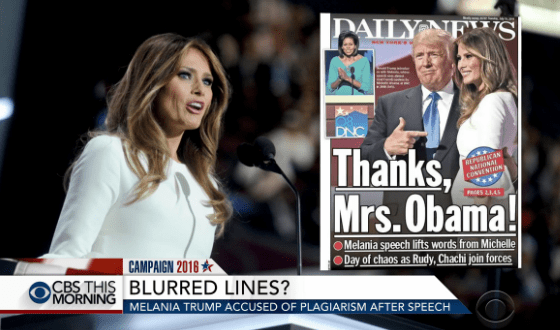
So what explains the umbrage over Melania Trump’s warmup speech at the Republican National Convention, extolling Trump family values and virtues of her husband, Donald, the Republican nominee for president?
“From a young age, my parents impressed on me the values that you work hard for what you want in life, that your word is your bond and you do what you say and keep your promise, that you treat people with respect,” said Trump to warm applause.
By the next day, political writers were pointing out that passage and others were almost exactly what First Lady Michelle Obama said at the 2008 Democratic National Convention.
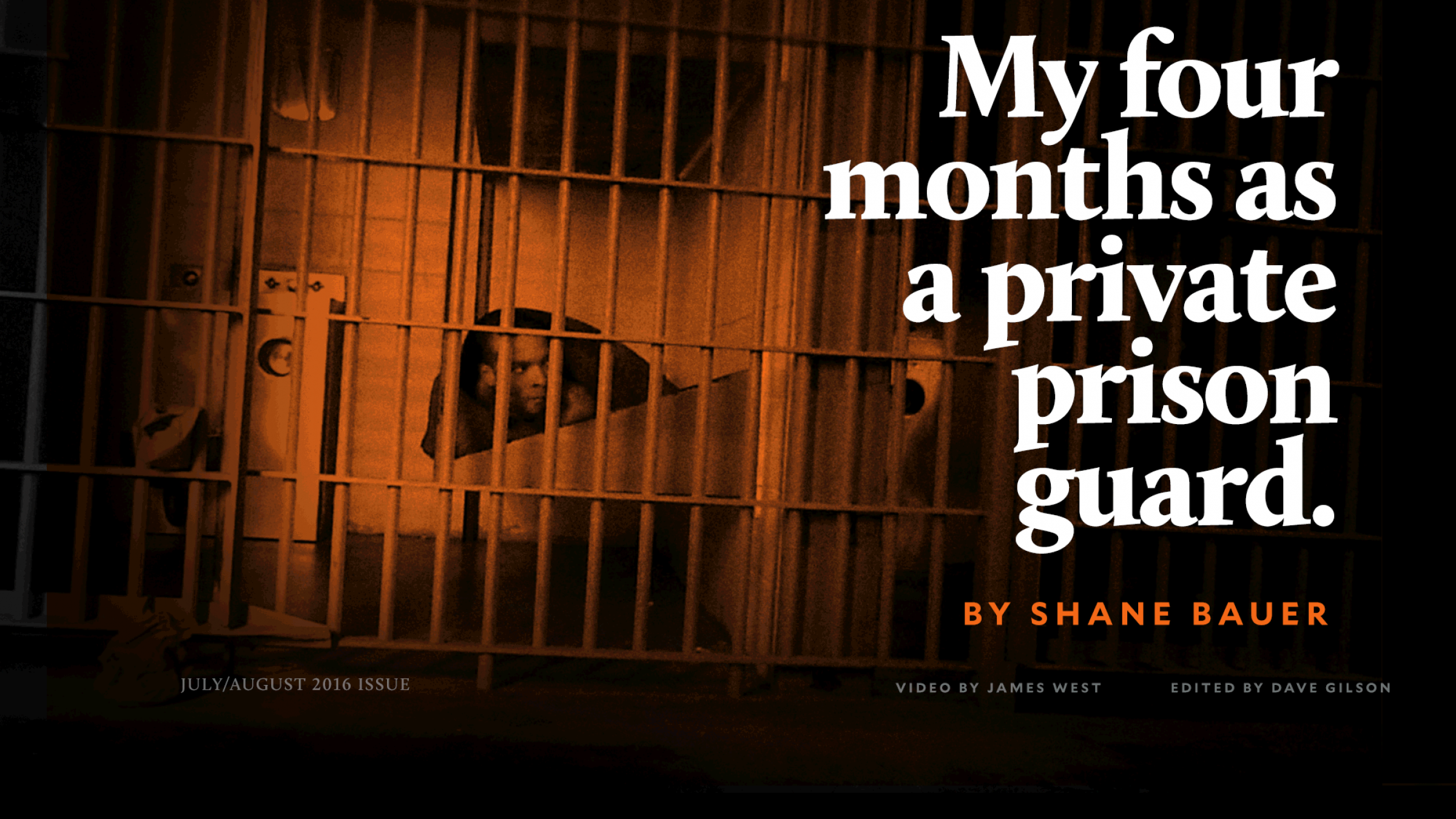
Mother Jones senior reporter Shane Bauer took a job at a state prison run by Corrections Corporation of America. His account is in the July-August 2016 issue.
By Casey Bukro
Just when you think an ethics issue has been put to rest, a Mother Jones magazine reporter spends four months working undercover as a guard at a corporate-run prison in Louisiana.
“I took a $9 an hour job as a private prison guard in Louisiana,” reporter Shane Bauer wrote in a 35,000 word, six-part report accompanied by two sidebar reports and an editor’s note, plus video.
“I saw stabbings, an escape and prisoners and guards struggling to survive,” Bauer wrote.
The publication’s editor-in-chief, Clara Jeffery, wrote that legal intimidation makes investigations of prisons rare, but “it’s time for journalists to reclaim our roots.” She pointed to an 1887 undercover investigation of a women’s mental asylum by New York World reporter Nellie Bly as an early example of the kind of work journalists should be doing. It triggered reforms.
It’s fair to say undercover reporting has fallen into disfavor these days because it often depends on deception, for which a publication can be sued. And it can make journalists look like liars.
“Avoid undercover or other surreptitious methods of gathering information unless traditional, open methods will not yield information vital to the public,” says the Society of Professional Journalists code of ethics.
An 18th-century Pirate Code of Conduct was stern but direct: Anyone found stealing from another crewman would have his ears and nose slit open and be set ashore.
Honor among thieves: Pirates and their captains agreed on codes of conduct. (Boston Public Library)
The penalty for bringing a woman aboard in disguise was death.
Anyone being lazy or failing to clean his weapons would lose his share of booty.
The punishment for hitting a man was 40 lashes on the bare back.
These are among the rules Bartholomew “Black Bart” Roberts and his crews are said to have adopted in 1722 to keep the peace among his bloodthirsty men and reward good conduct. There are many variations on buccaneer codes, however.
Even 300 years later, rewarding or defining good conduct is the purpose of codes of journalism ethics that continue to emerge.
A new Radio Television Digital News Association Canada code takes effect July 1, replacing a version adopted in 2011.
“This Code of Ethics is based on more than a century of journalistic experience and represents our membership’s guiding principles,” states a preamble that welcomes adoption by all practicing journalists.
Ethics violations close Britain’s News of the World. itv.com photo.
“Let not England forget her precedence of teaching nations how to live.” —Milton
By Casey Bukro
British journalists are more likely to pay sources for information than American journalists, but journalists in both countries agree that providing reliable information is their chief goal.
These are among the conclusions of a survey of 700 of the United Kingdom’s almost 64,000 professional journalists, by the Reuters Institute for the Study of Journalism at the University of Oxford.
On ethics and standards, said the report:
“There is a close correspondence between U.K. journalists’ views on ethics and their professional codes of practice. However, they are more likely to find justification for ethically contentious practices, such as paying sources, than journalists in the United States.
“Rank and file journalists in the U.K. push ethical boundaries more than their managers, and 25 percent of all journalists believe it is justified, on occasion, to publish unverified information.”
As for misrepresentation and subterfuge, U.K. journalists expressed mixed views about whether claiming to be somebody else is acceptable. Fifty-four percent believe it is never justified and 46 percent think it is justified on occasion. U.S. journalists, according to the study, are more disapproving, with only 7 percent agreeing that misrepresentation is justified on occasion.
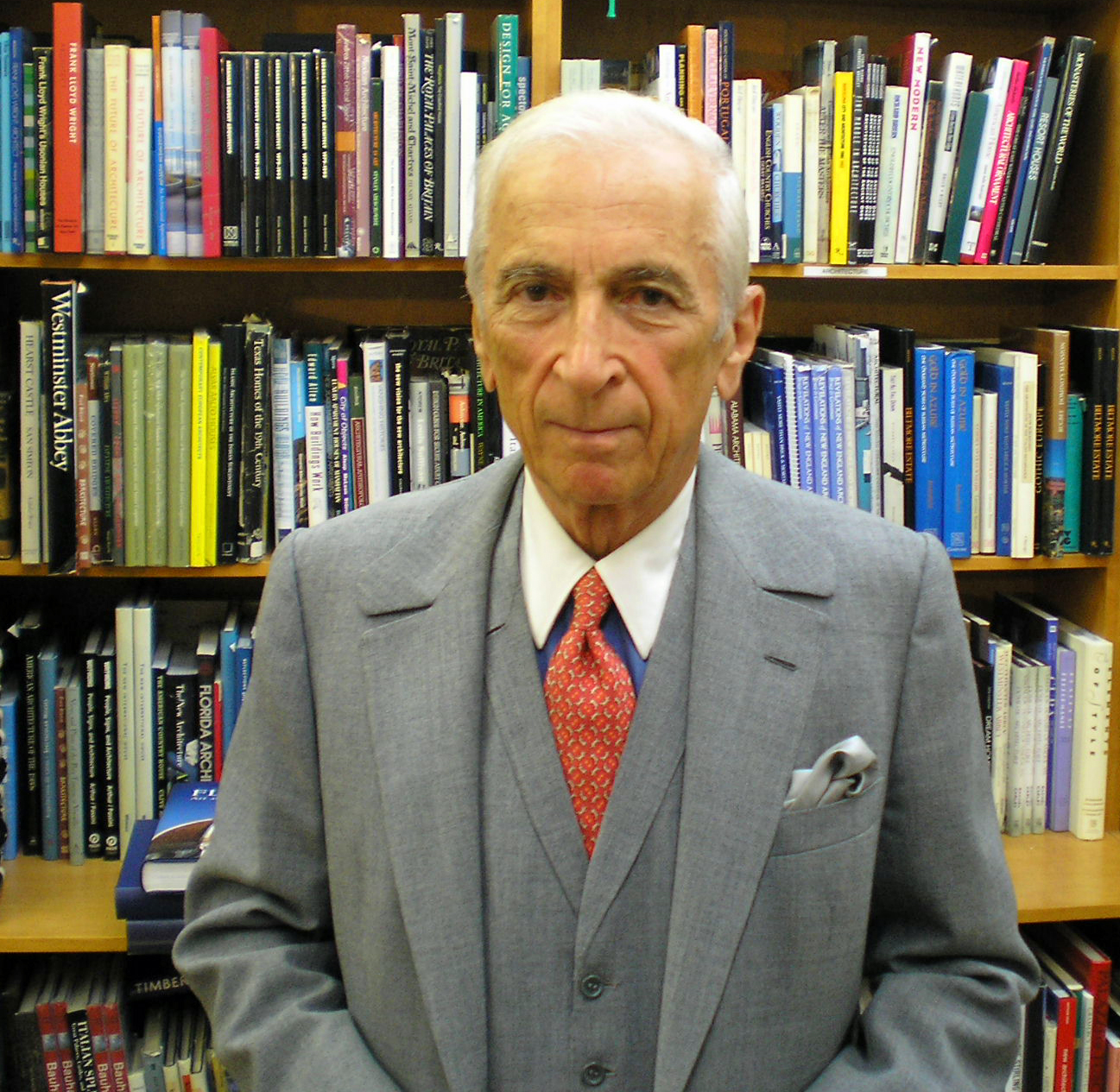
Update:“I should not have believed a word he said,” author Gay Talese said after the Washington Post informed him that property records showed that the subject of his latest book, a Peeping Tom motel owner, did not own the motel from 1980 to 1988. While Talese disavowed his latest book in the Post’s report, he and his publisher defended the book to the New York Times.
By Casey Bukro
One questionable ethical episode after another piles up in the New Yorker’s excerpt of a forthcoming Gay Talese book. In “The Voyeur’s Motel,” a serial Peeping Tom owner of a motel might have witnessed a possible murder. He invites Talese to join him in secretly watching a couple have sex.
By Talese’s own admission, there’s reason to believe some of the story is not true.
It’s possible the New Yorker was swayed by the author’s fame in publishing a titillating account of voyeurism. The Aurora, Colorado, motel owner kept detailed written accounts of what he saw through the ceiling ventilating system grille openings over more than a dozen rooms. Talese writes that he could not verify some details, including the murder. He shrugs it off as poor record-keeping.
Although the motel owner, Gerald Foos, admits to being a voyeur since the age of 9, he considers himself a researcher of human sexual habits. Talese knows the subject as well, having explored it in 1981’s “Thy Neighbor’s Wife.” He’s also an inventor of New Journalism, a style that depends heavily on subjective observation.
“Over the years, as I burrowed deeper into Foos’s story, I found various inconsistencies – mostly about dates – that called his reliability into question,” Talese wrote in the New Yorker excerpt. Most editors might balk at publishing a story on which the writer himself casts doubt upon its reliability. But the New Yorker forged ahead.
At least Talese points to the holes in his story. Under the rules of Old Journalism, that would have qualified “spiking” the piece.
Carol Marin in center of NBC 5 staff viewing the Laquan McDonald shooting video as it arrived before airing. (NBC 5 photo)
By Casey Bukro
“There is real agony to ethical dilemmas as we strive to be both competitive and excellent,” said Carol Marin, one of Chicago’s most respected journalists, as she launched DePaul University’s Center for Journalism Integrity and Excellence.
Marin will be co-director of the new center with her longtime television producer, Don Moseley. Both recently won Peabody Awards for their coverage of the police shooting of 17-year-old Laquan McDonald, the third Peabody for Marin and the second for Moseley.
Marin and Moseley were among the speakers at a reception celebrating the launch. The new center is dedicated to turning students into investigative reporters who dig hard, but with compassion for those afflicted.
Journalists do not always recognize or honor that delicate balance. In her remarks, Marin cited the McDonald case as an example of how hard it was to strike that balance at NBC-owned WMAQ-Channel 5.
“When the video of that night was finally released by the city under court order, we at NBC 5, from the president of the station all the way down to the working ranks of the newsroom, stood at the assignment desk together and watched it,” Marin said. “Saw the officer fire 16 shots. Saw an explosion of droplets fly out as the bullets hit. Saw Laquan McDonald spiral and fall to the ground.
“The pressure of being first to report is a real pressure,” she said. “But better to be late than be wrong.”
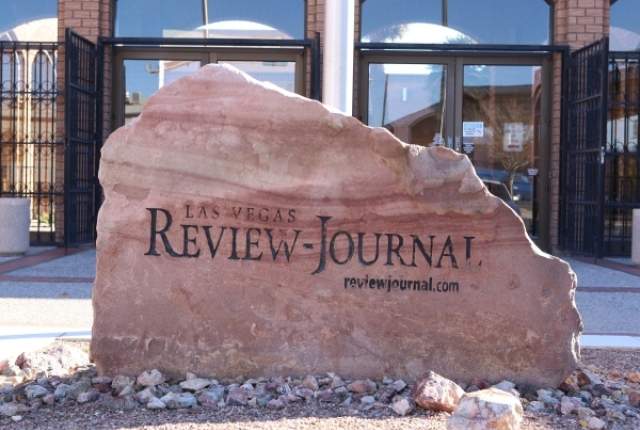
The proverbial other shoe dropped in the case of Las Vegas casino mogul Sheldon Adelson, who secretly bought the Las Vegas Vegas Review-Journal after days of denial.
The newspaper’s columnist John L. Smith resigned in protest after being told he could not write about Adelson or Steve Wynn, both Vegas casino magnates who unsuccessfully sued Smith for libel and drove him into bankruptcy through legal fees.
The paper’s editor, J. Keith Moyer, argued that it would be a conflict of interest for Smith to write about two of the most powerful men in town, who had sued him, not for his work on the newspaper, but for books he had written about them.
The one mentioning Adelson was titled “Sharks in the Desert.” The other book was titled “Running Scared: The Life and Treacherous Times of Las Vegas Casino King Steve Wynn.” Clearly, neither book offered much sympathy for either power player.
But this is a story about fabulous Las Vegas, a town with an explosive history of gambling, gangsters, show-business megastars, showgirls and entertainment. It’s in a constant state of drama or turmoil. All you have to do is walk through the downtown casinos at 3 a.m. and see the action on the roulette and blackjack tables to know things don’t slow down there.
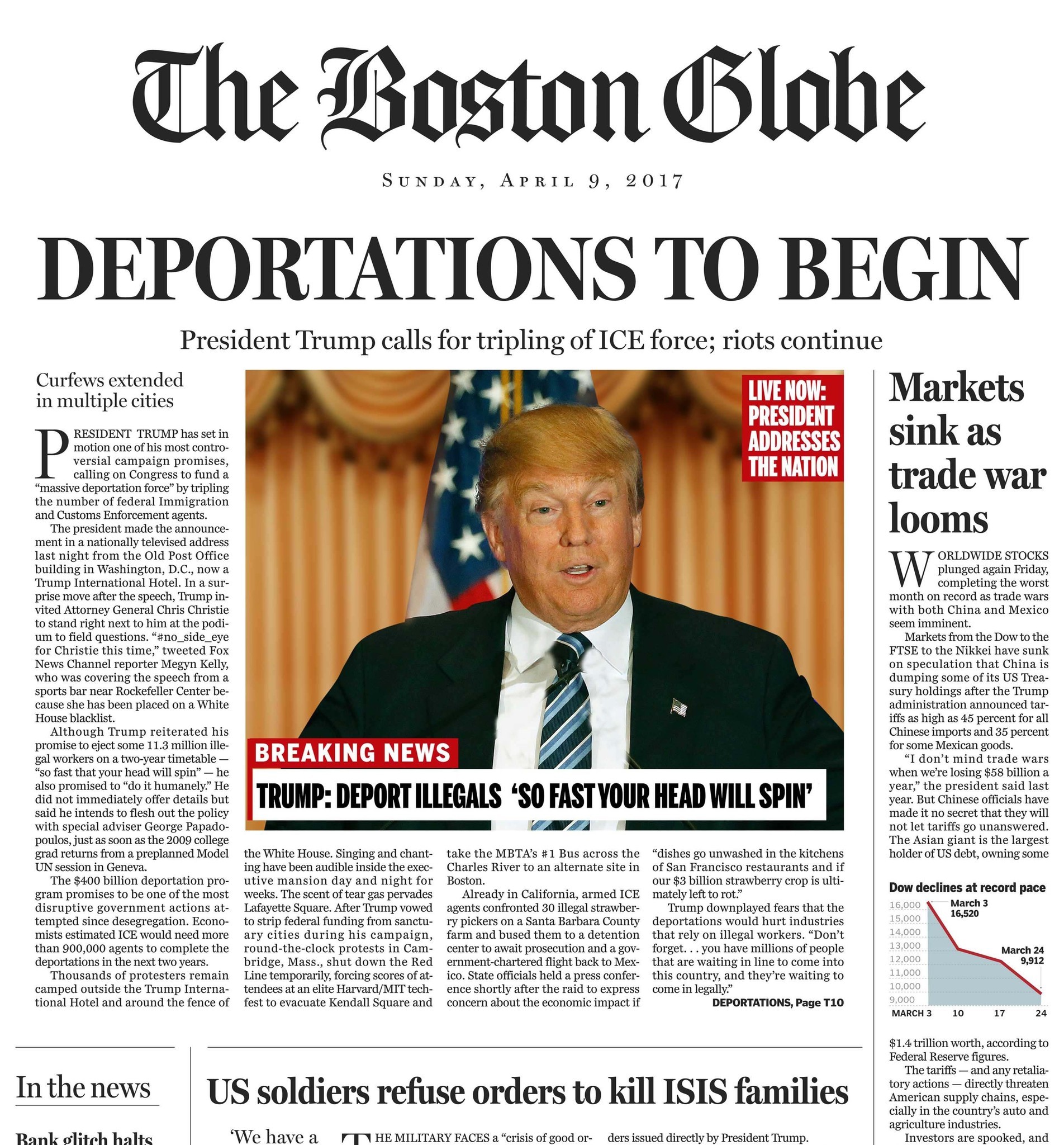
The Boston Globe added another twist to a bizarre political season by publishing a satirical front page intended to show a future based on presidential candidate Donald Trump’s words and proclamations.
“Deportations to Begin,” was the banner headline of the fake page, dated Sunday, April 9, 2017. “Markets sink as trade war looms,” read one headline. “New libel law targets ‘absolute scum’ in press,” read another.
Let me make it clear right now that this is not an attempt to cover politics. AdviceLine patrols the journalism ethics beat. We let the political writers, columnists, bloviators, commentators, prognosticators and fulminators deal with the uncertainties and comedy of political life.
The Boston Globe’s hypothetical front page did not run on the actual front page of the newspaper, but appeared inside as a front page of the Ideas Section of a Sunday edition of the Globe. It referred to an editorial, “The GOP must stop Trump.”
Reuters called the page a “parody.” CNN said “the faux front page resembles an April Fools’ Day prank by a college newspaper,” although it was nine days too late for that.
More importantly, the Globe was not joking. It was trying to show “Donald Trump’s America,” according to an editor’s note in the lower left-hand corner of the bogus page. “What you read on this page is what might happen if the GOP front-runner can put his ideas into practice, his words into action.” The editorial made the same point.
Halloween display at Fort Campbell taken down after complaints. Contributed photo from clarksvillenow.com.
By Casey Bukro
Lynching is no joking matter in the United States. News manager Robert Selkow found himself in the middle of a controversy over a Halloween display featuring three figures hanging from a tree.
“I got a photo on a smartphone,” recalled Selkow, who is site manager and news director of clarksvillenow.com, an online hyperlocal website affiliated with six radio stations serving Middle Tennessee and southern Kentucky. “It looked like a scene out of (the movie) ‘Mississippi Burning,’ black figures being hanged.”
He said it turned out to be “the most powerful image we ever published.”
Selkow contacted Ethics AdviceLine for Journalists in facing this sensitive issue, and agreed to discuss details of the case publicly.
The offensive Halloween display was in the residential area of the Fort Campbell military base on the Kentucky-Tennessee border near Clarksville.




 Ethics AdviceLine for Journalists