Category Archives: Accuracy

NewsGuard Fights Fake News


By Casey Bukro

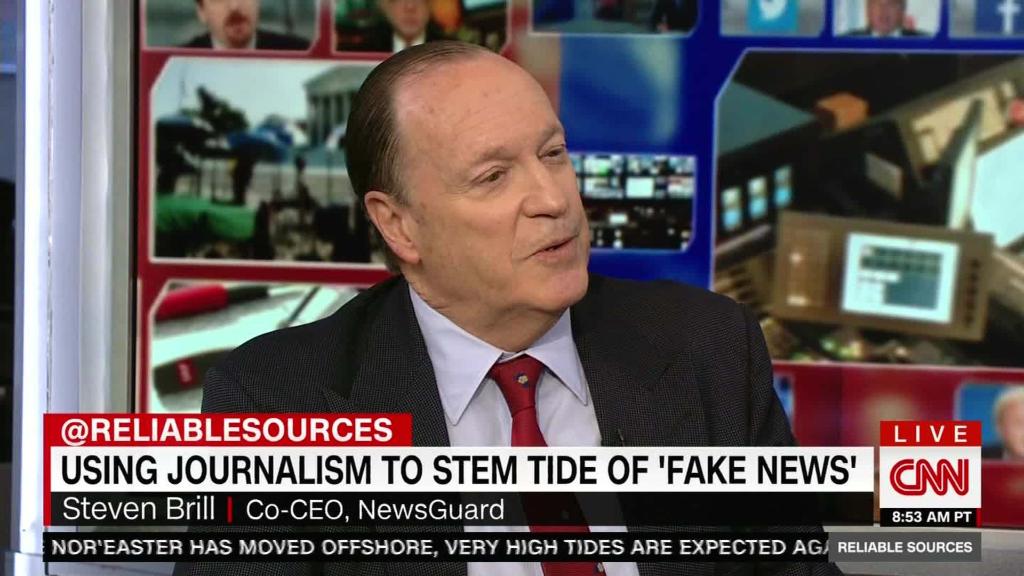
NewsGuard Technologies is recruiting veteran journalists to fight fake news by color-coding 7,500 news and information websites and video channels in the United States green, yellow and red.

A red rating goes to purveyors of consistently and intentionally false information or propaganda.

Now in the process of recruiting and training qualified journalists to be NewsGuard analysts, the enterprise, based in New York and Chicago, will begin operating in time for the mid-term elections in November.

The 7,500 news sources targeted account for 98 percent of the news articles read and shared in the English language online in the United States. After launching in the U.S., NewsGuard will expand to serve billions of people globally who get news online.

“Our goal is to help solve this (fake news) problem now by using human beings – trained, experienced journalists – who will operate under a transparent, accountable process to apply basic common sense to a growing scourge that clearly cannot be solved by algorithms,” said co-founder Steven Brill, longtime journalist and media entrepreneur.

The founders raised $6 million to launch NewsGuard.

In addition to color-coding websites or online publications, NewsGuard plans to issue Nutrition Labels that will explain the history of the site, what it attempts to cover, who owns it and who edits it. The labels also will reveal financing, notable awards or mistakes, whether the publisher upholds transparency standards or repeatedly is found at fault.

Two NewsGuard analysts will independently review and rate each site or online publication. One will draft the Nutrition Label and the other will edit it. The public can access these reviews to see why publishers got the green, yellow or red ratings.

Any disagreement between the two analysts is resolved by NewGuard’s senior editorial officers, including Brill, cofounder Gordon Crovitz, former Wall Street Journal publisher, James Warren, former Chicago Tribune managing editor and Eric Effron, former Legal Times editor and publisher.

Warren is NewsGuard’s executive editor and Effron is managing editor.

The lead investor in NewsGuard, among 18 investors, is Publicis Groupe, based in Paris. It is a French multinational advertising and public relations company, and the oldest and one of the largest marketing and communications companies in the world, by revenue.

Psychographics And Electoral Corruption

Psychographics and electoral corruption: Adrian Chen finds that “the model of the voter as a bundle of psychological vulnerabilities to be carefully exploited reduces people to mathematical inputs.”

Data-obsessed political marketing can undermine democracy, he writes.

Avoiding Off-The-Record Interviews


Indira Lakshmanan calls off-the-record interviews a trap.

“We earn public trust by providing true and accurate information and being clear with our audience and our sources about the ground rules under which we gather news,” she writes. “If news is in the public interest and we can’t inform the public, we’re not doing our jobs.”


Unplugging From The Internet

Unplugging from the internet, a questionable experiment: Dan Mitchell questions the accuracy of a New York Times columnist’s claim that he went offline, dispensing avuncular advice to his readers about the benefits of slowing down one’s news consumption.

“But he didn’t really unplug from social media at all,” writes Mitchell.

Small Newspaper, Big Punch

Asbury Park Press, a small newspaper known for big exposes, writes Matthew Kassel.

Its chief of news and investigations says every big project needs three components: A human element (for pathos), a new finding (preferably unearthed through public records requests) and a solution or two (for purposes of accountability).

Shunning Hacked Emails

The case for shunning hacked emails: Nathaniel Zelinsky calls for a “responsible journalism pledge” to prevent Russian from meddling in U.S. elections.

“Most reporters distance themselves from questions about the origin of information, so long as it remains verifiable, while tech companies tend to believe no one should restrict access to information on the internet,” he writes. “But at this particularly dangerous point in our nation’s history, reporters and Facebook alike just might be willing to embrace a new ethical obligation out of a sense of civic duty.”

Shootings Changing Education Beat

Post Florida mass shooting: Alexandria Neason says pay more attention to local reports of shootings and bomb threats, which are shifting education coverage.

“For local reporters working the education beat, local threats have dominated their attention the past few weeks, even if they’ve only been a blip on the national radar…,” she writes.

Profiling Killers Or Victims?

Profiling killers or victims?

Russell Frank writes that mental health professionals urge journalists to focus less on the perpetrators of shooting rampages and more on the victims.

“The question that arises with every mass shooting is whether these instant illustrated profiles of the killers do more harm than good,” he writes.