Ethics Scan: Remaining Media Ombudsmen Uphold Standards

By Casey Bukro

Ombudsmen and public editors often are described as a dying breed, yet those who remain clearly take the job seriously.

A 2014 University of Nebraska graduate thesis finds there are about a dozen ombudsmen working now in U.S. news organizations, down from about 40 or 50 earlier in the decade. Internationally, however, the report finds ombudsmen growing in number and popularity.

In these times of job insecurity, ombudsmen seem to be taking more risks than most journalists. But they toil on.

In the U.S., Margaret Sullivan, the New York Times public editor, attracted attention for pointing to a conflict of interest Times editors failed to flag or apparently even to notice in an article titled “The Transformers.”

The article profiled five technology entrepreneurs, including Airbnb CEO Brian Chesky.

Tipped by readers, Sullivan discovered the article was written by the wife of a major investor in Airbnb, and that the writer was not a NYT staffer. The article appeared in T, the style magazine of the Times, and lauded entrepreneurs “harnessing goodness through technology.”

Sullivan came down hard on her employer in an article titled “Conflict of Interest in T Magazine’s Tech Article.”

Among readers who contacted Sullivan about the article, one wrote, “my question is about an undisclosed conflict” in an article that “reads as uncritical P.R.” for Airbnb without disclosing the relationship between the article’s author and the investor in Airbnb.

“This is a case in which the financial conflict is so clear, and the spousal tie so close, that a disclosure would not have been enough. A different writer altogether would have been a far better idea, and, to my mind, the only right one,” Sullivan wrote.

Sullivan found that T Magazine failed to live up to the Times’s high journalistic standards. Online, the article carries a disclosure about the conflict.

In South Africa, news24 reported that complaints to the Press Ombudsman faulted the Sunday Times for information it did not report, rather than what it did report about a tax-collecting agency of the South African government.

The Sunday Times published a series of reports on an alleged rogue unit in the agency accused of running a brothel and spying on President Jacob Zuma. Officials accused in the scheme resigned, but told the ombudsman “there is an alternative narrative” that contradicts the Times reports.” A lawyer said the Times had been selective and unbalanced in its reporting.

The Sunday Times of South Africa is a weekly newspaper. The ombudsman is pondering the case.

Here’s a long, scholarly look at the Press Council of South Africa by Dr. Julie Reid.

Despite the brain-twisting nature of the job, others still step up. ESPN recently named James M. Brady, formerly of the Washington Post, as its public editor. In making the announcement, company officials said his goal would be transparency and advocacy in an increasingly multimedia world.
Ethics Scan: Media Bias in Poland and Britain


4c9ed35c-e03c-47d6-a453-7fda3790d05f.file

By Casey Bukro

Media ethics in nations around the globe can be as controversial, and thought-provoking, as they are in the United States. They are worthy of an occasional look, which is the goal of Ethics Scan.

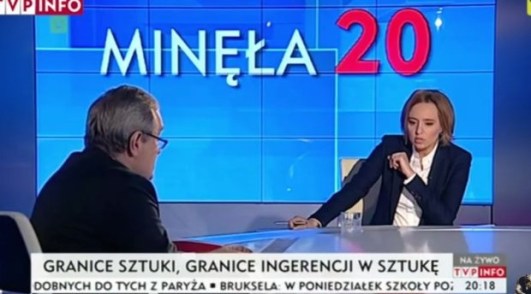
A Polish public broadcaster is back to work after a suspension stemming from her tough interview with Poland’s deputy prime minister over his attempts to block a controversial theater production. He accused TVP, the public broadcaster in Poland, of “manipulating” public opinion.

The interviewer was suspended hours after the interview when the minister complained that her aggressive techniques were contrary to the expected standards of public television. However, TVP’s ethics committee decided that the journalist did not violate network ethics standards and was justified in grilling the government official, whose comments about TVP and its journalist were considered “unjust and hurtful.”

In the United Kingdom, the British Broadcasting Corp. discovered from a viewer survey that they wanted “less bias and political opinion in journalism and news reports.”

The BBC Trust, the network’s governing body, also found that viewers wanted fewer game shows and cooking programs, but more high-quality drama. BBC is the world’s oldest national broadcaster, dating to 1920.

In its analysis of the survey results, BBC said it was not clear how it was biased, since respondents on both sides of the political spectrum complained the corporation was against them.

A Second Look at the Mizzou Uproar, Pros and Cons


thefederalist.com photo


By Casey Bukro

Since all the Ethics AdviceLine for Journalists consultants teach on campuses across the country, it seemed logical to ask them how they and their students reacted to events that played out at the University of Missouri over press freedoms and protests over racial tensions.

An earlier AdviceLine blog post focused on what appeared to be an attack on First Amendment press freedoms when faculty member Melissa Click attempted to banish two student photographers from the protest scene, for which she later apologized.

Hugh Miller, assistant professor of philosophy at Loyola University Chicago, took what he called a contrarian view.

“I disagree,” said Miller, citing a lawyer friend who pointed out that the First Amendment of the U.S. Constitution “is a restriction imposed upon the state, not upon individuals…. It imposes no restrictions on individuals.

“Reporters are perfectly free to jam a microphone in my face – no government authority can prevent them from doing so. And I am perfectly free to tell such reporters to get stuffed if I don’t want to talk or have them around. In so doing I do not violate the First Amendment. The First Amendment is not, IMHO [in my humble opinion], a license for journalists to demand, and get, access to coverage.

“Whether the contested access is on public property makes little difference to the First Amendment issue (though it may be important in a property rights sense). Nor does the First Amendment impose duties or obligations upon individuals to afford journalists the opportunity to cover them.

Continue reading A Second Look at the Mizzou Uproar, Pros and Cons →

Mizzou Students and Faculty Flunk Press Freedom Test

Heated: Activists at the University of Missouri were caught on camera forcing photographer Tim Tai (left) off the public quad on Monday, during their celebrations over the resignation of President Tim Wolfe

Photographer Tim Tai explains First Amendment

By Casey Bukro

Amid the chaos of student and faculty protests over racial tensions at the University of Missouri, student photographers Tim Tai and Mark Schierbecker stood out as young men who understood their First Amendment rights to photograph and videotape the historic event in a public place.

Sadly, Tai and Schierbecker were badgered, harassed and bullied by students and faculty while trying to do their jobs.

Schierbecker videotaped Tai as he was harangued, surrounded and pushed by a crowd of students and older individuals who held their hands in front of his camera and would not allow him to move forward.

“We will just block you,” says one. “You need to go.”

Others chanted, “hey, hey, ho, ho. Reporters have got to go.”

Another says, “You gotta go, bro. You lost this battle, bro. Just back up.”

To his credit, Tai stood his ground and explained patiently, “The First Amendment protects your right to be here and mine.” He added, “I’ve got a job to do.”

Continue reading Mizzou Students and Faculty Flunk Press Freedom Test →

A Code of Ethics All Your Own

By Casey Bukro

Everyone is in favor of ethics, until you get into the details. That’s when the fights break out.

This is something the Online News Association is likely to learn as it makes its way through a project called the Build Your Own Ethics Code. Journalists are invited to crowdsource and document their ethical practices.

Code of Ethics
Can Stock Photo

I have some personal experience in this realm. Back in 1972, I was national professional development committee chairman for Sigma Delta Chi, later named the Society of Professional Journalists.

The public, then as now, tended to have a low opinion of journalists. A public opinion poll in 1972 showed only 19 percent of the public had confidence in the press. Garbage collectors ranked higher.

Hoping to counteract that, delegates at the 1972 convention in Dallas adopted a resolution asking the group to do something about that low image of American journalists. That resolution was sent to my committee.

We decided to write a code of ethics reflecting SDX values and standards, acting on a constitutional mandate to inform the public as part of journalism’s role in a democracy. We wanted to show that journalists do have standards, and can act in an ethical manner.

Continue reading A Code of Ethics All Your Own →

A Reporter Discovers the Pain of Being Ethical

By Casey Bukro

It’s hard to be good and ethical. Sometimes it comes at a cost.

Amelia Pang, metro reporter for Epoch Times in New York, discovered this when she called the Ethics AdviceLine for Journalists in 2012 and asked a question that AdviceLine gets sometimes:

When calling a news source, is it necessary for reporter to admit to being a reporter? That is, not say that she is a reporter, unless asked?

It is a question that arises among young reporters, those learning the ropes or those who work for organizations without printed standards or spelled out ethical guidelines that can leave a reporter wondering what to do.

In Pang’s case, she called AdviceLine on advice from a colleague.

“I am doing an article about a controversial homeless shelter in New York City,” Pang told AdviceLine adviser Hugh Miller, an assistant professor of philosophy who teaches ethics at Loyola University Chicago.

“The shelter is located in a very rich area, therefore many residents have been quite unhappy about it. The shelter has received a lot of bad press since they opened last year, and now they are reluctant to talk to any media.”

Continue reading A Reporter Discovers the Pain of Being Ethical →

Killing the Messenger, Live: Journalists Killed on Video

By Casey Bukro

Killing the messenger takes new meaning when you see it live, in living color, as happened in the deaths of a Virginia television news reporter and her cameraman.

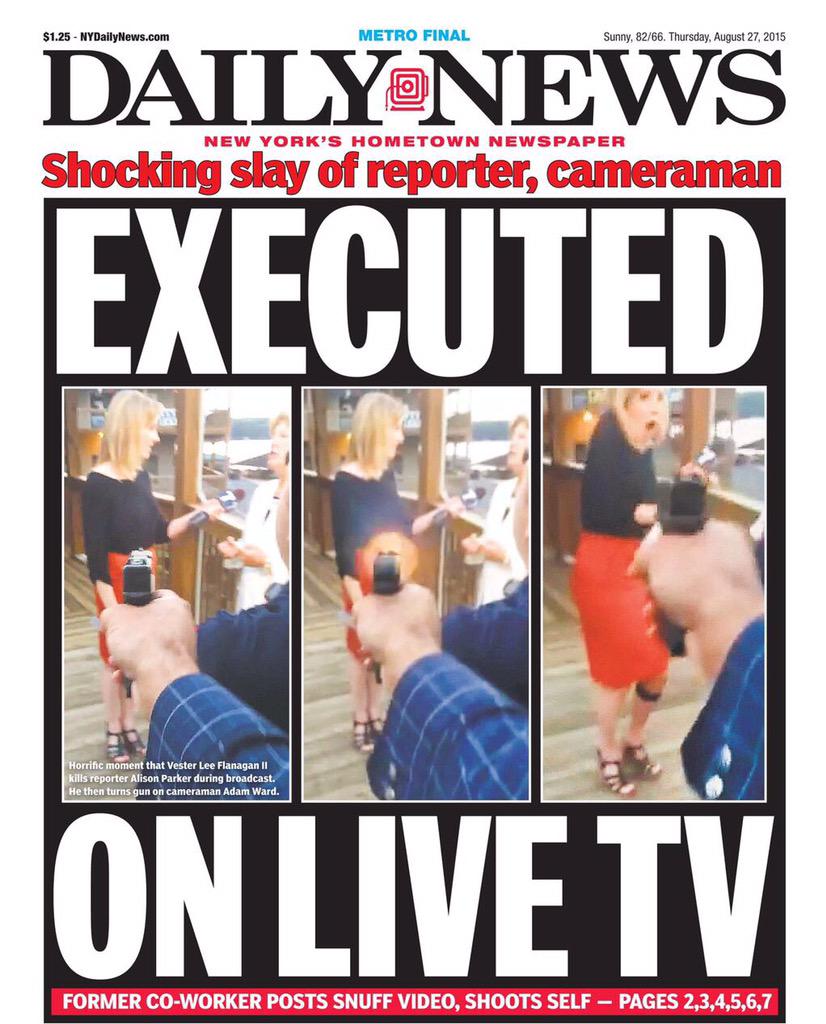
WDBJ correspondent Alison Parker was conducting an on-air interview in a Moneta, Va., shopping center when she and the photographer, Adam Ward, were shot and killed by a disgruntled former colleague who also videotaped the attack and put it on social media.

The New York Daily News gave the murders front-page display, in very graphic detail than some TV outlets shunned.

Embedded image permalink

Killings on video are increasingly common these days. Journalists are among those targeted now, becoming victims and not just reporters of  events. Parker and Ward’s names are now added to a list that included James Foley and Daniel Pearl.

Tech-savvy killers use social media and the internet these days to show their crimes.

The Islamic State group released a video in 2014 showing Foley, clad in an orange gown, kneeling on the ground next to a man dressed in black holding a knife. Foley makes a short statement and then is decapitated.

In 2002, Pearl, a correspondent for The Wall Street Journal, disappeared while on assignment in Karachi, Pakistan. Video shown around the world via the Internet showed Arab extremists cutting his throat, then decapitating the reporter.

In this world of social media, terrorists don’t need reporters to tell their message. Terrorists can do that themselves now, and one way of doing that is killing reporters.

Continue reading Killing the Messenger, Live: Journalists Killed on Video →

Charlie Hebdo’s Dead Boy Cartoon Triggers Global Ire

Photo published for Charlie Hebdo Mocks The Death of Syrian Child Aylan Kurdi

Nilufer Demir/Reuters photo

By Casey Bukro

Charlie Hebdo, the French satire newspaper, published a cartoon of a drowned 3-year-old boy and showed why codes of ethics should warn against satirical cruelty.

Satire can be cruel, inspiring or infuriating. Maybe all at once. But are there limits to this form of freedom of expression?

Charlie Hebdo clearly touched a nerve by joking about the boy lying facedown in the surf of a Turkish beach, after drowning with his mother and a brother while attempting to flee war-torn Syria, becoming a stark symbol of Europe’s growing migrant crisis.

The cartoon was based on photos of the boy, first described as Aylan Kurdi and corrected later as Alan Kurdi.

“The haunting photograph of 3-year-old Aylan Kurdi, the Syrian boy whose lifeless body washed up on a Turkish beach last week, has been inescapable; even if you’ve just seen it once, it’s an image you can’t forget,” wrote Carolyn O’Hara, managing editor of The Week magazine.

O’Hara compared it with other grim photos of the past that forced the world to confront some tragic realities, such as the the 1972 photo of a naked Vietnamese girl screaming in agony from napalm burns, the 1993 image of a vulture stalking a starving Sudanese toddler and the hooded Abu Ghraib prisoner with outstretched arms.

It could be argued that these images served a greater purpose. Can the same be said about Charlie Hebdo?

Continue reading Charlie Hebdo’s Dead Boy Cartoon Triggers Global Ire →

Health Care Freelancers Face Tough Ethics Challenges

By David Ozar and Casey Bukro

Freelancing is a tough way to make a living – even tougher as downsized journalists turn to freelancing.

For writers specializing in health care, it’s especially challenging because of the ethics issues faced in navigating the cross connections between clients who want stories written for them or about them. Or both.

“Ethical guidelines for subspecialties may vary,” Tara Haelle in an email exchange with the Ethics AdviceLine for Journalists.

A freelancer herself, Haelle traced the obstacles in a story that appeared on the Association of Health Care Journalists website.

Tara Haelle
Tara Haelle

Haelle calls it the conflict-of-interest maze: “Ensuring that work for one client doesn’t create a conflict for another, present or future.” Though that might sound simple, Haelle said it isn’t because freelancers work for companies, journalism publications, universities and foundations or as consultants.

Haelle went to several sources, asking how she can avoid ethical conflicts of interests under the conditions in which she works and found that ethical guidelines vary. One source said “there’s no clear answer.” Another said journalists should “decide for ourselves what we think is ethical behavior.”

That sounded like a challenge for the Ethics AdviceLine for Journalists, which has a staff of five university ethicists to answer questions of the kind posed by Haelle.

One of them, David Ozar, is professor of social and professional ethics in the department of philosophy at Loyola University Chicago. AdviceLine asked Ozar to read Haelle’s story and offer his perspective on how he would have answered her call for guidance on ethics.

Continue reading Health Care Freelancers Face Tough Ethics Challenges →

Ombudsman: ‘Loneliest Job in the Newsroom’

Kathy English
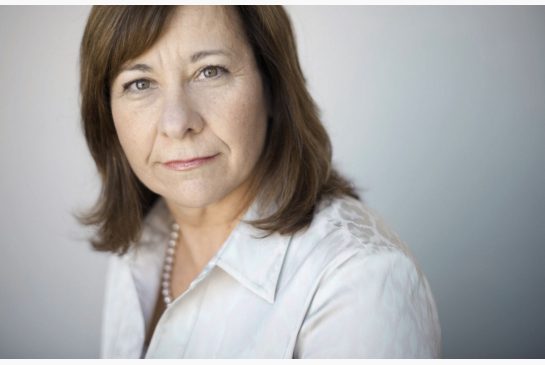
Kathy English, Toronto Star public editor (Toronto Star photo by Lucas Oleniuk)

By Casey Bukro

I’m a sucker for stories about news ombudsmen, or public editors or readers representatives, even though they are branded these days. I can’t help myself. It’s a compulsion, an addiction.

Think about it: An ombudsman might walk up to the top boss and tell him he’s wrong. She might pick through the details of a complicated story, then defend a reporter for doing a thankless, difficult or even dangerous job, or discover that a reporter did not go far enough to find the truth, and then say so publicly.

It’s almost heroic.

I suppose I also admire ombudsmen because what they do is so idealistic: speaking up without fear or favor, letting the chips fall where they may.

Maybe that’s why there are only about 20 of them working at American news outlets today, according to a Politico article, “The State of the Ombudsman in 2015.” That’s about half as many as a decade ago, according to USA Today.

Still, ombudsmen in the U.S. and elsewhere trudge on.

Kathy English, public editor of the Toronto Star in Canada, recently wrote an article titled, “So what does the public editor do?” Readers had asked her to explain her job, which she’s done for eight years.

Continue reading Ombudsman: ‘Loneliest Job in the Newsroom’ →