Denver Post Defiance Lauded

Denver Post defiance lauded: Ken Doctor sees a turning point in local American journalism’s descent into oblivison.

“And by standing up for their community, they stand up for themselves,” he writes. “This is the relationship that must be renewed. The loss here isn’t in mere journalism jobs; it’s in community knowledge and self-government.” He cites “vulture owners hollowing out local news.”

How Women Should Be Viewed

How women should be viewed: “It’s hard not to notice the magazine in checkout lines with the perfect women on the covers and the alluring headlines,” writes Joe Hight.

“It’s not uncommon to see those types of images in many magazines and on TV ads and social media. We and our children are flooded daily with thousands of messages telling us that we must be perfect to be accepted or successful. The damage is rampant.”

Retracting A Suicide

Retracting a suicide: Son found dead with a noose around his neck. Coroner rules it a suicide and the Toledo Blade reports it that way. The mother objects, the coroner changes the ruling and the mother wants the Blade to delete the suicide report from its online archives.

“But nobody can change old printed copies of any newspaper — and to be honest, online newspapers need to reflect what was actually published both in electrons and on newsprint,” writes the ombudsman. “The past is not always pretty, nor even accurate.”


Doubt Cast On Pulse Coverage

Doubt cast on Pulse coverage: Melissa Jeltsen writes that the widow of the man who killed 49 inside a gay nightclub in Orlanda, Florida, was wrongly accused.

“In the wake of the shooting, the media and public focused on certain details, many of which were later determined to be unfounded, and discounted others….,” she writes.

Facebook Trust Guidelines

Facebook guide to what to read, trust and share in News Feed:

Based on research, “we’re making it easy for people to view context about an article, including the publisher’s Wikipedia entry, related articles on the same topic, information about how many times the article has been shared on Facebook, where it has been shared, as well as an option to follow the publisher’s page,” write Taylor Hughes, Jeff Smith and Alex Leavitt.

New Poll: Trust In Media Weakens


New poll: Trust in media weakens.

“Large majorities of the American public believe that traditional media outlets engage in reporting fake news and that outside sources are actively trying to plant fake stories in the mainstream media,” reports the Monmouth University poll. Editiorial decisions are called “fake news.”

Bias Seen In Facebook Coverage

Bias seen in Facebook coverage: Mathew Ingram writes that “at least some of the enthusiasm with which media companies are covering Facebook’s trials and tribulations stems from their resentment over how the company has stolen their readers and advertising revenue.”

Media executives failed to adapt quickly enough to the internet, and then in a desperate attempt to catch up, handed too much of their business to Facebook and Google, he writes.

Thriving On Rejection

Thriving on rejection: Jackie Spinner writes about an Illinois Associated Press reporter who finds stories in Freedom of Information request rejections.

“Report on outlandish denials or those about significant public issues,” says the reporter. “Access to actions by public bodies is a huge issue and denials need to be exposed.”


“Activist” A Dangerous Word

“Activist” is a loaded word, writes Tara Murtha.

“Certainly, there are occasions when ‘activist’ is an appropriate way to identify a participant in an article,” she writes. “Often, though, identifying someone as an ‘activist’ is a subtle but effective way to degrade the person you are quoting and their perspective by erasing credentials and professional expertise.”


NewsGuard Fights Fake News


By Casey Bukro

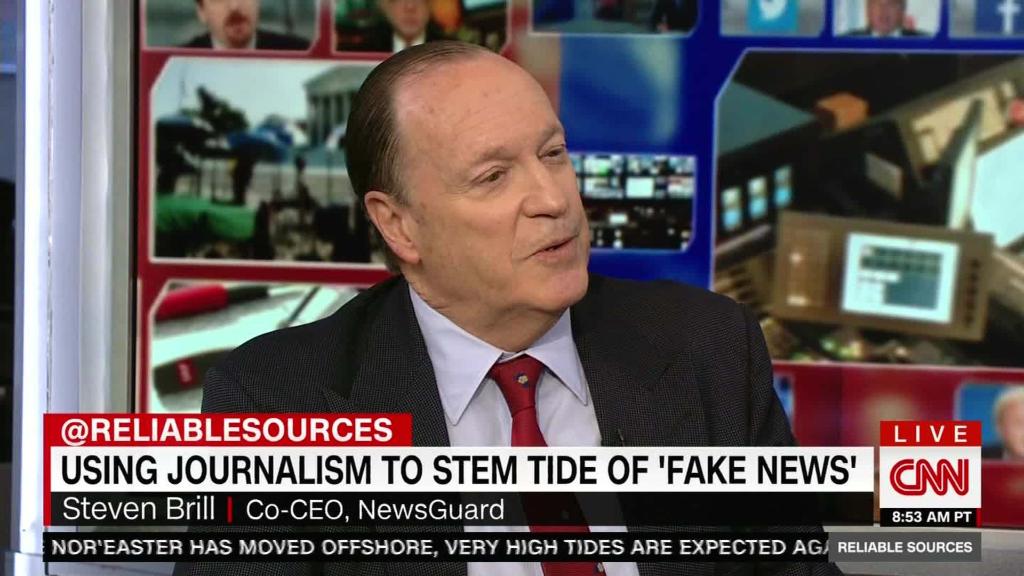
NewsGuard Technologies is recruiting veteran journalists to fight fake news by color-coding 7,500 news and information websites and video channels in the United States green, yellow and red.

A red rating goes to purveyors of consistently and intentionally false information or propaganda.

Now in the process of recruiting and training qualified journalists to be NewsGuard analysts, the enterprise, based in New York and Chicago, will begin operating in time for the mid-term elections in November.

The 7,500 news sources targeted account for 98 percent of the news articles read and shared in the English language online in the United States. After launching in the U.S., NewsGuard will expand to serve billions of people globally who get news online.

“Our goal is to help solve this (fake news) problem now by using human beings – trained, experienced journalists – who will operate under a transparent, accountable process to apply basic common sense to a growing scourge that clearly cannot be solved by algorithms,” said co-founder Steven Brill, longtime journalist and media entrepreneur.

The founders raised $6 million to launch NewsGuard.

In addition to color-coding websites or online publications, NewsGuard plans to issue Nutrition Labels that will explain the history of the site, what it attempts to cover, who owns it and who edits it. The labels also will reveal financing, notable awards or mistakes, whether the publisher upholds transparency standards or repeatedly is found at fault.

Two NewsGuard analysts will independently review and rate each site or online publication. One will draft the Nutrition Label and the other will edit it. The public can access these reviews to see why publishers got the green, yellow or red ratings.

Any disagreement between the two analysts is resolved by NewGuard’s senior editorial officers, including Brill, cofounder Gordon Crovitz, former Wall Street Journal publisher, James Warren, former Chicago Tribune managing editor and Eric Effron, former Legal Times editor and publisher.

Warren is NewsGuard’s executive editor and Effron is managing editor.

The lead investor in NewsGuard, among 18 investors, is Publicis Groupe, based in Paris. It is a French multinational advertising and public relations company, and the oldest and one of the largest marketing and communications companies in the world, by revenue.