Casey Bukro was inducted into the Chicago Journalism Hall of Fame in 2008 for outstanding contributions to Chicago journalism, after a 45 year career with the Chicago Tribune. Bukro retired from the Tribune in 2007 as overnight editor. He had pioneered in environmental reporting and in 1970 became the first full-time environment specialist at a major metropolitan newspaper in the United States and covered major developments on that beat for 30 years. He won the newspaper’s highest editorial award in 1967 for a series on Great Lakes pollution. The Society of Professional Journalists awarded Bukro its highest honor, the Wells Key, in 1983 for writing that organization’s first code of ethics. He is a past president of SPJ’s national ethics committee and a past president of the Chicago Headline Club. Bukro graduated with bachelor and master degrees from Northwestern University’s Medill School of Journalism. In 1998, he received the Northwestern University Alumni Association’s alumni service award for 17 years of volunteer service to the university. He has lectured in environmental journalism and journalism ethics at Northwestern, the University of Chicago, DePaul University, Loyola University Chicago, Columbia College, Columbia University and others. Before joining the Tribune staff, Bukro worked at the former City News Bureau of Chicago and the Janesville Gazette, Janesville, Wis.
View all posts by cbukro →
Covid-19 taking a mental health toll. Web24.news photo.
By Casey Bukro
Ethics AdviceLine for Journalists
Writers often resort to the word “dystopian” to signify an imaginary place of misery and dread, a place beloved by horror and science-fiction movie fans.
Then along came covid-19, and the world finds it is such a place. It’s not fictitious. It’s real.
The toll this dreaded disease is taking on the human race is easy to measure in one way, and not so easy in another.
It’s relativity easy to count the dead, or those stricken, if reports are accurate. By about mid-May, the count by those measures were 4.8 million cases worldwide, with 319,187 deaths and 1.8 million recovered.
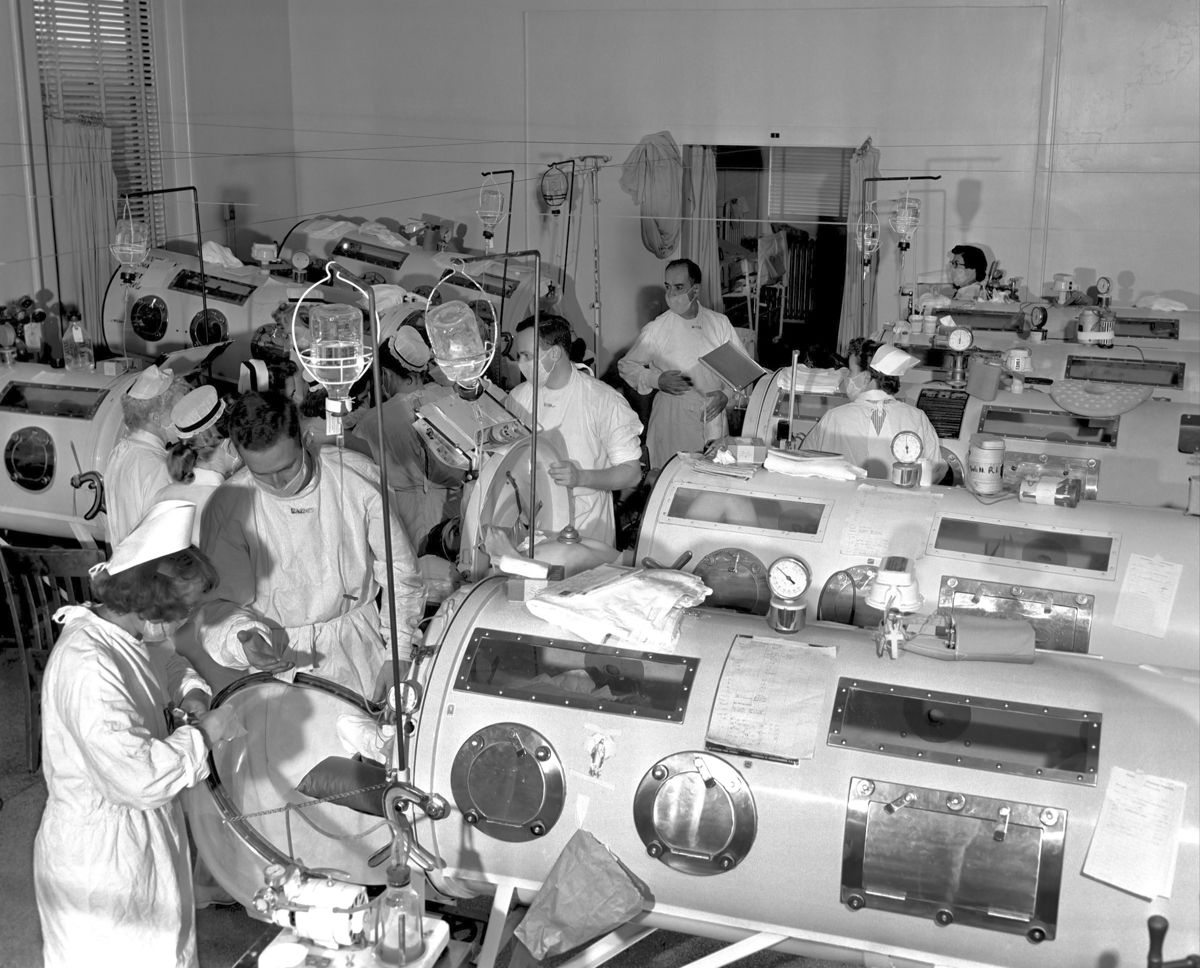
Polio patients in iron lungs. New York Daily News photo
By Casey Bukro
Ethics AdviceLine for Journalists
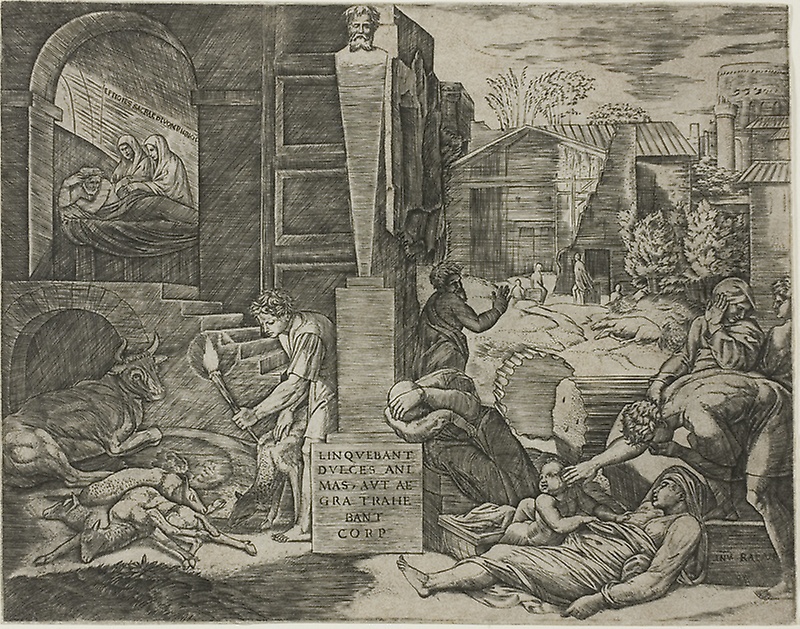
As uncomfortable as it is to us now, the coronavirus pandemic will interest future historians as another cataclysmic eruption distorting lives and causing death around the world.
They happened before. Every generation, it seems, worries about some kind of existential threat. They are events that grab us by the throat and leave lasting impressions
The struggle against COVID-19 is described as a war likely to last 12 to 24 months.
War, whether in medical or military terms, is a good description. One of its definitions is to “state one’s intent to suppress or eradicate.” The medical community is doing its best to suppress or eradicate the coronavirus as it tries to do the same to us biologically. It’s a war against a “novel” virus, meaning it’s new and the way it acts is largely unknown.
Look what happened to ethics in this time of a global viral pandemic.
It became important, a matter of life and death.
This became clear when the national demand for life-saving ventilators was greater than the supply, forcing doctors and medical technicians to decide which patients struggling to breathe gets them.
Until now, this is not how most people imagine ethics works. Mention ethics and they think it’s something for ivory tower scholars to ponder, but nothing that touches them personally, more a matter for study and debate. A sleepy sort of science, they thought. By definition, ethics is a system of moral principles or values, of right or good conduct.
Americans tend to have a me-first attitude. If they need something, they want it now. The coronavirus humbled those attitudes as medical ethicists step in to decide who gets scarce medical resources. They must wait their turn, if at all.
On April 3rd, Alexandria Ocasio-Cortez, a member of the U.S. House of Representatives for the 14thCongressional district of New York, wrote in a tweet: “COVID deaths are disproportionately spiking in Black + Brown communities. Why? Because the chronic toll of redlining, environmental racism, wealth gap, etc. ARE underlying health conditions. Inequality is a comorbidity.”
The following Tuesday, April 7th, Dr. Anthony Fauci, director of the National Institute of Allergy and Infectious Diseases, stood at a podium at the White House and praised the “incredible courage and dignity and strength and activism” of the gay community’s response to the AIDS crisis. Fauci, much of whose career has been dedicated to battling HIV/AIDS, then drew a connection between the “extraordinary stigma” which then attached to the gay community, and a similar stigma and marginalization which, he argued, today was increasing the burden and death toll imposed on African-American COVID-19 sufferers, who make up a disproportionately high number of fatalities of the latter-day plague.
As a philosopher and ethicist, I’ve been reflecting on the role of my discipline in coming to grips with this new and sudden event since it first burst into the headlines in early March. As the novel virus grew from an outbreak to an epidemic and then to pandemic dimensions, and the gravity of the illness associated with it, COVID-19, became clearer, the ethical approach to it became less so, to me.
Muzzled scientists, stifled media: New restrictions on speaking directly to government scientists about the coronavirus are dangerous, writes Margaret Sullivan.
“We’re now at a moment when experts must be free to share their knowledge and front-line workers must be free to tell their stories without being muzzled or threatened — and certainly without being fired,” she writes. Lives depend on it.
Verify Social Media Virus News: People spread hoaxes thinking they’re sharing valuable information with friends and family, writes Jessica Roy. Verify social media accounts, sites and the information, she writes.
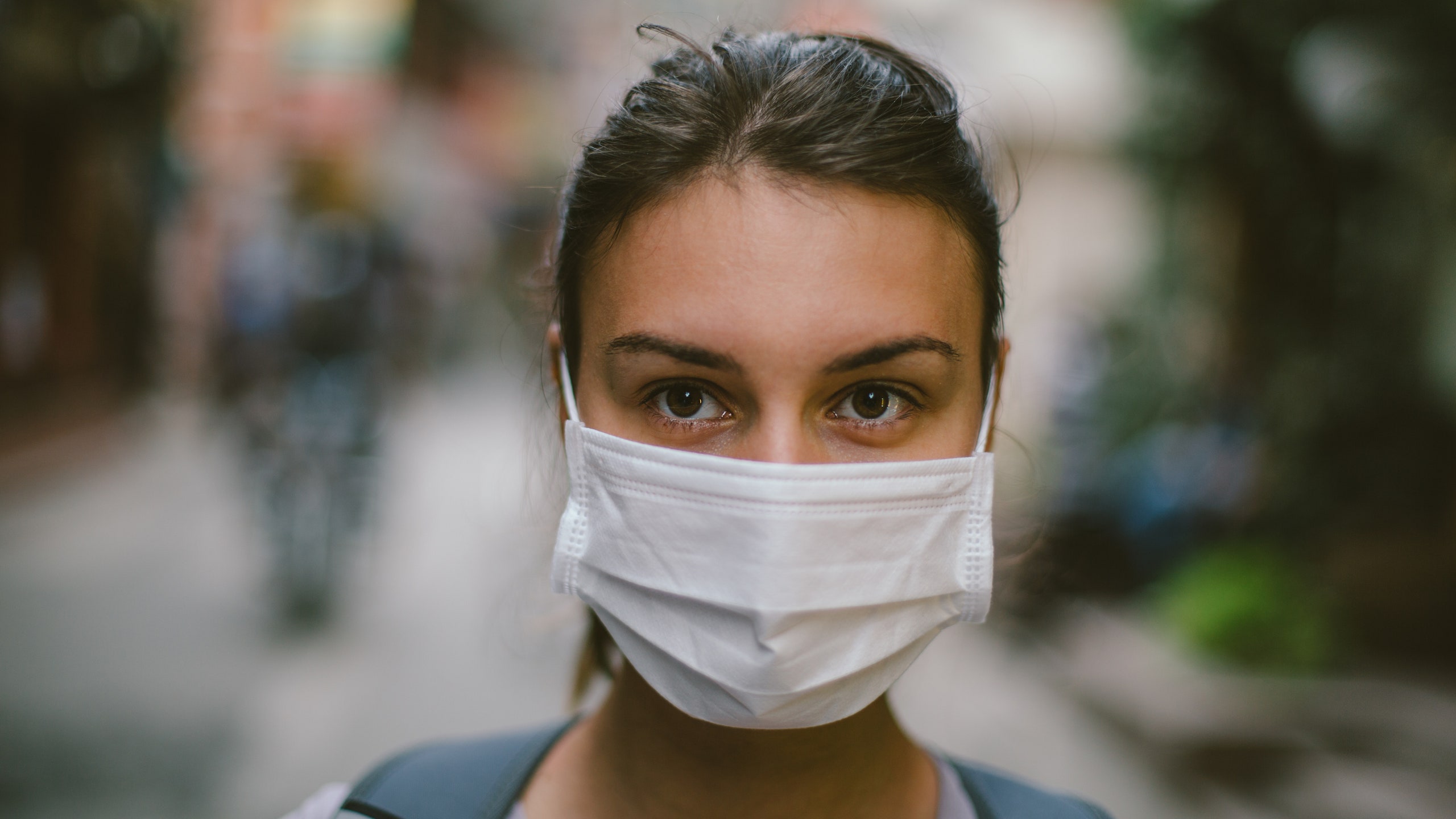
Masking the coronavirus: Seeing is believing, writes Al Tompkins, but “hospitals are blocking journalists from documenting what it’s like inside their walls….”
Imagery from inside hospitals is needed, though “no reasonable person would suggest journalists should sneak into hospitals to grab photos.”
Pandemic journalism: “My hope is that journalism, as an industry, will stop viewing itself as an external body meant to serve the public and instead begin to see itself as a member of the public,” writes Alexandra Neason.


 Ethics AdviceLine for Journalists