Killing net neutrality rules could hurt students using videoconferencing and other forms of high-tech distance learning, writes Klint Finley.
The Federal Communications Commission on Dec. 14 scraped rules that ban internet providers from blocking or slowing data delivery. Rural populations could suffer most, says Finley.
Reading a story with unnamed sources: Bethania Palma quotes experts who say that journalists risk losing audience trust by frequent or unnecessary use of unnamed sources.
“The public, like the reporters and editors putting a story together, should question whether the story is important enough to grant public-facing anonymity to the sources making the claims.”
Year of the Internet Vigilantes: Doris Truong writes about online identification technology to combat misinformation.
“It might lie in facial-recognition technology. You might have it in your hands already, depending on which smartphone you’re using.” Trust but verify.
What news consumers don’t know about journalism: Margaret Sullivan asks journalists what they wish news consumers knew about their business.
“The vetting process is similar at many large news organizations — and it’s just one of the practices that journalists assume, perhaps incorrectly, that news consumers understand,” writes Sullivan. “Sourcing is one of the least understood of the mysteries.”
BuzzFeed’s decision last week to publish a 35-page dossier containing allegations about President-elect Donald Trump’s relationships with Russia has prompted a great deal of discussion among journalists and journalism organizations about the ethics of the decision.
A number of those weighing in – such Washington Post media columnist Margaret Sullivan and Poynter Institute for Media Studies ethicist Kelly McBride – have argued that BuzzFeed was out of line for publishing unverified information. But some – including Watergate reporter and now CNN analyst Carl Bernstein and Columbia Journalism Review managing editor Vanessa M. Gezari – supported the decision.
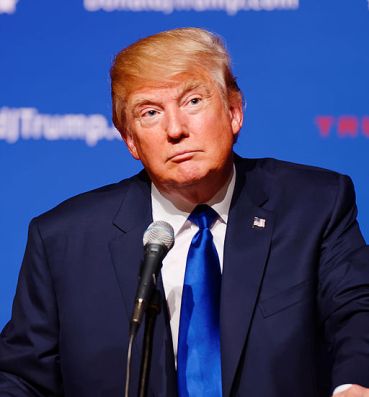
BuzzFeed has defended its publication of a dossier including unverified allegations against Donald Trump. Photo by Michael Vadon [CC BY-SA 2.0], via Wikimedia CommonsI think the fact that thoughtful people have landed on different sides is evidence of the fact that there are multiple ethical considerations involved, some of them potentially conflicting. Although verification is at the core of ethical journalism, exceptional situations like this one may arise where the decision on publishing is not so easy, particularly if the documents have surfaced in some official setting.
I have been thinking beyond this situation to similar ones that may arise in the future and the ethical questions involved.
Below is a list of questions I’m suggesting to help in thinking through the ethical issues in these situations. I have grouped the questions under the headings of the principles of the Society of Professional Journalists ethics code, as well as other considerations – public relevance and journalistic purpose – that relate to the mission of journalism.
In writing these questions, I’m inspired by some lists that Poynter has done to help journalists in other areas of ethical decision-making such as going off the record and, recently, using Facebook Live. Two co-authors and I also raised some of these issues in a question list in an academic study on data journalism.
I welcome any comments from readers on how these questions might be used or revised.
Questions to consider in deciding on whether and how to publish unverified documents involving public officials:
Public relevance and journalistic purpose
Have the documents been discussed or used in any official settings (e.g. intelligence briefings, committee hearings)? Have they otherwise been discussed on the record by any public officials?
Is there a compelling reason for the public to know about the information in the documents?
Seeking truth and reporting it
Have you or others tried to verify the information? Where verification has been possible for specific pieces of information, has the information proved to be true?
Are the sources of the documents reliable? Why or why not?
Acting independently
Is your decision to publish based on your own independent judgment of the ethics of publishing or on competitive pressures or other considerations?
Minimizing harm
If the documents contain sensitive allegations, what potential harms could result if you release the documents in their entirety or publish those details and they prove to be false or impossible to verify?
If potential harm is a valid concern if you release the documents in their entirety or report details such as these, how could you minimize harm (e.g. redacting some details, summarizing)?
Being accountable and transparent
Are you explaining the process you used in your decision-making including any conflicting ethical considerations and the ethical reasons for making the decision you did?
Are you explaining any efforts you made to verify the content of the documents and the outcome of those efforts?
By thinking through these questions, journalists can uphold the importance of verification while also considering when and how to report on unverified documents there may be a compelling reason for the public to see.
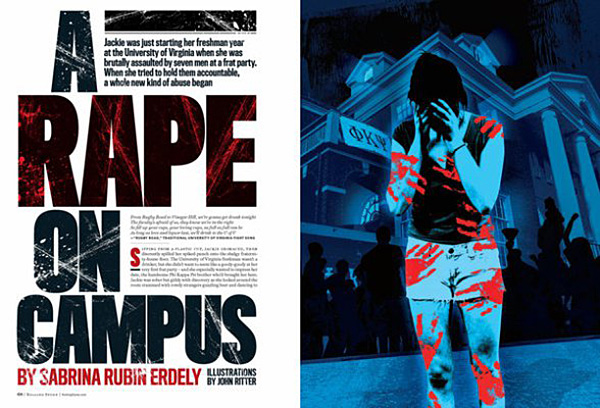
Rolling Stone retracted the article in its December 2014 issue months later.
By Casey Bukro
Rolling Stone retracted its 2014 story about an alleged gang rape in a University of Virginia fraternity house after admitting post-publication doubts about the story’s accuracy. You might wonder what a blunder like that might cost a publication, and now we know.
The magazine was hammered by lawsuits. In November 2016, a federal court jury in Charlottesville, Va., awarded $3 million in damages to a former U.Va. associate dean, Nicole Eramo. The jury found that the Rolling Stone article damaged her reputation by reporting she was indifferent to allegations of a gang rape on campus. Eramo oversaw sexual violence cases at U.Va. at the time the article was published.
The jury concluded that the Rolling Stone reporter, Sabrina Rubin Erdely, was responsible for defamation with “actual malice,” which usually means a reckless disregard for the truth.
University of Texas media researcher H. Iris Chyi says heavy shift to digital news was a mistake. Chyi photo.
By Casey Bukro
Here’s an interesting idea: The rush of newspaper management from print to digital journalism was a terrible mistake.
Cyber media was supposed to be the next big thing, the answer to plummeting circulation, advertising and readership. Soon it became clear that digital journalism got off on the wrong foot with a “bad business model,” this new way to get the news for free. That set an expectation of reluctance to pay for it.
“What if, in the mad dash two decades ago to repurpose and extend editorial content onto the web, editors and publishers made a colossal business blunder that wasted hundreds of millions of dollars? What if the industry should have stuck with its strengths–the print editions where the vast majority of their readers still reside and where the overwhelming majority of advertising and subscription revenue come from–instead of chasing the online chimera?”
Fascinating speculation, and Shafer admits it’s a contrarian viewpoint, but he bases it on a study of 51 U.S. newspapers by two University of Texas researchers, H. Iris Chyi and Ori Tenenboim. They published a paper in Journalism Practice, an academic journal.
That paper, said Shafer, “cracks open the watchwords of the newspaper industry to make a convincing case that the tech-heavy web strategy pursued by most papers has been a bust.” That strategy, Shafer adds, “has been a losing proposition for most newspapers.”
Come to think of it, history shows an “all eggs in one basket” strategy can lead to disappointment. The U.S. economy’s reliance on petroleum led to high costs and disruptions by unreliable sources. The electric power industry relied heavily on coal until air pollution and other problems forced the industry to turn to alternative and cleaner energy sources, like solar power. Nuclear power was heralded as the technology that would turn deserts green, but safety concerns derailed some of those hopes.

 Ethics AdviceLine for Journalists