Category Archives: Accountability

A Reporter Discovers the Pain of Being Ethical

By Casey Bukro

It’s hard to be good and ethical. Sometimes it comes at a cost.

Amelia Pang, metro reporter for Epoch Times in New York, discovered this when she called the Ethics AdviceLine for Journalists in 2012 and asked a question that AdviceLine gets sometimes:

When calling a news source, is it necessary for reporter to admit to being a reporter? That is, not say that she is a reporter, unless asked?

It is a question that arises among young reporters, those learning the ropes or those who work for organizations without printed standards or spelled out ethical guidelines that can leave a reporter wondering what to do.

In Pang’s case, she called AdviceLine on advice from a colleague.

“I am doing an article about a controversial homeless shelter in New York City,” Pang told AdviceLine adviser Hugh Miller, an assistant professor of philosophy who teaches ethics at Loyola University Chicago.

“The shelter is located in a very rich area, therefore many residents have been quite unhappy about it. The shelter has received a lot of bad press since they opened last year, and now they are reluctant to talk to any media.”

Continue reading A Reporter Discovers the Pain of Being Ethical

Health Care Freelancers Face Tough Ethics Challenges

By David Ozar and Casey Bukro

Freelancing is a tough way to make a living – even tougher as downsized journalists turn to freelancing.

For writers specializing in health care, it’s especially challenging because of the ethics issues faced in navigating the cross connections between clients who want stories written for them or about them. Or both.

“Ethical guidelines for subspecialties may vary,” Tara Haelle in an email exchange with the Ethics AdviceLine for Journalists.

A freelancer herself, Haelle traced the obstacles in a story that appeared on the Association of Health Care Journalists website.

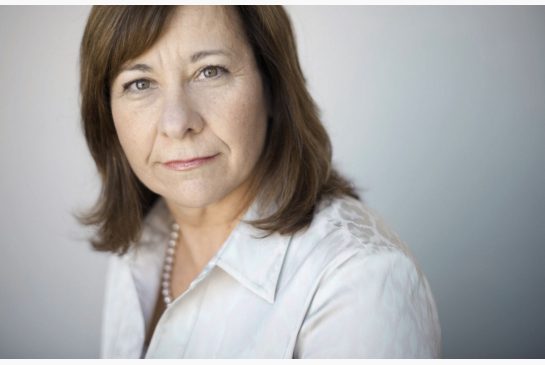
Tara Haelle
Tara Haelle

Haelle calls it the conflict-of-interest maze: “Ensuring that work for one client doesn’t create a conflict for another, present or future.” Though that might sound simple, Haelle said it isn’t because freelancers work for companies, journalism publications, universities and foundations or as consultants.

Haelle went to several sources, asking how she can avoid ethical conflicts of interests under the conditions in which she works and found that ethical guidelines vary. One source said “there’s no clear answer.” Another said journalists should “decide for ourselves what we think is ethical behavior.”

That sounded like a challenge for the Ethics AdviceLine for Journalists, which has a staff of five university ethicists to answer questions of the kind posed by Haelle.

One of them, David Ozar, is professor of social and professional ethics in the department of philosophy at Loyola University Chicago. AdviceLine asked Ozar to read Haelle’s story and offer his perspective on how he would have answered her call for guidance on ethics.

Continue reading Health Care Freelancers Face Tough Ethics Challenges

Ombudsman: ‘Loneliest Job in the Newsroom’

Kathy English
Kathy English, Toronto Star public editor (Toronto Star photo by Lucas Oleniuk)

By Casey Bukro

I’m a sucker for stories about news ombudsmen, or public editors or readers representatives, even though they are branded these days. I can’t help myself. It’s a compulsion, an addiction.

Think about it: An ombudsman might walk up to the top boss and tell him he’s wrong. She might pick through the details of a complicated story, then defend a reporter for doing a thankless, difficult or even dangerous job, or discover that a reporter did not go far enough to find the truth, and then say so publicly.

It’s almost heroic.

I suppose I also admire ombudsmen because what they do is so idealistic: speaking up without fear or favor, letting the chips fall where they may.

Maybe that’s why there are only about 20 of them working at American news outlets today, according to a Politico article, “The State of the Ombudsman in 2015.” That’s about half as many as a decade ago, according to USA Today.

Still, ombudsmen in the U.S. and elsewhere trudge on.

Kathy English, public editor of the Toronto Star in Canada, recently wrote an article titled, “So what does the public editor do?” Readers had asked her to explain her job, which she’s done for eight years.

Continue reading Ombudsman: ‘Loneliest Job in the Newsroom’

GamerGate Revisited: Is It Really About Journalism Ethics?

AirPlay

By Casey Bukro

Is GamerGate about ethical violations in video-game journalism?

Or is GamerGate just a smokescreen for harassing women who want to work in the male-dominated gaming industry?

Or is it something else?

A live-streamed debate will sort it out Aug. 15 in Miami.

Elements in the controversy include the $15 billion video game industry, the video game press, game reviewers, developers, commentators and those who sell advertising in gaming magazines. It’s a volatile mixture.

Michael Koretzky, a regional director for the Society of Professional Journalists, organized the conference and will moderate. His region covers Alabama, Georgia, Florida and South Carolina. Sponsors are the region and SPJ Florida.

AdviceLine questioned Koretzky on the key issues:

Continue reading GamerGate Revisited: Is It Really About Journalism Ethics?

Searching for the Limits of Ethics

By Casey Bukro

Some media people find it impossible to forgive Brian Williams, saying he tainted journalism through false reports.

A cascade of shame enveloped the former NBC anchor, demoted and vilified after saying repeatedly that he was aboard a military helicopter that was forced down over Iraq by enemy fire. Turns out that happened to another military helicopter, not the one he was riding.

Williams’ career began unraveling as other reports were called into question.

From a strictly ethical viewpoint, how should Williams be judged? He admitted he was mistaken about the helicopter incident and apologized.

Ethically, are there limits to forgiveness? Is it best to forgive and forget? Is he forever tainted, or is he allowed to get beyond it and redeem himself?

These questions were posed to AdviceLine’s team of ethicists.

Nancy Matchett, who teaches ethics at the University of Northern Colorado, answered this way:

“Philosophers understand ethics as ongoing reflection about ‘how one should live.’ In the professional context, that means ongoing reflection about the principles that should guide one’s work and how they apply to the concrete choices one faces every day. Ethics doesn’t exactly have a beginning or end.

“And, with respect to the Williams affair, we can evaluate his choices since the incident, and the choices of the network, as well as the original mistake.”

I asked Matchett if that suggests we should judge Williams and the aftermath by what he does from now on?

“Sure, that’s part of it,” said Matchett. “But I guess what I’m also trying to emphasize is that the fact that any particular bit of conduct that was good, bad, etc., is never ‘the whole story about Williams’ ethics.’ There is no whole story, except perhaps after a person is dead, because characters are never wholly fixed.

“What he does from now on should be judged in light of the fact that we know he is at least careless and at worst inclined to stretch the truth for the sake of a story.”

I told Matchett that appears to raise the issue of redemption.

“I don’t really have anything to say about redemption,” said Matchett. “Whether another person, or ‘the profession,’ forgives Williams doesn’t change his act from wrong to right. It acknowledges that his character isn’t all bad and that the mistake was in some sense ‘understandable’ given the various pressures he was under. And just to be crystal clear, note that ‘understandable’ is not the same as ‘justifiable.’ Or as we say in my business, an explanation is not the same as an excuse.

“As for people finding it ‘impossible to forgive,’ that’s a psychological issue or question, not the ethically central one. The ethically central issue is whether forgiveness is morally appropriate, whether people should do it, which is a little different from whether they can. … If it’s not appropriate, then folks are doing the right thing by refusing to forgive.

“But in general, I think any network would be foolish to leave him as an anchor on their main show. He has harmed his own and the network’s credibility. Even if the network execs were convinced that it was a forgivable mistake and his journalistic integrity could be counted on in the future, the average viewer surely doesn’t know Williams well enough to decide whether to trust him again.”

David A. Craig, another AdviceLine ethicist, who teaches ethics at the University of Oklahoma, sees it a different way:

“It troubles me that Williams seems to deflect responsibility for his untruths by saying he did not intend them. Journalists, especially those in roles as high profile as his, have a responsibility for every word that comes out of their mouths in a formal journalistic setting.

“If this were a single brief slipup in language, that would be different. But he was untruthful more than once about his experience in Iraq. Every viewer now has reason to question his trustfulness in the future. By failing to fully take responsibility for his words, he gives his audience ongoing reason to doubt.”

Reason to doubt Williams first emerged when military publication Stars and Stripes challenged his account of being aboard the helicopter that was forced down over Iraq.

NBC suspended Williams for six months without pay, then stripped him of his duties as anchor of NBC Nightly News.

As Matchett points out, we don’t know “the whole story” about Williams yet. Already, he is the subject of jokes and spoofs by the likes of Harry Shearer.

Forgiveness happens on two levels, personal and professional.

Journalists are notoriously soft on each other, and hard on everyone else. Journalists don’t like to criticize or censure other journalists. So, personally, they are likely to forgive Williams by finding that morally appropriate, as Matchett put it. They will write about ethical transgressions, but that’s not the same as taking a personal stand.

Professionally, it’s hard to forgive an act that weakens public trust in the integrity of journalism, which rests on a foundation of truth. The Society of Professional Journalists code of ethics begins with this tenet: “Seek truth and report it.”

Falsehoods damage the profession, and cannot be tolerated.

CBC Acts Fast, NBC Acts Slow

By Casey Bukro

Consider the differences in the way Canadian and United States broadcasting officials reacted when their star performers got into trouble.

The Canadian Broadcasting Corporation swiftly fired political anchor Evan Solomon, one of the biggest names in Canadian journalism, for moonlighting as a fine arts broker.

NBC is still trying to decide what to do about high-profile anchor Brian Williams, who was suspended for six months in February for saying he was aboard a helicopter over Iraq that was forced down by enemy fire, which proved untrue. Reports say Williams’ lawyer is making negotiations “excruciating” for NBC as it tries to decide what to do with Williams.

The comparison is interesting because both Solomon and Williams have been described as among the biggest media names in their countries.

Canadian Broadcasting Corporation, officially known as CBC/Radio-Canada, serves as the National Public Radio and Television broadcaster.

CBC acted swiftly after the Toronto Star reported that, for commissions of about 10 percent, Solomon had been working with a Toronto art collector and had earned at least $300,000 over two years, and believed he was entitled to another $1 million.

Solomon had disclosed to CBC in April that a production company he owned with his wife had a business partnership with an art dealer that would not conflict with his CBC News work.

After an independent investigation, CBC/Radio-Canada CEO Hubert Lacroix said Solomon was fired to protect “the integrity of the content and the journalism that we make.”

Reaction at CBC reportedly was mixed with anger and frustration, in part because of other ethics issues that had surfaced in the past. Some called it a “disproportionate response” and Solomon could appeal.

Tim Bousquet, editor and publisher of the Halifax Examiner, called what Solomon did a “crime against journalism.”

CBC’s sensitivity to ethical lapses no doubt was heightened by the earlier downfall of another CBC star, Jian Ghomeshi, who was fired for rough sex with women. He is facing trial on charges of sexual assault and choking.

The Guardian quoted critics who said the broadcaster’s decision to “groom celebrity journalists” led to a “corrosive culture” of stars with tremendous power and little self-restraint. Said one: “When you create these celebrities, you create monsters.”

Meanwhile, the Brian Williams case drags on. After suspending Williams, NBC reportedly found other instances where the anchor had exaggerated his involvement in events. Williams had apologized for the helicopter event, after military sources pointed out that Williams was not riding in a helicopter that was forced down by enemy fire.

“This was wrong and completely inappropriate for someone in Brian’s position,” Deborah Turness, president of NBC News, said in a memo.

The outcome remains to be seen. The suspension ends in August.

Nothing so far has been finalized in the Williams affair, reported columnist Lisa de Moraes, calling it a media cliffhanger.

The case drew attention from The New York Times. It said the episode “has called into question not only the credibility of Mr. Williams but also the ethics and culture of NBC News.”

Politico media writer Jack Shafer writes that Williams knows he’s dead, but is negotiating the terms of his burial.

In Vanity Fair, correspondent Bryan Burrough says the newsman is too damaged to return to the anchor’s desk. Burrough toyed with possibilities for a return.

Clearly, there are cultural and historical differences between Canada and the United States, as anyone who has traveled the two countries can attest. But maybe it’s possible to generalize and say that among the similarities between the two countries, which are fast allies, is a faith in media ethics. The details usually are messy, but ethics matters.

Ombudsmen Slice and Dice Media, Face Cuts

By Casey Bukro

The thing I like about news ombudsmen is they do to journalists what journalists do to everyone else.

Journalists hold everyone accountable; ombudsmen hold journalists accountable. It’s not a popular job, considering that their ranks grow thinner.

A report for New York’s Capital website points out that “the trend line is pointing down” because “the position is often the first to go when news executives are trying to trim their budgets.”

Associate editor Jeremy Barr quotes Jeffrey Dvorkin, a University of Toronto journalism professor, who estimates that about 20 news ombudsman exist today in the United States. Meanwhile, the job is growing in other countries, Dvorkin contends, because they value independent journalism “in a way that I think is being lost in the U.S.”

A pity.

It’s interesting to see how a good ombudsman works, sometimes finding fault with the way a news organization works, sometimes defending it.

Toledo Blade ombudsman Jack Lessenberry is a good example. In a recent column, Lessenberry tackled questions from readers about why The Blade presents corrections without stating the original error, whether the placement of a political cartoon in the text of an opinion column gave the wrong impression and why The Blade’s ink is smudging a reader’s hands.

Lessenberry dutifully investigates each question and reports back to the reader in a mild-mannered, patient way, admitting the paper is being printed with a different ink but “it also comes off easily when you wash your hands.”

An ombudsman is a modern King Solomon, famous and feared for his divine gift of wisdom. To decide which of two women who claimed to be the mother of an infant was telling the truth, Solomon proposed cutting the infant in half, so each woman could have a share.

One woman thought that was a good idea. The other, horrified, said she wanted the infant to live, and offered to surrender the child. The king declared that the woman who wanted the infant to live was the true mother, and awarded her the baby. The story is more complicated, but that’s the gist.

No ombudsman that I know has ever been confronted with such a challenge. Instead of cutting a problem neatly in half, they are more likely to slice and dice it, as does Lessenberry.

An ombudsman must look at a problem from many angles and perspectives, then come to a decision that might criticize his own organization. By comparison, King Solomon’s job might have been less stressful.

There is an existential quality in the way the job seems to be fading.

The exit of Patrick Pexton as the Washington Post’s last ombudsman in March 2013 brought some attention to the role of ombudsman. Pexton was replaced by a reader representative, a role considered less probing and critical.

Pexton offered insight to the job as he was leaving, pointing out that the No. 1 topic of complaint to the ombudsman during his term was the Post’s online comment system.

“About 10 percent of those complaints were about its functionality, which the Post has improved,” wrote Pexton. “Another 10 percent were from people who feel they were unfairly censored. But the rest were from readers who like the idea of online comments but abhor the hatefulness, name-calling, racism and ideological warfare that are constant features of the Post’s Commenting stream.”

Veiled by anonymity, the posters were just mean and vicious in a way they would not attempt if identified.

Pexton said he originally favored the anonymous nature of those online complaints, but changed his mind. He favored moving away from anonymous responses to a system that requires commenters to use their real names and to sign in via Facebook.

“What turned me,” wrote Pexton, were remarks by a high school football coach “who criticized first lady Michelle Obama’s derriere.”

More laudable, said Pexton, was the second most common type of complaint, from readers he described as “grammar police.” These are “the line-by-line readers who see every grammatical, spelling, punctuation and factual mistake in The Post.” Such criticism can be annoying, “but the grammar police help keep standards high.”

In a sense, these volunteer editors are unofficial ombudsman. They don’t really take the place of someone officially charged with investigating missteps. Yet, that may be where publishing is headed.

A USA Today report quoted Dworkin saying that there are about half as many media ombudsmen working in the U.S. today than a decade ago.

“The public is really hungry for them,” he said. And it does seem odd that while news organizations cut ombudsmen from their staffs, they also try to engage readers and viewers via Facebook, Twitter and other social media.

It appears they think social media can take the place of ombudsmen. Wonder what wise old King Solomon would say about that?

Donations Might Help to Define a Journalist

By Casey Bukro

One of the questions roiling journalism’s waters these days is, what defines a journalist?

One of the answers sometimes given is that a journalist is defined by what he or she does — committing acts of journalism like writing, reporting, editing or producing something that gives people information.

Usually standards exist for doing those activities, such as the Society of Professional Journalists code of ethics.

Lately, though, some broadcast journalists have shown that they might be confused about those standards, or simply ignored them. Or, are they leading the way toward a new era when broadcast opinion and partiality are overwhelmingly becoming the standards?

The most notorious case is Brian Williams, the NBC anchor who was suspended without pay for six months, for falsely reporting that he had been on a helicopter shot down in Iraq. Actually, another helicopter had been hit by a rocket-propelled grenade and forced down.

Williams apologized for the exaggeration, saying: “I don’t know what screwed up in my mind that caused me to conflate one aircraft with another.” The military publication Stars and Stripes had reported that Williams’ account of the incident was inaccurate.

“The episode has called into question not only the credibility of Mr. Williams but also the ethics and culture at NBC News,” The New York Times reported. NBC is investigating whether Williams exaggerated other reports, and will decide whether Williams returns to his post.

The SPJ ethics code says: Seek truth and report it.

Less prominent is the case of ABC News analyst and anchor George Stephanopoulis, who apologized for donating $75,000 to the Bill, Hillary and Chelsea Clinton Foundation without disclosing his donation to the network, as required. The donations were reported in the foundation’s public disclosure.

“We accept his apology,” ABC said in a statement. “It was an honest mistake.”

Stephanopoulos called the donations an “uncharacteristic lapse.”

His actions led to demands that Stephanopoulos recuse himself from all 2016 election coverage.

Critics recall that Stephanopoulos served President Bill Clinton as a political strategist before moving into broadcasting, despite allegations that he lacked journalistic objectivity.

“But with his acknowledgment that he had given a significant sum to the Clinton Foundation, he found himself facing accusations that he was effectively trying to buy favor with his former employers as Mrs. Clinton seeks the presidency for a second time,” reported the New York Times.

The Stephanopoulos disclosures prompted Judy Woodruff, PBS News Hour co-anchor, to make an on-air disclosure of her own: She said she gave $250 to the Clinton Foundation “for charitable purposes.”

The SPJ code says: Be accountable and transparent. It also says: Avoid conflicts of interest, real or perceived.

But are traditional standards and values still important, now that opinion or advocacy journalism are so widespread online? If those traditional standards were as entrenched as they seemed during Walter Cronkite’s day, when he was considered one of the most trusted men in journalism, perhaps Williams and Stephanopoulos would not have overlooked them so easily till they were caught.

Add to their stumbles the recent case of Rolling Stone, which apologized for reporting an alleged gang rape on the campus of the University of Virginia, a story based largely on one anonymous source. The story later was discredited by police and Rolling Stone was sued.

These cases, says Stephen J.A. Ward, a University of British Columbia ethicist, point to a “striking fragmentation” in journalism ethics and how they are applied, holding some anchors and reporters to the ideal of objectivity and independence while others are not.

“This only points to the utter breakdown of any consensus on journalism ethics,” said Ward.

The SPJ ethics code says: Boldly tell the story of the diversity and magnitude of the human experience.

With changing perspectives in journalism, it’s important for news organizations to adopt written standards, so employees understand the standards that govern their organization. As journalism changes, these standards might change depending on how news organizations define themselves.

Their audiences, too, benefit from knowing what to expect.

Journalists Working for Community Groups Face Hazards

From the Ethics AdviceLine for Journalists Archives

By Casey Bukro

Editors and publishers often are asked to serve as volunteers on civic groups.

Of course,  community groups might hope to get some publicity, and media management wants to serve their community. But is this symbiotic relationship good for journalism?

That’s what an editor for The Free Press, in Mankato,  Minn., wanted to know. She called AdviceLine in 2004.

She pointed out that an editor, especially in a smaller city, is regularly being pressured by  newspaper owners to be involved in community service like the United Way board. There is benefit, she said, for the editor’s work because you learn a lot about the community this way.

It also supports the paper’s message to the community that the paper cares about the community, she said. These are good things.

But at the same time it sends a mixed message to your reporters because, at a minimum, it looks like you are breaking the barrier between editorial and business; that you are schmoozing with the community’s power brokers like a publisher does rather than staying on the news side of the organization. She wanted to know what to do about this?

The AdviceLine consultant answered this way:

The first thing to say is that an editor who has to do such things needs to make sure she does not influence reporting about these organizations at all, because that would clearly break the barrier between reporting and business influence.

The editor is conscientious about not being involved in reporting about civic groups by leaving that entirely to the reporters assigned to those beats. Her concern is not that this activity is actually compromising anything in that way, but that her staff sees her going out to these things and wonders if there is compromise involved.

“I suggested that she sit down with them and talk it out, how she is being pressured by the owners for this and its benefits and her concerns about the ethical barrier,” said the adviser. “She could ask them for advice about it and elicit their help in making sure that the barrier is properly protected. She thought this was a good way to proceed.”

AdviceLine is always curious about what happened after journalists contacted AdviceLine. So, 11 years later, AdviceLine spoke with Joe Spear, managing editor of The Free Press. The editor who called AdviceLine has since left the newspaper, but Spear recalls working with her.

In 2004, said Spear, it’s possible that the newspaper did not have a policy governing the situation she called about. But in 2005, the newspaper was taken over by new management, Community Newspaper Holdings, Inc.

The new company “does have a handbook and just last week we went through the guidelines,” he explained.

The corporate handbook encourages journalists to “participate in worthwhile community activities, so long as they do not compromise the credibility of news coverage or the independence of the newspaper. Avoid involvement in organizations or activities that could create a conflict of interest or an appearance of conflict.”

Also,  “do not use CNHI or your CNHI paper’s connections to benefit you or your family, or to benefit a third party.”

A leading publisher of local news, CNHI serves more than 130 communities in the United States. The privately owned company is based in Montgomery, Ala.

Some cases are not always clear-cut.

“We have a photographer who teaches a photo class at a university in town,” said Spear. “He gets a paycheck. Is that a conflict? We leave it up to the editor and the publisher. If it appears to be a conflict of interest, we say we can’t do it.”

The AdviceLine consultant who handled the case commented: “The question isn’t whether conflicting interests exist, but whether the result is harmful in that it inhibits the editor’s or reporter’s exercise of sound professional judgment about something (or is highly likely to lead others to assume such harm will occur, as was the question in the original case).”

Another member of the AdviceLine team said it’s unfair to assume that civic boards invite journalists for the publicity.

“In my experience, they’re looking for someone with contacts in the community, or someone who can represent a major employer or its union, or someone who can take minutes or knows the web.

“Of course, they might want publicity eventually — or might NOT want publicity for something on the agenda. The journalist will want to think about how to handle that. But don’t discount the other reasons nonprofits may seek out people of honesty, talent and energy.”

An Editor’s Dilemma: Taking Donated Money for Reporting

From the Ethics AdviceLine for Journalists Archives

By Casey Bukro

In tough economic times, newspaper managers are always looking for new ways to raise money and pay the staff.

For an editor-in-chief of a small Idaho newspaper, that was always a problem. But in 2005, he got an offer that seemed too good to refuse. So he called AdviceLine and explained his dilemma:

A county commissioner called the editor saying he should have a reporter at an afternoon meeting of the county commission, because the commissioner is having a conflict with the county clerk and expects “there may be some monkey business on the agenda.”

Strapped for funds, the editor could not afford to send a reporter to cover the meeting.

Not a problem said the commissioner. She has a friend willing to pay for the reporter’s presence at the meeting. The editor called AdviceLine, wondering “Is it ethical to accept this money?”

This is how the conversation went:

Editor: I’m inclined to say so. Without the money, no reporter. Without the reporter, no possibility of a story, something the public may need or want to hear.

Adviser: The Society of Professional Journalists ethics code says journalists should “avoid conflicts of interest, real or perceived,” “Remain free of associations and activities that may compromise integrity or damage credibility” and “refuse gifts, favors, fees, free travel and special treatment … if they compromise journalists integrity.”

Editor: How would this payment scheme be a “conflict of interest?” How could it “compromise journalistic integrity or damage credibility?”

Adviser: Consider “perceived conflict of interest.” Suppose you are a reader. You read the story that results, which recounts a dispute between the clerk and the commissioner. You find out later, though, that the reporter’s presence was paid for by a friend of the commissioner’s. What are you likely to think?

Editor: Depends on the slant of the story.

Adviser: Why should it?

Editor: Hmmmm.

Adviser: Say you watch a press conference held by an embattled public official. One reporter gets called on a lot. You find out later he was paid for by friends of the official. What do you think, even if this questions seemed at the time “hardball?”

Editor: At the very least I’d re-read the press conference transcript and ask myself what he was up to.

Adviser: What do you think other media outlets in your area would say if they found out you’d done this?

Editor: Actually, we’re pretty much it in these parts, except for trade papers. But what about press passes to, say, concerts, rodeos, etc.? The organizers and promoters pay for them, not us.

Adviser: The pass is to enable the journalist to attend as a reporter, not a spectator. A better analogy might be: What might a reader think of the review if she knew that the promoter not only had issued the reporter a pass but paid the paper a sum of money equivalent to the reporter’s wage for the night?

Editor: Hmmm.

Adviser: I realize small-town journalism is different from the big-city type. The Tribune has a Clydesdale, and you’ve got a Shetland. But the issues are basically the same and you need to adapt them the best you can to your situation.

Editor: You’ve given me lots of food for thought. I’m now inclining the opposite way from the position I had at the beginning. Let me mull it over. Can I call you back?

Adviser: Sure.

Ten years later, AdviceLine tracked down the editor, who is no longer in the newspaper business. He quit in a dispute with new management over, among other things, raising revenue.

What did he do about that offer 10 years ago?

“I doubt that I allowed somebody else to pay for it,” said the ex-editor. “What might have happened? I didn’t cover it.”

But the editor admitted the temptation was great, because he knew that local commission meetings had a way of becoming explosive, making for interesting reading.

“It was so crazy,” he recalled. “In one case the commissioner slapped a clerk. And commissioners gave rants and got tossed out. It was great!”

He misses those days, but also recalls the never-ending tide of dilemmas.

“The buck stops with the editor,” he said. “The editor is responsible. Questions come up every week.”

Looking back on it, the adviser said he should have recommended that the editor adopt a procedures manual, “or some other way of maintaining an institutional ethical memory,” so that he or a future editor could ask, “have we ever dealt with something like this before? If so, how did we handle it?”