Category Archives: Accountability

The Buzz on Drone Journalism: Ethics Code Takes Flight

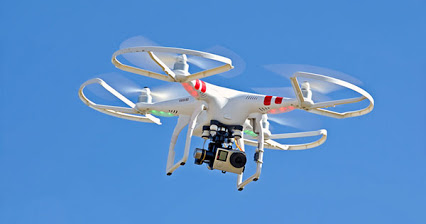
A flying drone with camera is an immersive journalism tool. (Columbia Journalism Review photo)

By Casey Bukro

Not many codes of ethics urge journalists to “take all possible measures to mitigate the odds of a crash.”

But the Professional Society of Drone Journalists code does that, and says its guidelines “should be viewed as a layer of additional ethical considerations atop the traditional professional and ethical expectations of a journalist in the 21st century.”

Drones can provide images and data for “immersion journalism”, according to a blog post that predicts virtual reality tools will allow audiences to experience the sights and sounds of news events as if actually there.

The door to this future is slowly opening as the Federal Aviation Administration works to strike a balance between assuring public safety and supporting the commercial drone industry.

The Killeen Daily Herald in Texas reports that the FAA has acted on more than 3,000 petitions seeking approval for U.S. drone operations.

Section 333 of the FAA Modernization and Reform Act of 2012 gives the FAA authority to grant certificates for the commercial use of small, unmanned aerial vehicles. Journalists already use drones to cover newsworthy events, the newspaper points out.

The FAA, meanwhile, is moving cautiously. Each month, it says, the FAA receives more than 100 reports from pilots and others who see what appear to be unmanned aircraft flying close to an airport or manned aircraft.

“It’s become a serious safety concern for the agency, and a potential security issue for the Department of Homeland Security,” the agency said in a statement. As a result, the FAA is working with other agencies to develop technology to detect and identify “rogue drones” and their operators.

A 2014 FAA report denies that the U.S. lags behind other countries in approving commercial drones, adding: “we want to strike the right balance of requirements for (unmanned aircraft systems) to help foster growth in an emerging industry with a wide range of potential uses, but also keep all airspace users and people on the ground safe.”

The Professional Society of Drone Journalists claims members from the Boston Globe, ESPN and Reuters in its global ranks, along with freelancers and academics. “Established in 2011, PSDJ is the first international organization dedicated to establishing the ethical, educational and technological framework for the emerging field of drone journalism,” its mission statement reads. “We develop small unmanned aerial systems (sUAS) for journalists, and explore best practices to deploy them for a variety of reporting needs, including investigative, disaster, weather, sports and environmental journalism.”

Its membership roster includes individuals with an interest in drones, and companies that manufacture them. So what is it primarily, a group that represents drone manufacturers or a drone advocacy group?

“I am under the impression it is an advocacy group,” said Mark LaBoyteaux, owner and operator of Hawkeye Media based in the Dallas-Forth Worth area. “But I haven’t heard from them for two or three years,” adding “I thought it evaporated.”

It started, he recalled, when a group of journalists who wanted to use drones for news photography sought permission from the FAA. Instead, the agency sent cease and desist letters to them.

“I got a letter from the FAA,” said LaBoyteaux. As a result, “they wanted to form a group that could work legally with the FAA and use photography for news gathering.”

LaBoyteaux uses five “multi-copters” for aerial photography and video photography. He understands that the FAA is relaxing its rules on drones “to let them be used for commercial purposes.”

On its website, the Professional Society of Drone Journalists espouses a “layered approach” to form its code of ethics, including traditional journalism ethics, privacy, sanctity of law and public spaces, safety and newsworthiness.

Drone operators must be adequately trained, according to the guidelines, and the equipment must be suitable for safe and controlled flight in adequate weather conditions.

Newsworthiness is the foundation of the group’s “hierarchy of ethics.” Drones should be used only after careful deliberation. “The investigation must be of sufficient journalistic importance to risk using a potentially harmful aerial vehicle,” the statement says. “Do not use a drone if the information can be gathered by other, safer means.”

The Poynter Institute notes that the FAA signed an agreement with CNN to test ways journalists can safely use drones in news gathering and reporting.

“Our aim is to get beyond hobby-grade equipment and to establish what options are available and workable to produce high quality video journalism using various types of (unmanned aerial vehicles) and camera setups,” CNN Senior Vice President David Vigilante says in a statement.

FAA Administrator Michael Huerta adds: “Unmanned aircraft offer news organizations significant opportunities. We hope this agreement with CNN and the work we are doing with other news organizations and associations will help safely integrate unmanned news gathering technology and operating procedures into the National Airspace System.”

With this kind of high-level cooperation, drone operators might declare they have liftoff.

Edited by Stephen Rynkiewicz.
Undercover Investigator Insults Journalists

By Casey Bukro

David R. Daleiden said he misrepresented himself and falsified his identification while investigating Planned Parenthood because that’s what journalists do.

What an insult to journalists! Ethical journalists know that telling lies and deception while covering the news destroys their credibility. Who would believe a journalist who lies, cheats or steals?

That’s why the Society of Professional Journalists code of ethics clearly states: “Avoid undercover or other surreptitious methods of gathering information except when traditional open methods will not yield information vital to the public. Use of such methods should be explained as part of the story.”

True, there’s a qualification. And journalism lore is rife with tales of Hollywood-style derring-do, with reporters pulling off grand deceptions.

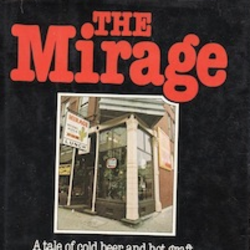
The Mirage tavern, a study in journalism deception.

In 1977, the Chicago Sun-Times bought a tavern and staffed it with reporters and photographers to show the extent of corruption and shakedowns by Chicago city inspectors and others who took $10 or $20 payoffs to ignore safety or health hazards. Then the Sun-Times published a 25-part series that documented the abuses and crimes in the Mirage tavern.

You’ll still get an argument from some journalists who say it was a terrific story and resulted in major city, state and federal reforms. The talk at the time, though, was that the series failed to win a Pulitzer Prize because the investigation was based on deception, and that was wrong.

Continue reading Undercover Investigator Insults Journalists

Sean Penn Touts Experiential Journalism on ’60 Minutes’

60 Minutes

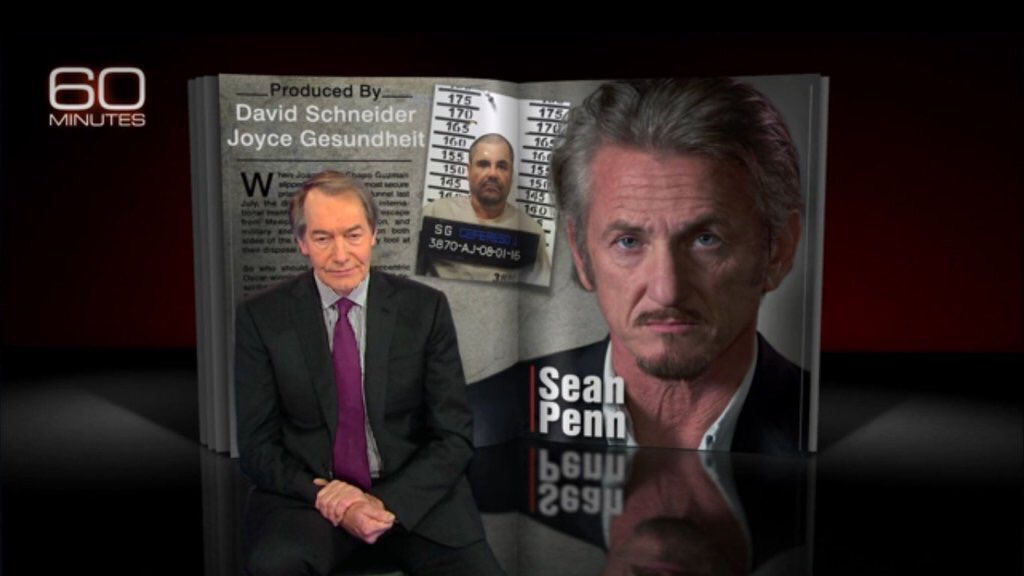
Charlie Rose on CBS’ s “60 Minutes” broadcast.

By Casey Bukro

Sean Penn told “60 Minutes”, the CBS television news magazine, that he was practicing “experiential journalism” when attempting to interview Mexican drug lord Joaquin “El Chapo” Guzman.

Penn admitted he failed. His article, based on an encounter with Guzman in a Mexican jungle and published in Rolling Stone magazine, was intended to spark a public discussion about U.S. policy on the war on drugs.

How could he succeed? When Penn actually had a chance to confront Guzman face to face, instead he asked Guzman if he has visited his mother and whether he knows Columbian drug lord Pablo Escobar. These are not penetrating questions that could trigger public discourse.

What he did was not experiential journalism. He knows the phrase but he doesn’t know what it means.

American Journalism Review uses the phrase to describe “How Virtual Reality Could Depict News in 3D.” In this case, newsrooms attract young users with in-the-round video on the Oculus Rift gaming platform: “Strap them in vision-encompassing helmets and let them experience the news like a video game.”

A Nieman Journalism Lab report names experiential journalism as one of “The Five Es of Journalism in 2016.” Neiman Lab is a Harvard University project aimed at discovering where the news is headed in the Internet age.

“Journalism has always been about more than just the facts,” according to the report. “There is a place for informational news but also for experiences that immerse the audience in the narrative.”  It cites the New York Times’ “Snow Fall” feature, “an attempt at using words, graphics, video and interactivity to have readers feel the story.”

Continue reading Sean Penn Touts Experiential Journalism on ’60 Minutes’

Secret Vegas Deal: Adelson’s Bet on Journalism

Sheldon Adelson
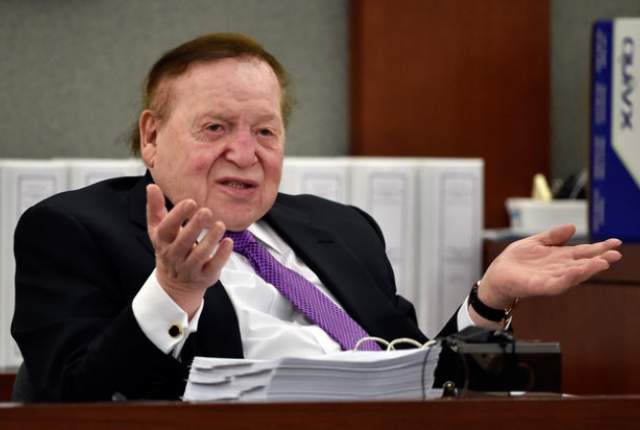
Sheldon Adelson, chairman and CEO of the Las Vegas Sands Corp. Photo by the Las Vegas Review-Journal.

By Casey Bukro

The stealth purchase of the Las Vegas Review-Journal by casino magnate Sheldon Adelson had journalists guessing for a week about the identity of the new owner and had some fuming over a lack of transparency, a prime tenet in media ethics these days.

But why should we be surprised by all this?

Very rich men often play by their own rules and get away with it. Even in media, top executives sometimes believe they are exempt from the ethics standards they hand down to their employees.

Journalists are warned against forming close personal ties with the sources they cover in case of conflicts of interest or an appearance of conflict. Publishers, however, party and play golf with the high and mighty covered by their staffs and call that good business.

They see themselves as business men and women, not journalists. In this case, we’re talking about a businessman in the Las Vegas casino business, where razzle-dazzle is the way the game is played. The house always wins.

Politics makes it more complicated. Adelson reportedly declined mentioning his purchase of the largest Nevada newspaper, even denying it as first, because he did not want it to distract from the fifth GOP presidential debate being held at the time in the Venetian resort hotel casino owned and operated by the Las Vegas Sands Corp., of which Adelson is chairman and CEO.

Clearly, politics took priority. And that might offer a clue into some of the leading questions in Las Vegas these days, such as what does Adelson want, and what does he intend to do with the newspaper?

Continue reading Secret Vegas Deal: Adelson’s Bet on Journalism

What the Ethical Robo-journalist Needs to Know

The ethical rob-journalist.
(Shutterstock photo)

By Casey Bukro

Can machines learn ethics?

The Associated Press already uses an automated platform capable of producing up to 2,000 stories a second. This is especially handy when companies issue quarterly earnings, which can be drudgery for a human reporter who scans the reports for meaningful numbers and statistics.

The robotic journalist crunches those numbers in seconds and spits them out in readable form, not in Pulitzer Prize-winning style but adequate.

Robo-reporting is especially handy for business and sports stories heavy on numbers and scores.

Northwestern University was among the pioneers in using machine learning, or pattern recognition software, to assemble the basics of a news report. A 2009 student project created software to write a headline and story from a baseball game’s box score. Two NU professors in 2010 started a Chicago company, Narrative Science to find commercial uses for the technique.

Stories written by robots have a lot of potential for the news business, and a few issues that need to be hammered out. Like ethics.

Computers, for example, could become plagiarists.

“Just because the information you scrape off the Internet may be accurate, it doesn’t necessarily mean that you have the right to integrate it into the automated stories that you’re creating — at least without credit and permission,” said Tom Kent, Associated Press standards editor, in a Digital Journal article, which cited comments Kent made to the University of Wisconsin Center for Journalism Ethics.

“I think the most pressing ethical concern is teaching algorithms how to assess data and how to organize it for the human eye and the human mind,” said Kent. “If you’re creating a series of financial reports, you might program the algorithm to lead with earnings per share. You might program it to lead with total sales or lead with net income. But all of those decisions are subject — as any journalistic decision is — to criticism.”

Continue reading What the Ethical Robo-journalist Needs to Know

Ethics Scan: Remaining Media Ombudsmen Uphold Standards

By Casey Bukro

Ombudsmen and public editors often are described as a dying breed, yet those who remain clearly take the job seriously.

A 2014 University of Nebraska graduate thesis finds there are about a dozen ombudsmen working now in U.S. news organizations, down from about 40 or 50 earlier in the decade. Internationally, however, the report finds ombudsmen growing in number and popularity.

In these times of job insecurity, ombudsmen seem to be taking more risks than most journalists. But they toil on.

In the U.S., Margaret Sullivan, the New York Times public editor, attracted attention for pointing to a conflict of interest Times editors failed to flag or apparently even to notice in an article titled “The Transformers.”

The article profiled five technology entrepreneurs, including Airbnb CEO Brian Chesky.

Tipped by readers, Sullivan discovered the article was written by the wife of a major investor in Airbnb, and that the writer was not a NYT staffer. The article appeared in T, the style magazine of the Times, and lauded entrepreneurs “harnessing goodness through technology.”

Sullivan came down hard on her employer in an article titled “Conflict of Interest in T Magazine’s Tech Article.”

Among readers who contacted Sullivan about the article, one wrote, “my question is about an undisclosed conflict” in an article that “reads as uncritical P.R.” for Airbnb without disclosing the relationship between the article’s author and the investor in Airbnb.

“This is a case in which the financial conflict is so clear, and the spousal tie so close, that a disclosure would not have been enough. A different writer altogether would have been a far better idea, and, to my mind, the only right one,” Sullivan wrote.

Sullivan found that T Magazine failed to live up to the Times’s high journalistic standards. Online, the article carries a disclosure about the conflict.

In South Africa, news24 reported that complaints to the Press Ombudsman faulted the Sunday Times for information it did not report, rather than what it did report about a tax-collecting agency of the South African government.

The Sunday Times published a series of reports on an alleged rogue unit in the agency accused of running a brothel and spying on President Jacob Zuma. Officials accused in the scheme resigned, but told the ombudsman “there is an alternative narrative” that contradicts the Times reports.” A lawyer said the Times had been selective and unbalanced in its reporting.

The Sunday Times of South Africa is a weekly newspaper. The ombudsman is pondering the case.

Here’s a long, scholarly look at the Press Council of South Africa by Dr. Julie Reid.

Despite the brain-twisting nature of the job, others still step up. ESPN recently named James M. Brady, formerly of the Washington Post, as its public editor. In making the announcement, company officials said his goal would be transparency and advocacy in an increasingly multimedia world.

Ethics Scan: Media Bias in Poland and Britain


4c9ed35c-e03c-47d6-a453-7fda3790d05f.file

By Casey Bukro

Media ethics in nations around the globe can be as controversial, and thought-provoking, as they are in the United States. They are worthy of an occasional look, which is the goal of Ethics Scan.

A Polish public broadcaster is back to work after a suspension stemming from her tough interview with Poland’s deputy prime minister over his attempts to block a controversial theater production. He accused TVP, the public broadcaster in Poland, of “manipulating” public opinion.

The interviewer was suspended hours after the interview when the minister complained that her aggressive techniques were contrary to the expected standards of public television. However, TVP’s ethics committee decided that the journalist did not violate network ethics standards and was justified in grilling the government official, whose comments about TVP and its journalist were considered “unjust and hurtful.”

In the United Kingdom, the British Broadcasting Corp. discovered from a viewer survey that they wanted “less bias and political opinion in journalism and news reports.”

The BBC Trust, the network’s governing body, also found that viewers wanted fewer game shows and cooking programs, but more high-quality drama. BBC is the world’s oldest national broadcaster, dating to 1920.

In its analysis of the survey results, BBC said it was not clear how it was biased, since respondents on both sides of the political spectrum complained the corporation was against them.

A Second Look at the Mizzou Uproar, Pros and Cons


thefederalist.com photo


By Casey Bukro

Since all the Ethics AdviceLine for Journalists consultants teach on campuses across the country, it seemed logical to ask them how they and their students reacted to events that played out at the University of Missouri over press freedoms and protests over racial tensions.

An earlier AdviceLine blog post focused on what appeared to be an attack on First Amendment press freedoms when faculty member Melissa Click attempted to banish two student photographers from the protest scene, for which she later apologized.

Hugh Miller, assistant professor of philosophy at Loyola University Chicago, took what he called a contrarian view.

“I disagree,” said Miller, citing a lawyer friend who pointed out that the First Amendment of the U.S. Constitution “is a restriction imposed upon the state, not upon individuals…. It imposes no restrictions on individuals.

“Reporters are perfectly free to jam a microphone in my face – no government authority can prevent them from doing so. And I am perfectly free to tell such reporters to get stuffed if I don’t want to talk or have them around. In so doing I do not violate the First Amendment. The First Amendment is not, IMHO [in my humble opinion], a license for journalists to demand, and get, access to coverage.

“Whether the contested access is on public property makes little difference to the First Amendment issue (though it may be important in a property rights sense). Nor does the First Amendment impose duties or obligations upon individuals to afford journalists the opportunity to cover them.

Continue reading A Second Look at the Mizzou Uproar, Pros and Cons

Mizzou Students and Faculty Flunk Press Freedom Test

Heated: Activists at the University of Missouri were caught on camera forcing photographer Tim Tai (left) off the public quad on Monday, during their celebrations over the resignation of President Tim Wolfe

Photographer Tim Tai explains First Amendment

By Casey Bukro

Amid the chaos of student and faculty protests over racial tensions at the University of Missouri, student photographers Tim Tai and Mark Schierbecker stood out as young men who understood their First Amendment rights to photograph and videotape the historic event in a public place.

Sadly, Tai and Schierbecker were badgered, harassed and bullied by students and faculty while trying to do their jobs.

Schierbecker videotaped Tai as he was harangued, surrounded and pushed by a crowd of students and older individuals who held their hands in front of his camera and would not allow him to move forward.

“We will just block you,” says one. “You need to go.”

Others chanted, “hey, hey, ho, ho. Reporters have got to go.”

Another says, “You gotta go, bro. You lost this battle, bro. Just back up.”

To his credit, Tai stood his ground and explained patiently, “The First Amendment protects your right to be here and mine.” He added, “I’ve got a job to do.”

Continue reading Mizzou Students and Faculty Flunk Press Freedom Test

A Code of Ethics All Your Own

By Casey Bukro

Everyone is in favor of ethics, until you get into the details. That’s when the fights break out.

This is something the Online News Association is likely to learn as it makes its way through a project called the Build Your Own Ethics Code. Journalists are invited to crowdsource and document their ethical practices.

Code of Ethics
Can Stock Photo

I have some personal experience in this realm. Back in 1972, I was national professional development committee chairman for Sigma Delta Chi, later named the Society of Professional Journalists.

The public, then as now, tended to have a low opinion of journalists. A public opinion poll in 1972 showed only 19 percent of the public had confidence in the press. Garbage collectors ranked higher.

Hoping to counteract that, delegates at the 1972 convention in Dallas adopted a resolution asking the group to do something about that low image of American journalists. That resolution was sent to my committee.

We decided to write a code of ethics reflecting SDX values and standards, acting on a constitutional mandate to inform the public as part of journalism’s role in a democracy. We wanted to show that journalists do have standards, and can act in an ethical manner.

Continue reading A Code of Ethics All Your Own