Rolling Stone retracted the article in its December 2014 issue months later.
By Casey Bukro
Rolling Stone retracted its 2014 story about an alleged gang rape in a University of Virginia fraternity house after admitting post-publication doubts about the story’s accuracy. You might wonder what a blunder like that might cost a publication, and now we know.
The magazine was hammered by lawsuits. In November 2016, a federal court jury in Charlottesville, Va., awarded $3 million in damages to a former U.Va. associate dean, Nicole Eramo. The jury found that the Rolling Stone article damaged her reputation by reporting she was indifferent to allegations of a gang rape on campus. Eramo oversaw sexual violence cases at U.Va. at the time the article was published.
The jury concluded that the Rolling Stone reporter, Sabrina Rubin Erdely, was responsible for defamation with “actual malice,” which usually means a reckless disregard for the truth.
University of Texas media researcher H. Iris Chyi says heavy shift to digital news was a mistake. Chyi photo.
By Casey Bukro
Here’s an interesting idea: The rush of newspaper management from print to digital journalism was a terrible mistake.
Cyber media was supposed to be the next big thing, the answer to plummeting circulation, advertising and readership. Soon it became clear that digital journalism got off on the wrong foot with a “bad business model,” this new way to get the news for free. That set an expectation of reluctance to pay for it.
“What if, in the mad dash two decades ago to repurpose and extend editorial content onto the web, editors and publishers made a colossal business blunder that wasted hundreds of millions of dollars? What if the industry should have stuck with its strengths–the print editions where the vast majority of their readers still reside and where the overwhelming majority of advertising and subscription revenue come from–instead of chasing the online chimera?”
Fascinating speculation, and Shafer admits it’s a contrarian viewpoint, but he bases it on a study of 51 U.S. newspapers by two University of Texas researchers, H. Iris Chyi and Ori Tenenboim. They published a paper in Journalism Practice, an academic journal.
That paper, said Shafer, “cracks open the watchwords of the newspaper industry to make a convincing case that the tech-heavy web strategy pursued by most papers has been a bust.” That strategy, Shafer adds, “has been a losing proposition for most newspapers.”
Come to think of it, history shows an “all eggs in one basket” strategy can lead to disappointment. The U.S. economy’s reliance on petroleum led to high costs and disruptions by unreliable sources. The electric power industry relied heavily on coal until air pollution and other problems forced the industry to turn to alternative and cleaner energy sources, like solar power. Nuclear power was heralded as the technology that would turn deserts green, but safety concerns derailed some of those hopes.
Usually, a journalist at the center of an explosive story would be congratulated. Not Billy Bush.
Billy Bush suspended in wake of Donald Trump making lewd comments. Wikimedia photo
He’s the one cackling and giggling in the background of the 2005 tape as Donald Trump brags about kissing and groping beautiful women. “I just start kissing them,” Trump says. “It’s like a magnet. I just kiss. I don’t even wait.”
Egged on by Bush, Trump adds the remark about grabbing women by the genitals, using an obscene term, saying, “I can do anything.”
Released on the eve of the 2016 elections, the tape has been played countless times as commentators speculate about its likely impact on Trump’s chances of being elected president as the GOP contender.
No need to wonder about Bush, Trump’s enabler in that episode. NBC suspended him as a co-host of the “Today” show.
Bush was co-anchor of “Access Hollywood” at the time the tape was made. NBCUniveral Television Distribution, with NBC-owned station KNBC, has been solely responsible for producing “Access Hollywood” since 2004.
Bush was a rising star until the video train wreck. It might be a stretch to call him a journalist.
Television personalities often consider themselves entertainers or performers who want to put on a show. Brian Williams, for example, gave himself credit for doing things he did not do, making his reports more exciting until NBC learned of his fabrications, then suspended and reassigned him. Makes you wonder if these guys ever heard of journalism ethics.
William Hall “Billy” Bush is the nephew of former President George H.W. Bush and cousin of former President George W. Bush and former Florida Gov. John Ellis “Jeb” Bush.
The public’s shifting attention has implications across the media landscape, from CBS’ plans to sell its historic radio division to the expanding influence of topical comedy on TV and the internet.
CBS organized its radio network in 1928.
Radio historian Frank Absher appeared on NPR’s “All Things Considered” to talk about the heyday of CBS radio. The broadcast described CBS as one of the first networks to truly realize the power of news and develop its uses. Established in 1928, the network owns 117 stations and has an illustrious news-breaking history.
Voices were key to that development—the calm, measured and authoritative voices of correspondents like Edward R. Murrow and Lowell Thomas.
What was the state of broadcast journalism when CBS started? “There wasn’t any,” said Absher, a member of the Radio Preservation Task Force and the St. Louis Media History Foundation. “Broadcast journalism did not exist, not even as a concept. In fact, the early, early radio stations would simply grab a newspaper because a lot of them were owned by newspapers. And they would read stories on the air out of today’s edition.”
Ironically, John Oliver, host of HBO’s “Last Week Tonight,” argues that much of today’s TV news still depends on what journalists find in daily newspapers. But back to Asher’s perspective.
Author Suki Kim complains of unfair treatment by New York Times writer. Sukikim.com photo.
By Casey Bukro
Ambush interviews usually are not the way journalists conduct business. Seasoned professionals identify themselves as journalists and tell sources they intend to quote them, or ask permission to quote them. They make clear that remarks are “on the record.”
That’s the way it’s usually done. Ethics AdviceLine for Journalists occasionally get calls or inquiries, usually from young reporters, who don’t know that.
In 2012, a reporter doing an article on a controversial homeless shelter in New York asked: “Would it be unethical to call and not disclose that I am press?”
The answer from Hugh Miller, an AdviceLine consultant, was short and sweet: “Don’t. It would be unethical.”
Implicit in this exchange are questions of candor, disclosure and transparency. They raise the question of getting information under false pretenses.
Police hitched a ride on a news helicopter in pursuit of a shooting suspect. Wikimedia Commons photo.
By Casey Bukro
People sometimes think police and reporters are alike. Both chase criminals and other kinds of crooks to protect the public.
But they’re not the same, and a case involving a news helicopter in Boulder, Colorado, made that clear.
Boulder police were chasing a shooting suspect when they asked reporters aboard a helicopter shared by Denver TV stations for an airborne lift at the scene to search for the suspect.
A police officer boarded the copter. From his aerial vantage point, the officer was able to nab a suspect in cooperation with a SWAT team on the ground.
A police spokeswoman called the assist instrumental in the arrest, according to the Boulder Daily Camera, and noted that the news team got direct access to the police action.
Boulder police requested the ride from reporters after failing to get assistance from Denver Police or the Federal Bureau of Investigation.
Zenith, an alternative paper in Duluth, Minnesota, faced an ethical dilemma reporting on water quality.
By Casey Bukro
Ethics is not only a matter of what a journalist should do, but also what she should not.
That was the dilemma facing Jennifer Martin-Romme, co-owner with her husband Taylor of the Zenith News in Duluth, Minnesota.
Back in 2012, a trusted source leaked a report to Martin-Romme showing that the drinking water wells of eight families in northern St. Louis county were tainted with manganese, a chemical that in high concentrations potentially could cause nerve and brain damage, especially in children.
“It seems almost impossible to publicize this information without identifying the affected individuals,” Martin-Romme said when she called Ethics AdviceLine for Journalists for guidance. “Even if they weren’t named, this pollution is fairly contained geographically in a low-population rural area. It would be easy to identify them and such a story is essentially branding them as at-risk for mental deficiencies or retardation. The negative impact that could have on their lives is obvious and enormous. What do I do? Help!”
Today, lead in the Flint, Michigan water supply has made water safety a national concern. This follow-up story reports the outcome of her dilemma, and whether the call to AdviceLine was helpful. Since it started taking calls from journalists in 2001, AdviceLine has handled more than 900 inquiries. Periodically, we contact journalists who called us to learn the rest of the story.
Television bosses normally like stories involving powerful men, beautiful women, sex, intrigue and big money. But the Roger Ailes story hits too close to home.
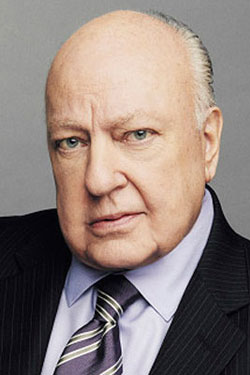
Roger Ailes
The longtime chairman of Fox News resigned in a sex scandal while Fox News parent company 21st Century Fox investigated accusations of sexual harassment and intimidation.
Ailes was sued by former Fox News host Gretchen Carlson for sexual harassment. That triggered more allegations against him, from both named and anonymous sources.
Now add questions about Ailes’ use of company funds “to hire consultants, political operatives and private detectives who reported only to him,” according to a New York magazine report, as part of a campaign to discredit Ailes’ personal and political enemies.
“Highly placed sources” tell Gabriel Sherman that in 2011 Ailes established a “Black Room” to conduct public relations and surveillance campaigns against people he targeted, including journalists. The article asks how Ailes was able to spend millions of dollars quietly to settle sexual harassment claims.
In reporting on the magazine’s allegations, CNN Money suggests the operation could violate of rules against corporate executives using company funds for personal reasons. “If true,” reported Dylan Byers, “such actions could make 21st Century Fox liable to its shareholders.”
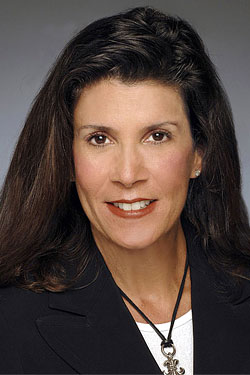
Shelley Ross
Powerful men leave big trails. Vanity Fair contends that unnamed staffers still fear reprisal if they discuss Ailes.
Ailes cut a wider swath than anyone realized and now could become a poster boy for fixing what has been described as deep-seated sexual harassment habits at Fox, and maybe the rest of the television industry.
Shelley Ross, described as once one of the most powerful women in TV news, offers her “big idea” for addressing sexual harassment in the workplace.
It’s patterned after the South African Truth and Reconciliation Commission. After the official end of apartheid in 1994, victims of brutality were invited to speak publicly about their experiences. Attackers were invited to testify and ask for amnesty from civil and criminal prosecution.
Ross wrote about her idea in The Daily Beast “after watching, dodging and experiencing sexual harassment for 30 years.”
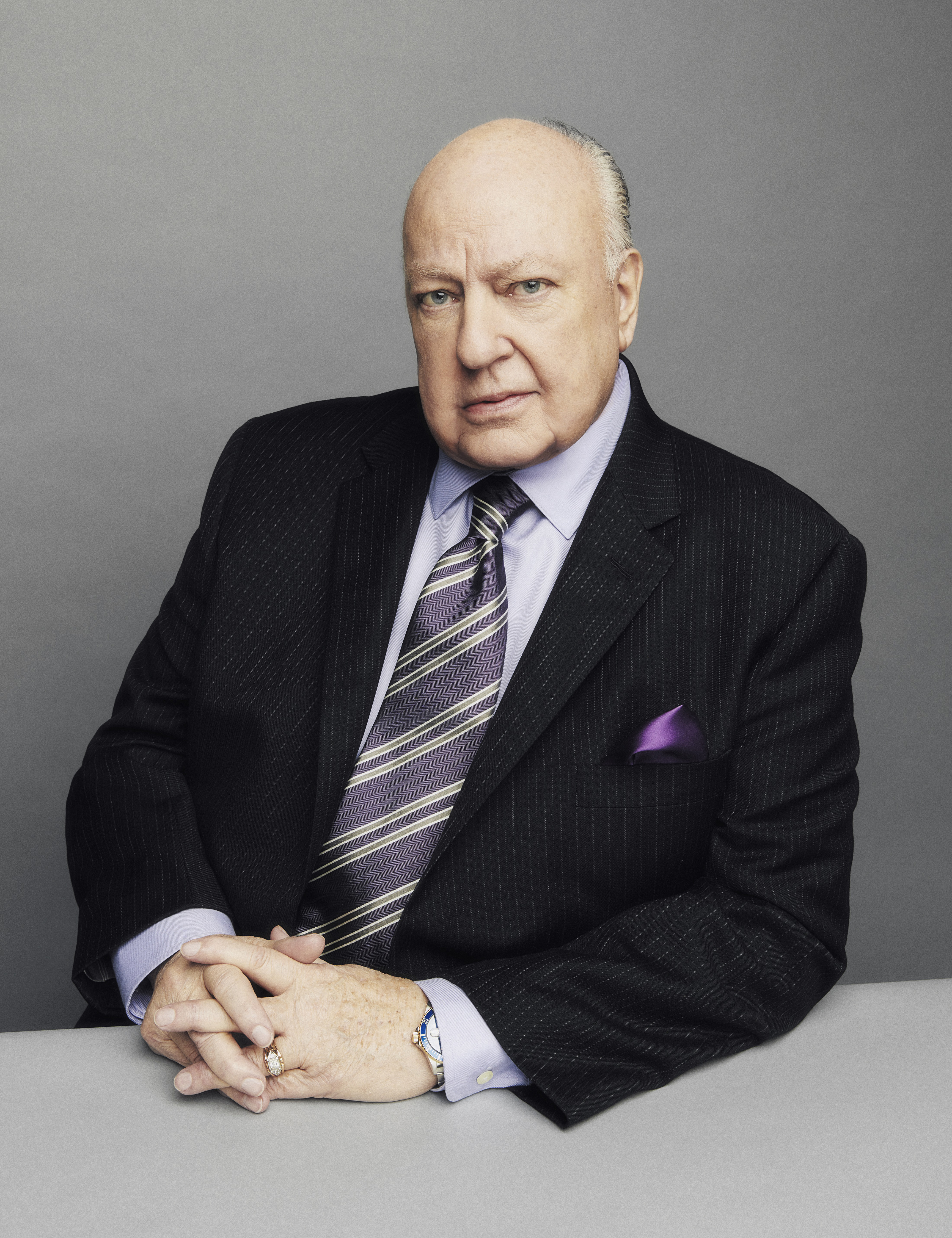
Fox News boss Roger Ailes resigns after he’s accused of sexual harassment. (Wesley Mann/Fox News photo)
By Casey Bukro
As chairman of Fox News, Roger Ailes peddled sex appeal.
News anchors often were chosen for their looks: young, pretty, blonde, leggy and shapely. That’s the way Ailes liked them. A lot. Maybe too much.
It’s a formula that led to his downfall, apparently because he could not resist temptation or the raptures of the casting couch. Ailes resigned amid sexual harassment allegations after a 20-year reign as head of Fox News, where he devised a highly successful broadcast formula of vitriolic partisan right-wing commentary.
Ailes’s own alleged comments are part of a lawsuit against him by former Fox News Anchor Gretchen Carlson.
“I think you and I should have had a sexual relationship a long time ago,” Ailes supposedly “>told Carlson. Carlson charges that Ailes sabotaged her career in retaliation for rebuffing his sexual advances and complaining about a hostile work environment. In a statement, Ailes contended her contract was not renewed due to low ratings and her lawsuit was her retaliation for the dismissal. Her lawyer claims the suit was considered even before the firing.
Carlson’s lawsuit prompted 25 women to come forward with what they describe as similar harassment claims against Ailes over five decades.
The Washington Post reported that interviews with four of the women “portray the 76-year-old television powerhouse as a man who could be routinely crude and inappropriate, ogling young women, commenting about their breasts and legs, and fostering a macho, insensitive culture.” One women accused Ailes of groping her. Ailes’s lawyer said the accusations are false.
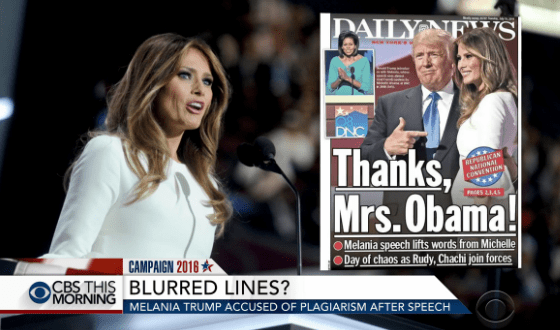
So what explains the umbrage over Melania Trump’s warmup speech at the Republican National Convention, extolling Trump family values and virtues of her husband, Donald, the Republican nominee for president?
“From a young age, my parents impressed on me the values that you work hard for what you want in life, that your word is your bond and you do what you say and keep your promise, that you treat people with respect,” said Trump to warm applause.
By the next day, political writers were pointing out that passage and others were almost exactly what First Lady Michelle Obama said at the 2008 Democratic National Convention.







 Ethics AdviceLine for Journalists