Tag Archives: Media Ethics

Political Endorsements Wane

http://www.tomliberman.com image

By Casey Bukro

Ethics AdviceLine for Journalists

The freelancer who contacted the Ethics AdviceLine for Journalists was troubled at learning that the Los Angeles Times and The Washington Post had stopped endorsing presidential candidates prior to the last election.

“I realize a newspaper isn’t necessarily required to issue a presidential endorsement, but both papers have a long history of doing so, so the decision not to do one is clearly a deviation from the norm, and I’d expect that would require a valid and ethical reason. So far, the reasons provided by both publications are far from transparent or satisfactory.”

The anguished journalist admitted the endorsement issue is “weighing heavily on me since I’ve already become incredibly disillusioned with my own industry over coverage of this election…. I fear the news media already has and continues to fail its responsibility to upholding democracy.”

A retreat

Clearly, the journalist is upset at seeing a retreat from an historic media responsibility for leading public opinion at a time when parts of the media industry are redefining themselves. And give her credit for taking journalism and its responsibilities seriously.

The endorsement issue captured national attention during a wild election campaign involving a candidate known to punish those deemed disloyal to him, sowing an undercurrent of fear and caution in the media.

But this was happening at a time when political endorsements are not as common as we might think.

Once ubiquitous

“While such plugs were once ubiquitous, they’ve faded in recent decades,” reported mentalfloss.com. It said a survey by Editor & Publisher “showed that by 1996, almost 70 percent of newspapers weren’t endorsing presidential candidates….”

“Part of this is probably a reluctance to engage in partisan politics, but it also probably speaks to the decline of the newspaper as a central aspect of Americans’ lives.

“With so many avenues available for voters to get to know the candidates, it seems rather quaint to think of anyone voting how an editor tells them to.”

Social media impact

That’s another way social media changed the way journalism and the American public operate.

Two highly circulated newspapers, USA Today and The Wall Street Journal, do not endorse political candidates. The last time WSJ endorsed a candidate was in 1928, plugging for Herbert Hoover, considered “the soundest proposition for those with a financial stake in the country.” A disastrous stock market crash soon followed, souring The Journal on endorsements.

“Big headlines popped up in media circles…when the billionaire owners of The Washington Post and Los Angeles Times blocked editorials that would have endorsed Kamala Harris,” wrote Rick Edmonds of the Poynter Institute in an article explaining “why newspaper presidential endorsements have become an endangered species.”

Resignations

The blocked editorials resulted in resignations at the Times and an angry petition from opinion writers at the Post. The Times admitted losing thousands of readers because of their decision.

“I had already been looking at regional papers, where the steady move away from taking sides in presidential elections has become an epidemic,” wrote Edmonds.

“Independent, locally owned organizations dominate the shrinking list of holdouts,” said Edmonds. “Here, too, disengagement is becoming a trend.”

Murky

That included the Minnesota Star Tribune, which published an explanation, said Edmonds, “that reads, to me, as many such do: murky and excuse-filled.”

The shadow of presidential reprisals hovers over media, along with deep public distrust of media. Among Edmonds’ reasons for ending political handicapping is one that touches on public perceptions. 

“No matters how many times the clarification is offered that an editorial board and the newsroom operate separately, many readers don’t see the distinction or don’t believe there is one.”

Ethics issue

This becomes solidly a media ethics issue.

Other issues Edmonds cited include pinched staffs and space, a belief that readers don’t want editors telling them what to think and the argument that regional papers don’t speak with authority on national matters.

The New York Times among national newspapers still endorses political candidates.

Partly from the public blowback from blocking endorsements, the owners at The Washington Post and the Los Angeles Times issued statements.

Tip scales

Jeff Bezos, owner of The Washington Post, said: “Presidential endorsements do nothing to tip scales of an election. No undecided voters in Pennsylvania are doing to say, ‘I’m going with Newspaper A’s endorsement.’ None. What presidential endorsements actually do is create a perception of bias. A perception of non-independence.”

Similarly, Times owner Dr. Patrick Soon- Shiong, said in an interview: “The process was (to decide): how do we actually best inform our readers? And there could be nobody better than us who try to sift the facts from fiction” while leaving it to readers to make their own final decisions. He feared picking a candidate would create deeper divisions in a nation already deeply divided over politics.

Some writers, like Jerry Moore of The Hill publication, reacted to declining political endorsements by saying: “What took them so long?” He thinks they have “outlived their purpose.”

Muddy waters

Political endorsements “muddy the waters of a newspaper’s independence,” he wrote. “A candidate favored by editorial board members becomes ‘their’ candidate moving forward.”

While “some journalists are calling it a betrayal of democratic responsibility,” writes David Artavia in yahoo!news.

That was exactly the point raised by Tara, the freelancer who came to the Ethics AdviceLine for Journalists looking for advice.

Providing facts

The AdviceLine advisor, David Craig, wrote in his report on the case: “We discussed her question but also two broader issues: the more general practice of newspaper endorsements of presidential candidates, beyond the two instances she raised. And her concern about whether (apart from editorial page choices) the normal approach to news reporting of just providing the facts – and the conventional frameworks of journalism ethics – work in what she saw as abnormal times with a threat to democracy if Donald Trump were re-elected.

“I told her I thought the decisions by the Times and Post owners were questionable from the standpoint of the principle of the (Society of Professional Journalists) code of being accountable and transparent, especially since the decision not to endorse was different from the recent past for these publications and came so close to the election.

After backlash

“I think they should have better explained the decisions both internally and externally, though Post owner Jeff Bezos did publish an opinion piece explaining his decision after backlash. I also told her I thought they violated the principle of acting independently by blocking the editorial boards from endorsement.

“She said she felt more comfortable about how she had understood the ethics of the decisions after hearing my perspective, which was essentially in line with hers.”

As for the broader issue of newspaper endorsements, Craig “noted my concern about possible negative impact on audience trust given the widespread distrust of news media today and perceptions of bias.”

Hold to principles

Addressing the broader concerns about the state of journalism, Craig urged the freelancer “to hold to the SPJ code’s principles of seeking truth, minimizing harm, acting independently and being accountable and transparent because they are not just journalism principles but human principles.

“Although there was no specific decision at issue here, it was evident she takes these matters very seriously, and she appreciated getting to talk about them.”

*********************************************************************************

The Ethics AdviceLine for Journalists was founded in 2001 by the Chicago Headline Club (Chicago professional chapter of the Society of Professional Journalists) and Loyola University Chicago Center for Ethics and Social Justice. It partnered with the Medill School of Journalism at Northwestern University in 2013. It is a free service.

Professional journalists are invited to contact the Ethics AdviceLine for Journalists for guidance on ethics. Call 866-DILEMMA or ethicsadvicelineforjournalists.org.

AI Scandal Hits Wyo. Paper

http://www.ctvnews.ca image

By Casey Bukro

Ethics AdviceLine for Journalists

In the first known case of deliberate falsification using artificial intelligence in journalism, a novice reporter for the Cody Enterprise has resigned and the editor apologized.

The futuristic technology in this case fabricated quotes attributed to various people, including Wyoming’s governor, who had not been interviewed by the reporter, Aaron Pelczar, a 40-year-old new to journalism.

It is the latest scandal in the troubled history of a new technology that blurs the difference between what is real and what is not.

Generative artificial intelligence of the kind being used in journalism grows by being fed information created by others, an algorithmic  learning process. In essence, AI is a copycat, a plagiarist and mistakes it makes are called hallucinations.

No hallucination

The story Pelczar wrote with the assistance of artificial intelligence was no hallucination, though it did turn out to be a nightmare for the Cody Enterprise.

“AI was allowed to put words that were never spoken into stories,” admitted Enterprise Editor Chris Bacon, and apologized that he “failed to catch” the false quotes.

“They’re very believable quotes,” said Bacon, pointing out that people he spoke to during his review of Pelczar’s articles said the quotes sounded like something they would say, but they never actually talked to Pelczar.

Did not intend to misquote

Upon resigning, Pelczar said he never intended to misquote anyone.

This controversy began with an investigation by a reporter for a competing newspaper, CJ Baker of the Powell Tribune. 

A reporter for 15 years, Baker noticed that several of Pelczar’s articles seemed oddly worded, including one that ended with instructions on how to write a news story, which had no bearing on the article.

In another oddity characteristic of generative AI, the questionable stories added incorrect roles and titles to people.

Calling people

Baker began calling people named in Pelczar’s articles who were quoted, and discovered none had spoken to Pelczar, though the quotes sounded plausible, which is characteristic of generative AI text.

Baker met with Pelczar and his editor with evidence that at least seven people who were quoted were never interviewed.

“It’s never comfortable to confront someone, but it’s especially uncomfortable when it involves colleagues in the media world,” Baker said. “What helped is that the editor at the Cody Enterprise, Chris Bacon, was gracious and receptive.”

My job

In an editorial, Bacon wrote: “It matters not that the false quotes were the apparent error of a hurried rookie reporter that trusted AI. It was my job.” He also apologized to the governor and others who were falsely quoted.

“I will eat crow with what dignity I can muster,” he wrote, “though pheasant tastes much better. I will do better.” He was working on an AI policy for the newspaper and as part of its hiring practice, “this will be a pre-employment topic of discussion.”

Megan Barton, Cody Enterprise publisher, wrote on the paper’s website: “AI isn’t all it’s cracked up to be, especially in our line of work. We take extreme pride in the content that we put out to our community and we trust that the individuals hired to accurately write these stories are honest in gathering their information. So, you can imagine our surprise when we learned otherwise….

“Plagiarism is something every media outlet has had to correct at some point or another. It’s the ugly part of the job. But, a company willing to right (or quite literally write) those wrongs is a reputable one. So, take this as our lesson learned.”

Longer conversations

Barton wrote that the newspaper now had a system to recognize AI-generated stories and will “have longer conversations about how AI-generated stories are not acceptable.”

It’s not the first time the media have been roiled by artificial intelligence, as well as falsification and plagiarism. Last year, Sports Illustrated came under fire for product reviews published under fake author names with fake author profiles.

Kelly McBride, senior vice president of the Poynter Institute for Media Studies, said of the Cody episode: “This sort of deception by a reporter is very similar to the old-fashioned ethical failures of plagiarism and fabrication. It’s what Jayson Blair did at The New York Times more than 20 years ago. He got caught when a reporter at a smaller paper called him out for plagiarizing her work.”

Newsrooms learn

Newsrooms can learn from such situations, she added.

Alex Mahadevan, also of the Poynter Institute, said it’s easy to create AI-generated stories: “These generative AI chatbots are programmed to give you an answer, no matter whether that answer is complete garbage or not.”

Humans must be alert enough to notice if the chatbots are deceiving them. In an ironic historic twist, the Cody Enterprise controversy grew out of an area famous for tall stories and western lore.

Cody Enterprise founded

The Cody Enterprise was founded in 1899 by William Fredrick Cody, otherwise known as Buffalo Bill, a showman most widely known for  Buffalo Bill’s Wild West, a traveling show featuring battles between American Indians and cowboys and soldiers. It toured across the United States and in Europe.

Cody, Wyoming, population 10,028, also is named for Buffalo Bill. The twice-weekly newspaper’s circulation is 4,675.

Though born in Iowa territory, Cody started his legend when he was only 23, performing in shows with cowboy themes and episodes from the frontier and Indian Wars.

Pony Express

At the age of 15, so the story goes, Cody became a rider for the legendary Pony Express, an express mail delivery service. And he claimed to be a trapper, bullwacker, wagonmaster, stage coach driver and hotel manager.

Historians have had difficulty documenting that, saying some of it might have been fabricated for publicity.

This much is known, during the Civil War, he served the Union from 1863 to the end of the war in 1865. Later, he was a civilian scout for the U.S. Army during the Indian Wars, for which he was awarded the Medal of Honor in 1872. He lost the award when it was rescinded in 1917 for 910 recipients, many of whom were not in the military.

Medal reinstated

Congress reinstated the Medal of Honor for Cody and four other civilian scouts in 1989.

Cody got his nickname, Buffalo Bill, after the Civil War, when he got a contract to supply Kansas Pacific Railroad workers with American bison meat. Code reportedly killed 4,282 buffalo in 18 months in 1867 and 1868.

Cody cut a rugged figure, dressed in primitive frontier garb, with a mustache and a long chin beard. His fame grew with the help of American dime novel author Edward Zane Carroll Judson, whose pen name was Ned Buntline, who was no stranger to fanciful writing.

Cody’s adventures

Buntline published a story based on Cody’s adventures, largely invented by Buntline. He followed that with a highly successful novel, Buffalo Bill, King of the Bordermen, which was serialized in the Chicago Tribune.

Sequels followed and an enduring legend was born.

Like Buffalo Bill himself, artificial intelligence is seen in different ways by various people, a modern miracle or some kind of media doomsday machine.

Different versions

Where journalism is concerned, artificial intelligence seems like one of those Japanese movies in which several observers of an event tell different versions of what they saw.

Writing for the Brookings Institution, Courtney C. Radsch asks: “Can journalism survive artificial intelligence?” In the past 20 years, she points out, the U.S. lost two-thirds of its newspaper journalist jobs – jobs that AI cannot fill.

Despite that, she writes, AI advancements continue the “platformization” of journalism and enabling a handful of technology firms to maintain their control over our information channels.

Double down

“Journalism can only survive if the news industry unites to double down on journalists and demand a framework in their deals with tech giants that benefits journalism in the public interest.” It depends, she adds, on whether journalism can adapt its business models to the AI era.

With AI, “innovation in journalism is back,” writes David Caswell for the Reuters Institute for the Study of Journalism.

“Following a peak of activity in the mid 2010s, the idea of fundamentally reinventing how news might be produced and consumed had gradually become less fashionable, giving way to incrementalism, shallow rhetoric and in some cases even unapologetic ‘innovation exhaustion.’

Urgent focus

“No longer. The public release of ChatGPT in late November of 2022 demonstrated capabilities with such obvious and profound potential impact for journalism that AI-driven innovation is now the urgent focus of the senior leadership teams in almost every newsroom. The entire news industry is asking itself, ‘what’s next?’

Jack Shafer, writing in Politico, said artificial intelligence is poised to change the news business at every level.

“Used effectively, it promises to make news more accurately and timely. Used frivolously, it will spawn an ocean of spam.” The future has not yet been written, says Shafer. AI in the newsroom will be only as bad or good as its developers and users make it.

Times copyright suit

The New York Times sees artificial intelligence as a thief of intellectual property. The nation’s foremost newspaper in December sued OpenAI and Microsoft for copyright infringement, opening a new front in an increasingly intense legal battle over the unauthorized use of published work to train artificial intelligence technologies. The Times is the first major American media organization to sue the companies.

“Defendants seek to free-ride on The Times’s massive investment in its journalism,” the complaint says, accusing OpenAI and Microsoft of “using The Times’s content without payment to create products that substitute for The Times and steal audiences away from it.”

OpenAI said The Times was not telling the whole story.

In a substack, journalism veteran James O’Shea charges that prophets of artificial intelligence are meeting their own worst enemy: Themselves.

“From the manipulation of posts on Elon Musk’s careless X platform to the dishonest bots exposed by NewsGuard on its Reality Check service, misuse of the AI technology pollutes the promise touted by its champions.”

The objective

This talk of the promise of artificial intelligence prompts a question: How did all of this get started and what was the objective?

Like much of today’s advanced technology, it started with something that seems like science fiction. A history of artificial intelligence says it began with ancient myths and stories of artificial beings with human intelligence.

Quests attempting to describe the process of human thinking led to the programmable digital computers in the 1940s.

That device inspired a handful of scientists to discuss the possibility of building an electronic brain.

The field of AI research was founded at a workshop held on the campus of Dartmouth College in the summer of 1956.

Scientists predicted that a machine as intelligent as a human would exist in no more than a generation, but it became obvious that researchers grossly underestimated the difficulty of the project, leading investors to become disillusioned and withdrawing funding in a time known as an “AI winter.”

But powerful computer hardware and breakthrough technology brought us to where we are today, with machines that think in ways that scientists do not fully understand. And they have “hallucinations.”

***********************************************************

The Ethics AdviceLine for Journalists was founded in 2001 by the Chicago Headline Club (Chicago professional chapter of the Society of Professional Journalists) and Loyola University Chicago Center for Ethics and Social Justice. It partnered with the Medill School of Journalism at Northwestern University in 2013. It is a free service.

Professional journalists are invited to contact the Ethics AdviceLine for Journalists for guidance on ethics. Call 866-DILEMMA or ethicsadvicelineforjournalists.org.

Fracking News Rejected

revistaenfoque.com.co image

By Casey Bukro

Ethics AdviceLine for Journalists

Fracking, the controversial process of forcing oil and natural gas from the Earth, was added to the tumultuous history of Southern Illinois, a land known as “Little Egypt.”

Journalists joined a long list of combatants going back more than a century when a publisher hung a sign in his newspaper’s window saying: “No anti-fracking info welcome. If you have a problem, see my lawyer.”

Fracking was coming fast to the rural county where the newspaper is located as a gas company bought up mineral rights in the area. The publisher was feeling pressure from businesses that stand to benefit financially from the gas production business.

Both sides debated

The publisher decided that his paper, and a sister paper, would not accept articles or material from groups that oppose fracking for environmental reasons. Prior to that decision, both newspapers published articles for several weeks on both sides of the debate about fracking.

Then came the sign in the window. It was too much for a freelance writer working for one of the newspapers, who contacted AdviceLine and took action of her own.

“I resigned from writing my regular human interest column in protest because I think this is a violation of journalism ethics; but I wanted to get the judgment of some other people who know about this,” the journalist told David Ozar, the AdviceLine advisor.

Stands by standards

No doubt, the freelance writer stands with the Society of Professional Journalists Code of Ethics, which urged journalists to seek truth and report it, and to recognize a special obligation to serve as watchdogs over public affairs without favoring special interest groups.

The final article the freelancer wrote for her newspaper explained why she was resigning, and the publisher agreed to publish it. The freelancer also allowed AdviceLine to report details of the case for educational purposes.

This episode emerged in an area known for bloody feuds, gun battles with rivals and authorities, and a distinct southern flavor inherited from its earliest settlers who came from America’s hilly backcountry in the southeast. Although Illinois was an anti-slavery state, some Southern Illinoisians owned slaves and fought for the confederacy in the Civil War. They are culturally aligned with Western Kentucky, Southwestern Indiana and West Tennessee – where people all speak with similar Southern accents.

Towns boast of “old fashioned southern hospitality,” inviting visitors to “come experience our scenic beauty and enjoy the peace and tranquility of our small town.”

Little Egypt

The region got its name, “Little Egypt,” when early settlers compared the bountiful Mississippi River with the Nile and ancient Indian mounds in the area, like the Cahokia Mounds, to the Egyptian pyramids. The earliest inhabitants of Illinois arrived around 12,000 BC.

Once the wealthiest part of the state, and earliest to be settled, Illinois fell on hard times in a series of steps that transformed the region.

Vast tracts of forests covered southern Illinois, before they were clearcut to make way for farms. Forty-two percent of Illinois once was covered with forest. Today, about 10 percent is left.

The trees were seen as obstacles to be swept away. A 1818 booklet said: “To travel day after day, among trees of a hundred feet high, without a glimpse of the surrounding country, is oppressive to a degree…”

Forty acres of land sold for $5, fueling a land rush. In the early 1800s, 99 percent of the men in southern Illinois were farmers. Farming grew swiftly in the region and peaked arounder 1900, when dramatic crop failures led to severe economic hardship for farm families. 

Century of farming

“The general region has been farmed for 100 years and much of the farm soil is worn out,” said a U.S. Department of Agriculture Forest Service report. “Many of the farms have been abandoned on account of worn out soil and erosion. A large percentage of the row crops are on soil which should not have been cleared of timber. It was suitable only for tree crops. Practically the whole region has been logged from one to ten times.” That also led to catastrophic floods.

Log houses from that time still are scattered along backcountry roads, although stone chimneys often are all that remain.

Coal mining next took its toll on the land in the region.

Goaded by conservationists, state and federal government officials moved to reclaim what became known as “the wastelands of Illinois.”

In 1931, the Illinois General Assembly passed an act inviting the federal government to establish a national forest in the state, in addition to one created in 1925.

A planted forest

This led to the 280,000-acre Shawnee National Forest in 1939, much of it exhausted farmland. It includes the Ozark and Shawnee Hills of southern Illinois and covers parts of nine Illinois counties. Illinois cities in or near the area are Carbondale, Marion and Cairo.

Throughout the 1930s and 1940s, the Civilian Conservation Corps planted pine trees to prevent erosion and help rebuild the soil, although the region includes hardwood trees and other plants and animals typical of the area. 

Through the 1980s and 1990s, the region was swept by more conflict as local, regional and national environment groups campaigned for the preservation and expansion of Shawnee National Forest and a wise use management plan.

The newspaper publisher who wanted no more information about fracking seemed to be carrying on a long tradition in southern Illinois of combative disagreement.

*********************************************************************

The Ethics AdviceLine for Journalists was founded in 2001 by the Chicago Headline Club (Chicago professional chapter of the Society of Professional Journalists) and Loyola University Chicago Center for Ethics and Social Justice. It partnered with the Medill School of Journalism at Northwestern University in 2013. It is a free service.

Professional journalists are invited to contact the Ethics AdviceLine for Journalists for guidance on ethics. Call 866-DILEMMA or ethicsadvicelineforjournalists.org.

Mental Illness and Privacy

St. Patrick’s Mental Health Services image

By Casey Bukro

Ethics AdviceLine for Journalists.

Mental illness places a special responsibility on journalists to be sensitive to those involved in a story, which can become unusually complicated.

For example, the Ethics AdviceLine for Journalists was contacted in a case involving a missing 23-year-old woman last seen in a Lake Placid, New York, hotel. Her father posted information about her disappearance on his Facebook page.

A reporter for the Adirondack Daily Enterprise in Saranac Lake, New York, interviewed the father, who said his daughter had been on anxiety medications and exhibited “bizarre behavior” during a Skype call with her. The missing woman was off her medications, her best friend told the father.

“We had some reservations about publishing all this information about her,” the newspaper’s managing editor told AdviceLine, “but we went ahead and published it anyway.”

Missing person stories pose a familiar dilemma for journalists. They sometimes are criticized for waiting too long to inform the public about a missing person. Worried families want immediate action from media. Experienced journalists know that the missing person in most cases is found safe and unharmed, although not always. Sometimes people are reported missing because of misunderstandings about where they were expected to be.

In the Adirondack Daily Enterprise case, the missing woman was found a few hours after the print edition hit the street.

“Subsequently, we received a phone call from the young woman’s best friend, in which she claimed she had communicated with her friend’s father in confidence, and would not have spoken so freely had she known that her statements would find their way into print,” said the managing editor.

The caller said that her friend, the formerly missing young woman, would be greatly upset to see such private information about herself made public, and that it might do her some harm. She asked the newspaper to redact the online story to remove references to her medical condition, and what the friend had told the woman’s father.

The managing editor asked the AdviceLine adviser if the newspaper should let the record stand, or if the story should be redacted.

In his report on the query, the AdviceLine adviser wrote: “We spoke at some length about the conflict between refusal to alter an already-published story and the ‘minimize harm’ issues raised by the case.

“The most troubling bit had to do with the communication of the woman’s best friend to her father being made public. But the whole question of her privacy, particularly regarding sensitive personal medical information, was an important one.

“She is a private individual, with a greater presumptive right to privacy and consideration of that privacy from journalists. Future employers doing an Internet search of her name, for example, might come up with the story in its unedited form, and it might raise unnecessary red flags for her.

“The issue is: does she have a particularly strong case for special consideration here? Would the public be harmed if the information about her medical condition were to be deleted? Did it really need to know that information at the time the story was first issued.”

The conversation highlighted the “minimize harm” issues of the case, and touched on the possibility that it also could serve as a public forum topic on how the media should cover cases involving people with mental illness.

The managing editor responded: “Oh, wow, this is even better advice than I expected. Thank you so much – I do in fact know a professor who would love to help moderate a discussion.” He also agreed to AdviceLine’s use of the Adirondack Daily Enterprise case “as a teaching example.”

The Society of Professional Journalists code of ethics urges journalists to minimize harm in news reports.

******************************************************************

The Ethics AdviceLine for Journalists was founded in 2001 by the Chicago Headline Club (Chicago professional chapter of the Society of Professional Journalists) and Loyola University Chicago Center for Ethics and Social Justice. It partnered with the Medill School of Journalism at Northwestern University in 2013. It is a free service.

Professional journalists are invited to contact the Ethics AdviceLine for Journalists for guidance on ethics. Call 866-DILEMMA or ethicsadvicelineforjournalists.org.
Naming A Boy in Sex Case

ipkitten.blogpost.com image

By Casey Bukro

Ethics AdviceLine for Journalists

A church youth leader is accused of having a sexual relationship with a boy, a minor at the time of the alleged crime.

The youth is 18 years old by the time the case reaches trial. His mother is the first witness in the case, using her full name. In court, the boy is identified as John Doe.

The reporter covering the case calls the Ethics AdviceLine for Journalists, asking if his California newspaper should print the mother’s name, which would identify the boy. They live in a small town.

The reporter is concerned about potential harm to the boy from being identified.

“I asked if the news organization has any policies or precedents that are relevant” to the case, the AdviceLine advisor said in his report on this case. The advisor also mentioned the Society of Professional Journalists code of ethics, which urges journalists to minimize harm while seeking truth.

The reporter responded that his newspaper had no policies or precedents that could help answer the question.

Looking for a second opinion, the AdviceLine ethicist contacted a member of the Ethics AdviceLine for Journalists staff who is a professional journalist. Most of the questions AdviceLine gets are answered by a staff of ethicists who teach or taught ethics at universities. But the ethicists sometimes reach out to professional journalists to ask how the news media typically handle some ethics issues.

“I wanted to get a second opinion on this since the boy is now at the legal age of an adult, and his mother is allowing herself to be named,” said the ethicist. The journalist “agreed with my initial inclination to err on the side of caution without a compelling reason to identify him.”

The journalist pointed out that even though the complainant is 18 years old, he is still young and warrants some additional protection.

“That’s in keeping with what the SPJ code and ethics scholars would say about being sensitive to vulnerable parties, including young people,” said the ethicist in his report. When the ethicist called back, he learned that the reporter had discussed the case again with his editor and they had come to the same conclusion.

Here’s what the SPJ code of ethics says: “Use heightened sensitivity when dealing with juveniles, victims of sex crimes and sources or subjects who are inexperienced or unable to give consent. Consider cultural differences in approach and treatment.”

********************************************************************************

The Ethics AdviceLine for Journalists was founded in 2001 by the Chicago Headline Club (Chicago professional chapter of the Society of Professional Journalists) and Loyola University Chicago Center for Ethics and Social Justice. It partnered with the Medill School of Journalism at Northwestern University in 2013. It is a free service.

Professional journalists are invited to contact the Ethics AdviceLine for Journalists for guidance on ethics. Call 866-DILEMMA or ethicsadvicelineforjournalists.org.
Troubling News Source

killtolive.itch.io image

By Casey Bukro

Ethics AdviceLine for Journalists

The Minnesota reporter said she had a “strange and not-disclosable” relationship with a news source, but it was not sexual, not even a friendship.

The source, an elected official, gives the reporter insights into stories on the county beat, but the reporter is conflicted over where to ethically “draw the line” when using the source. She is becoming uncomfortable with the nature of the relationship and is not certain she can remain objective if the source is part of the story.

Told of this conflict, the reporter’s editor suggests taking the reporter off the county beat, or having someone else cover a story that involves the problematic source.

The reporter called the Ethics AdviceLine for Journalists, asking what she should do.

Take a moment and reflect on what you might suggest to the troubled reporter. She wants to be objective, but feels she is being drawn into a relationship she has trouble defining, and one that could lead to a more serious ethical dilemma in the future.

The Ethics AdviceLine for Journalists advisor recognized that the reporter wants to do the right thing, but is reluctant to give up the source or the county beat, where she has deep experience. She values the “inside” information but has used the source so often, the relationship has become ethically uncomfortable. She fears a time might come when she might be required to report unfavorably on the source.

The safer course, reasoned the advisor, would be for someone else to interview the source when necessary, with the reporter’s coaching, rather than abandoning the county beat. The advisor complimented the reporter for her self-examination in trying to reach an ethical solution to a matter that was bothering her.

*****************************************************************

The Ethics AdviceLine for Journalists was founded in 2001 by the Chicago Headline Club (Chicago professional chapter of the Society of Professional Journalists) and Loyola University Chicago Center for Ethics and Social Justice. It partnered with the Medill School of Journalism at Northwestern University in 2013. It is a free service.

Professional journalists are invited to contact the Ethics AdviceLine for Journalists for guidance on ethics. Call 866-DILEMMA or ethicsadvicelineforjournalists.org.

Roe vs. Wade Leak

news.sky.com image

By Casey Bukro

Ethics AdviceLine for Journalists.

A soothsayer warned Julius Caesar to beware the ides of March, sometime around 44 BC.

Daniel Ellsberg leaked the Pentagon Papers to newspapers in 1971, revealing that the Johnson administration had systematically lied about the United States’ political and military involvement in Vietnam from 1945 to 1967.

WikiLeaks, launched in 2006, publishes news leaks and classified media provided by anonymous sources. The international non-profit organization said it released online 10 million documents in its first 10 years.

Leaks of sensitive, sometimes shocking, information are a time-honored tradition in history and the United States. It’s done, often by whistle-blowers, who believe the public is entitled to know something that is being kept secret.

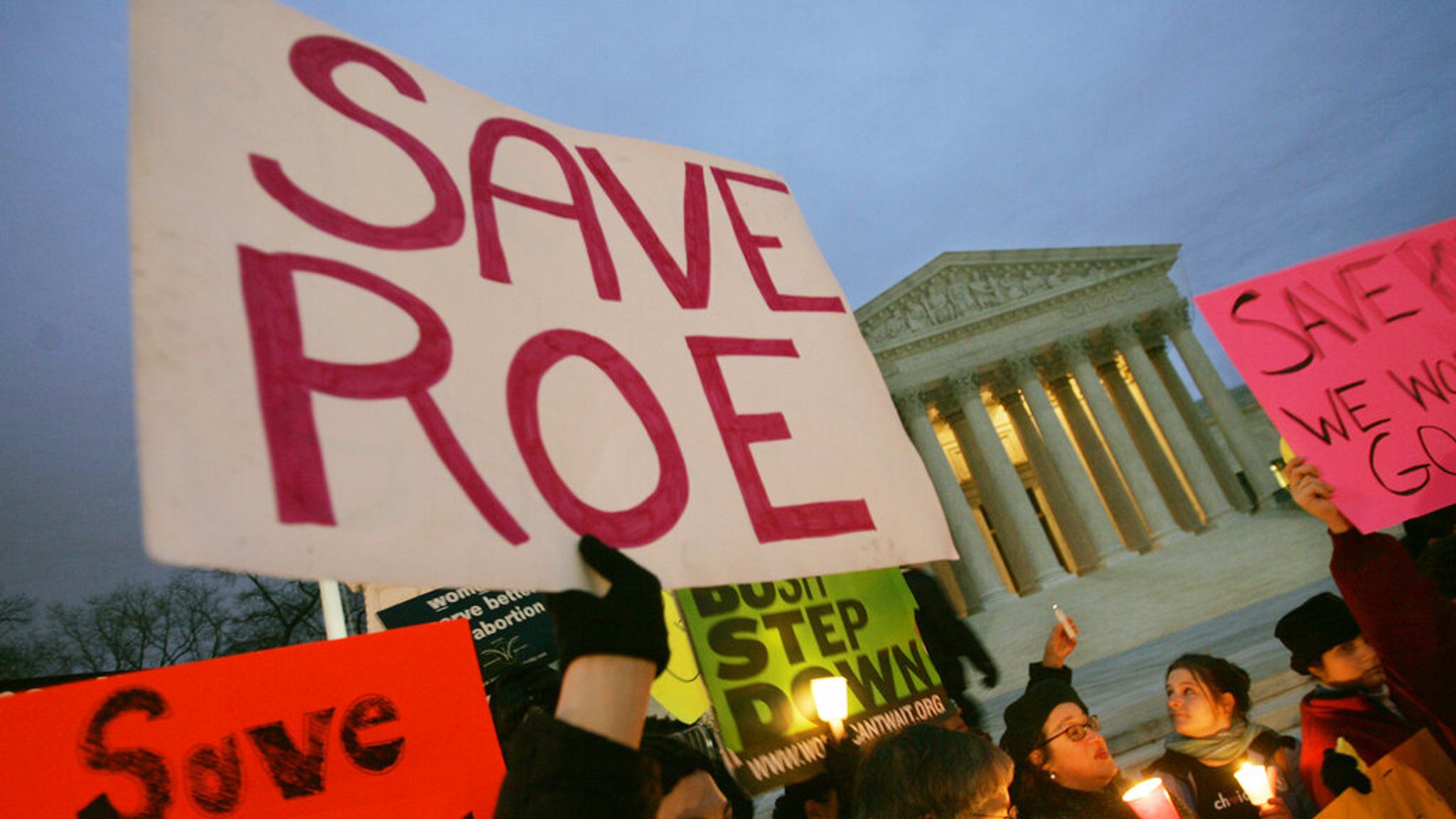
The latest example is the explosive report by Politico that a U.S. Supreme Court draft opinion proposes to overturn the landmark 1973 Roe vs. Wade decision that made abortion legal in every state. Politico reported: “No draft decision in the modern history of the court has been disclosed publicly while a case was still pending.”

The 98-page draft was written by Justice Samuel Alito, who says abortion is not mentioned in the U.S. Constitution. This argument might appeal to constitution originalists, although the high court rules on cases involving jet planes, which also are not mentioned in the constitution.

That might be among the many issues the revelation unleashed, including highly emotional protests that largely eclipsed news about the Russian invasion of Ukraine for a day or two. It opened layers of concerns about legal abortion availability, the honesty of justices who said they supported Roe vs. Wade as established law at their confirmation hearings and the authenticity of the draft opinion. A day after the disclosure, Supreme Court Chief Justice John Roberts confirmed that the leaked draft ruling was authentic, but did not represent the court’s final decision in the case.edia ethics

Among the troubling concerns raised by the leak was how Politico obtained the draft ruling, and from whom. This is in the realm of journalism ethics. The Society of Professional Journalists code of ethics cautions journalists against using undercover methods to obtain information, promising anonymity, favors to news sources or paying for information.

“The ethics behind Politico’s decision to publish the document will likely become a case study for future generations of journalists,” writes Kelly McBride, senior vice president of the Poynter Institute, a journalism school in St. Petersburg, Florida. “Politico offers very few details about how they got the copy…..(and) what the newsroom did to confirm that it’s real or even if it’s the most current draft.”

Politico reporters Josh Gerstein and Alexander Ward said in their 2,500-word story that Politico received a copy of the draft opinion from a person familiar with the case along with details supporting the authenticity of the document. They did not elaborate.

McBride wrote further: “Editors at Politico would help dubious readers if they explained why they are so confident the document is real and how they made the decision to publish it. When confronted with an unprecedented leak like this, news consumers are understandably skeptical in this era of mis-and disinformation. When journalists behind the work don’t signal that they have gone through an ethical process, consumers may conclude that ethics don’t matter to journalists.”

But McBride had no doubts that it was newsworthy. “Clearly, “ she wrote, “an unprecedented leak that could overturn a five-decade-old divisive national issue is news.”

*************************************************************

The Ethics AdviceLine for Journalists was founded in 2001 by the Chicago Headline Club (Chicago professional chapter of the Society of Professional Journalists) and Loyola University Chicago Center for Ethics and Social Justice. It partnered with the Medill School of Journalism at Northwestern University in 2013. It is a free service.

Professional journalists are invited to contact the Ethics AdviceLine for Journalists for guidance on ethics. Call 866-DILEMMA or ethicsadvicelineforjournalists.org.

Ethics and Algorithms

blog.eduonix.com image

By Casey Bukro

Ethics AdviceLine for Journalists

George Orwell was right. Big Brother is watching, only now they are called algorithms, the list of instructions and rules that a computer needs to do a task.

In Orwell’s book, 1984, Big Brother included totalitarian forces that governed the thoughts and actions of people living in a dystopian science fiction society under mass surveillance and regimentation. In Orwell’s imagined future, Thought Police persecute individuality and independent thinking. Big Brother is the dictatorial leader.

Now, 73 years after the English writer’s book was published in 1949, rigid and mindless computer algorithms do the job of governing human behavior. But now it’s not science fiction.

Orwell might be surprised to learn that Big Brother became senile.

Here’s an example: On April 6, I posted on Facebook a report explaining how an ethicist tells the difference between a genuine ethical dilemma and a difficult ethical choice. This is about ethics in journalism. I tried to boost that report, aiming to get a bigger audience through advertising.

The response from Meta for Business, the new corporate name for Facebook, said: “Your ad was rejected.” It went on to say the ad was rejected “because it doesn’t comply with our Cheating and Deceitful Practices policy.” Imagine that. Meta considers a report about ethics, the study of right or good conduct, as cheating or deceitful conduct.

Meta algorithms must have overheated a circuit or two to arrive at that conclusion. Or Facebook and its algorithms are unfamiliar with the term “ethics.” That might be the reason, a year ago, the CEOs of Facebook, Twitter and Google faced congressional lawmakers who criticized them for algorithms that promote misinformation and online extremism, such as baseless election fraud claims and anti-vaccine content.

Back to the issue of ethics being cheating or deceitful conduct, Meta stated further: “Ads may not promote products or services that are designed to enable a user to engage in cheating or deceitful practices.” The rejection notice gave eight examples of cheating or deceitful practices. None of them mentioned ethics.

One of the prohibited examples: “Ads many not promote fake documents, such as counterfeit degrees, passports, immigration papers, or fake currency.” Another discouraged “Incentivizing or soliciting reviews in exchange for free products.”

None of them seemed to justify banning an ad about ethical practices intended to help journalists.

It appears Facebook and its algorithms need to be smarter about ethics, including the welfare of their users.

************************************************************************

The Ethics AdviceLine for Journalists was founded in 2001 by the Chicago Headline Club (Chicago professional chapter of the Society of Professional Journalists) and Loyola University Chicago Center for Ethics and Social Justice. It partnered with the Medill School of Journalism at Northwestern University in 2013. It is a free service.

Professional journalists are invited to contact the Ethics AdviceLine for Journalists for guidance on ethics. Call 866-DILEMMA or ethicsadvicelineforjournalists.org.
A Hate Group Chat

nrinenewstoday.com image

By Casey Bukro

Ethics AdviceLine for Journalists

A staff writer for a southern arts and entertainment magazine learns that the publication’s columnist spoke to a racist hate group on how to get their message out through media.

Fearing this violates ethical standards, the staff writer brings her concerns to an editor, who becomes angry for “bringing him problems without offering solutions.” The columnist who spoke to the League of the South did so without management’s knowledge, and contends she did not know about the neo-Confederate organization’s mission and reputation.

The staff writer comes to the Ethics AdviceLine for Journalist asking how she should deal with this situation, since she is not sure she wants to work for a publication that employs people who appeal to racist groups. What advice would you give to the staff writer?

The Society of Professional Journalists code of ethics encourages journalists to “remain free of associations and activities that may compromise integrity or damage credibility.” It also tells journalists to “support the open exchange of views, even views they find repugnant.”

****************************************************************************

The Ethics AdviceLine for Journalists was founded in 2001 by the Chicago Headline Club (Chicago professional chapter of the Society of Professional Journalists) and Loyola University Chicago Center for Ethics and Social Justice. It partnered with the Medill School of Journalism at Northwestern University in 2013. It is a free service.

Professional journalists are invited to contact the Ethics AdviceLine for Journalists for guidance on ethics. Call 866-DILEMMA or ethicsadvicelineforjournalists.org.

Cuomo Conflicts

By Casey Bukro

Ethics AdviceLine for Journalists

Andrew and Chris Cuomo youtube.com image

If Chris Cuomo considers himself a journalist, he forgot who he’s working for.

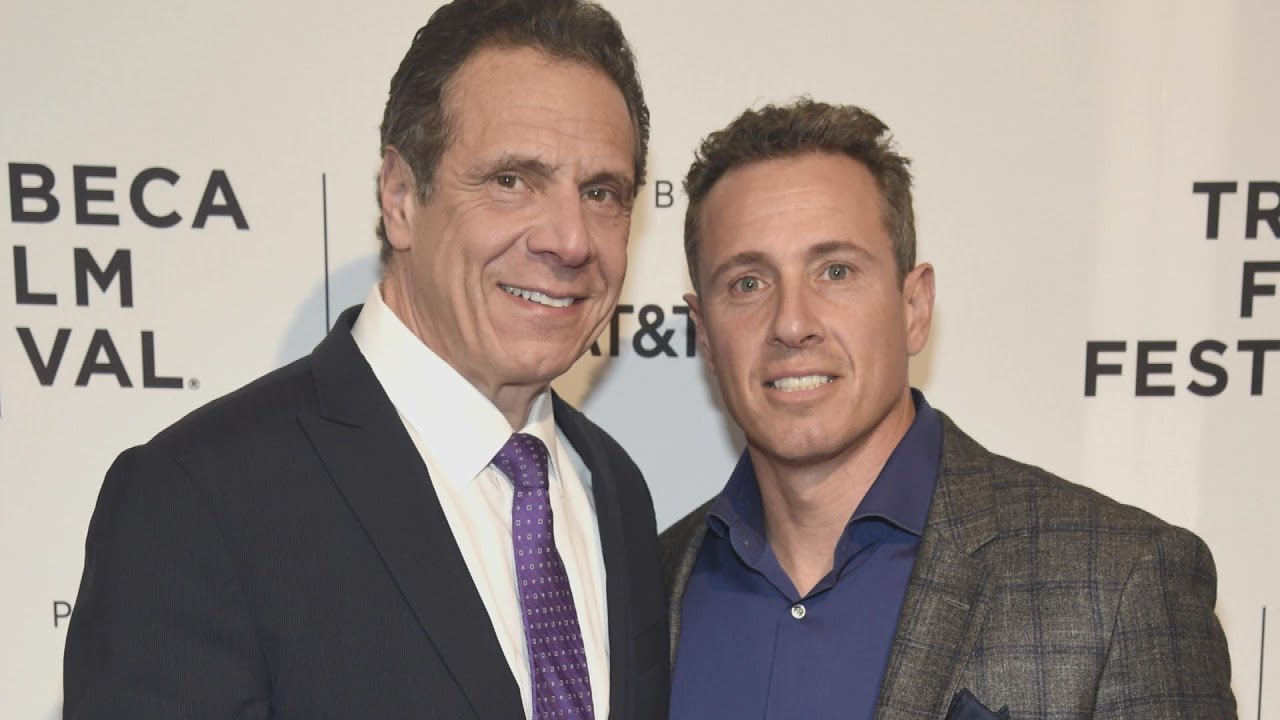
Journalists work for the public interest, not for conflict of interest favors for his brother, Andrew, the former governor of New York who left office amid a flurry of sexual misconduct allegations by 11 women.

A CNN superstar broadcaster, Chris Cuomo admits to a “family first, job second” ethical standard that led him to strategize a defense with his brother, while allegedly using his media contacts and helping the brother to dig up information about one of the female accusers.

For that, CNN placed the star anchor on indefinite suspension from the network because “he broke our rules.”

Acknowledging his suspension on a radio program, Chris Cuomo said: “It really hurts to say it, it’s embarrassing, but I understand it and I understand why some people feel the way they do about what I did. I’ve apologized in the past and I mean it, it’s the last thing I ever wanted to do was compromise any of my colleagues and do anything but help.” He has called his actions a “mistake.”

Cases like this tend to convince the public that journalists have no ethical standards, and smear journalists who recognize they have a calling that requires them to act with high standards, and abide by them. The Society of Professional Journalists code of ethics spells out those standards. Journalists should:

*Avoid conflicts of interest, real or perceived. Disclose unavoidable conflicts.

*Expose unethical conduct in journalism, including within their organizations.

*Abide by the same high standards they expect of others.

Margaret Sullivan, the Washington Post’s media columnist, points out that some observers sympathize with the “family first” defense, but she is not impressed.

“No, this was about a high-powered media star using his considerable juice to blunt credible accusations of sexual assault and misconduct against the governor of New York,” she wrote. “Even if you accept the idea that Chris Cuomo is less a journalist than an entertainer, the rules of journalistic ethics still ought to apply. He is, as much as anyone, the face of CNN.”

The rules are pretty simple, says Sullivan: “You don’t abuse your position in journalism — whether at a weekly newspaper or a major network — for personal or familial gain.”

**********************************************************************************

The Ethics AdviceLine for Journalists was founded in 2001 by the Chicago Headline Club (Chicago professional chapter of the Society of Professional Journalists) and Loyola University Chicago Center for Ethics and Social Justice. It partnered with the Medill School of Journalism at Northwestern University in 2013. It is a free service.

Professional journalists are invited to contact the Ethics AdviceLine for Journalists for guidance on ethics. Call 866-DILEMMA or ethicsadvicelineforjournalists.org.