Tag Archives: journalism ethics

Anti-Immigrant Blitz Burns

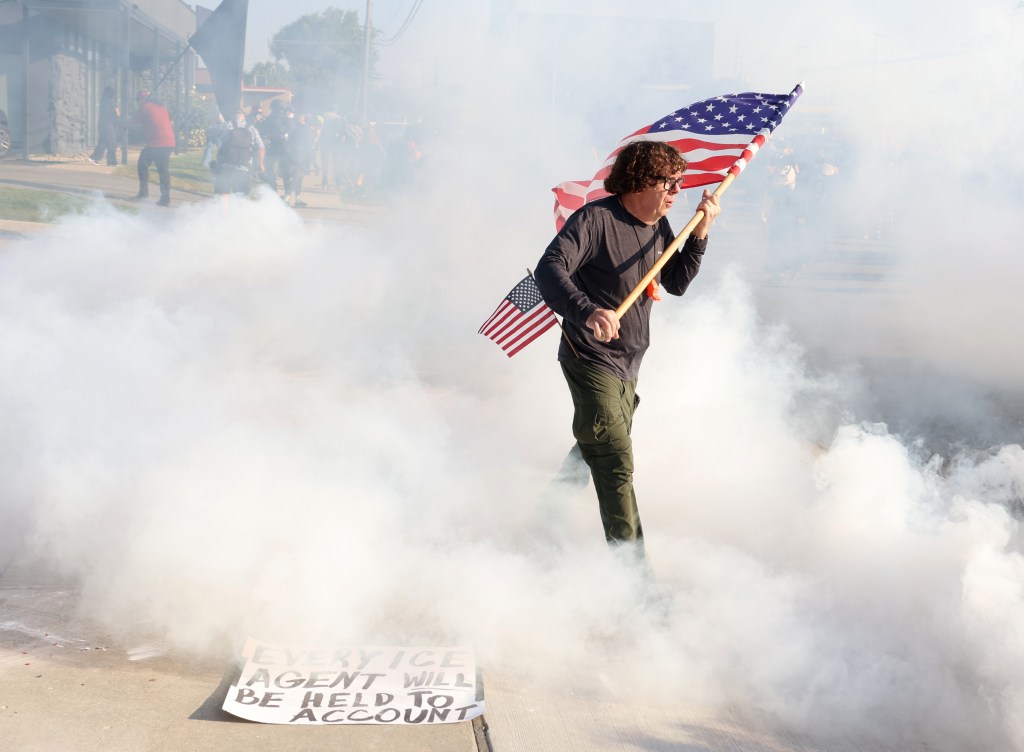
Protester in cloud of chemical spray in Broadview — Chicago Tribune photo

By Casey Bukro

Ethics AdviceLine for Journalists

Immigrants in America, once a haven for such people, are now targets of federal crackdowns ordered by the Trump administration in sometime violent sweeps by masked and unidentified men.

The mass detention policy beginning on July 8 indiscriminately locked up immigrants who are contesting government attempts to deport them, which has been declared illegal by dozens of federal judges, according to Politico. Millions of immigrants are targeted.

In Los Angeles, Portland, Washington, D.C., Memphis and Chicago, federal troops and the National Guard were mobilized in the crackdown, which was highly controversial, unpopular, and in some cases challenged by shouting demonstrators.

How they look

“Dozens of federal agents took individuals into custody during a winding patrol Sunday through downtown Chicago,” the Chicago Sun-Times reported, “and a top U.S. Border Patrol official told WBEZ (broadcasting station) the agents were arresting people based on ‘how they look.’”

Passersby shouted at the agents, telling them to go home and “ICE sucks,” referring to U.S. Immigration and Customs Enforcement, one of the agencies in the deportation blitz. One person shouted “thank you!”, while another said sarcastically, “Real patriotic guys. Real patriotic.”

About two dozen protesters followed the agents, chanting “ICE go home!”

Illinois governor protests

On social media, Illinois Gov. JB Pritzker noted the agents were carrying large weapons in downtown Chicago while wearing camouflage and masks.

“This is not making anybody safer – it’s a show of intimidation, instilling fear in our communities and hurting our businesses,” said the Democratic governor.

Newsweek reported that ICE arrested more than 2,200 undocumented migrants in a single day.

Faced with increasing hostility, the U.S. Department of Homeland issued a statement saying: “Despite ongoing attacks and villainization of our brave U.S. Immigration and Customs Enforcement (ICE) officers, ICE continues to arrest the worst of the worst criminal illegal aliens across the country. Over the past two days, criminal Illegal aliens arrested by ICE have prior convictions for crimes including sexual conduct with a minor under 14, indecency with a child, criminally negligent DUI, homicide, drug charges, aggravated assault with a deadly weapon, theft, burglary and battery.”

Opposing politicians are comparing ICE to the Nazi Gestapo, secret police and slave patrols, said an agency official.

Collateral damage

In the first 50 days of the Trump administration, immigration officials arrested more than 32,000 migrants living in the United States without legal status. But these included 8,718 persons who were considered “collateral damage” and not immigration violators.

One of the most heated clashes with ICE agents came in Broadview, a village of 7,998 residents 12 miles west of downtown Chicago, where a federal deportation center is located. ICE agents used chemical irritants to fend off protesters at the processing center.

“We are experiencing an immediate health safety crisis,” Broadview Police Chief Thomas Mills said at a news conference. “The deployment of tear gas, pepper spray, mace and rubber bullets by ICE near the processing center in the Village of Broadview is creating a dangerous situation for the community and all first responders.”

Broadview Mayor Katrina Thompson said gas clouds released by the agents irritate people within 200 to 700 feet, but “the wind can carry it further.”

Three criminal investigations

Broadview officials asked ICE to stop using chemical sprays on protesters and said three criminal investigations were launched in the suburb against ICE agents.

Several federal officials, including two Illinois U.S. senators, sent a letter to the Department of Homeland Security asking for information about the fatal shooting of an alleged undocumented immigrant, Silverio Villegas-Gonzalez, by ICE officers during a Sept. 12 traffic stop in suburban Franklin Park.

This bulldozer approach to immigration management poses huge consequences for individual lives, torn families, the nation’s economy, labor force, health care, social services and housing.

It is still too early to fully assess the legal and ethical implications of the federal deportation blitz going on in the United States. It all boils down to deportation.

Individual lives

One of the most sensitive aspects is the impact on the lives of individuals, some fearful of what could become of them if they are identified as potential targets, rounded up legally or not, and deported to an uncertain fate in undisclosed places.

Years before the current vigilante-style manhunts for undocumented immigrants, one case came to the Ethics AdviceLine for Journalists that forecast the kind of questions facing journalists and undocumented migrants.

It involved a Rhode Island man who was severely injured on the job, possibly because of faulty equipment.

Undocumented immigrant

“The man is an undocumented immigrant from somewhere in Central America,” wrote David Ozar, an AdviceLine advisor who wrote a report on the query. “The result of the accident is that he lost one leg and part of his rectum, and now has a colostomy. He lives in an assisted living facility and has received some help from workers’ compensation, but nothing from the company.”

Pro Bono lawyers offered to bring suit against the company on behalf of the injured man because of alleged safety violations. The unidentified man wants to pursue that, even at the risk that his identity would become a matter of public record and could result in his deportation.

“He believes that the company was at fault and that other workers at the company are still at risk, as well as other undocumented workers whose safety is taken lightly by their employers because they will not sue if they are injured because of the risk of deportation,” wrote Ozar. If he won the case, the injured man might gain funds for medical treatment.

Second reason

But that is not entirely the reason this case was brought to AdviceLine’s attention.

A journalist called, encouraged by an editor, to ask about the newspaper’s ethical responsibilities in this case.

“My first question to the reporter was whether she had discussed all these risks with the man, risks that are obviously multiplied significantly if the story is published, and was she sure he understood them?” wrote Ozar.

The reporter went back to the injured man to make sure he understood the risks he was taking if the story were published.

Increased risk

“He was firm in his desire to have the story published,” Ozar wrote, “in spite of the increased risk of deportation and loss of needed health care, in order to call the public’s attention to the safety issues and the exploitation of undocumented workers by U.S. businesses.”

After further deliberation, the newspaper decided that the issues raised by the story and the human interest slant of a man willing to take risks to help others, a public benefit, “strongly supported a decision to publish if the harm to this man did not clearly outweigh it,” and the man approved.

Not discussed, said Ozar, but worth considering in such cases, was whether the newspaper’s editors should ethically decline to publish such a story because they believed the risks to the victim were too great, even if the injured man wanted it published.

Ethics is a balancing act, where the facts in each case have more or less weight that tips a decision one way or another.

The Society of Professional Journalists code of ethics encourages journalists to “minimize harm.”

**************************************************************************

The Ethics AdviceLine for Journalists was founded in 2001 by the Chicago Headline Club (Chicago professional chapter of the Society of Professional Journalists) and Loyola University Chicago Center for Ethics and Social Justice. It partnered with the Medill School of Journalism at Northwestern University in 2013. It is a free service.

Professional journalists are invited to contact the Ethics AdviceLine for Journalists for guidance on ethics. Call 866-DILEMMA or ethicsadvicelineforjournalists.org.

Cosby Case Update

Bill Cosby
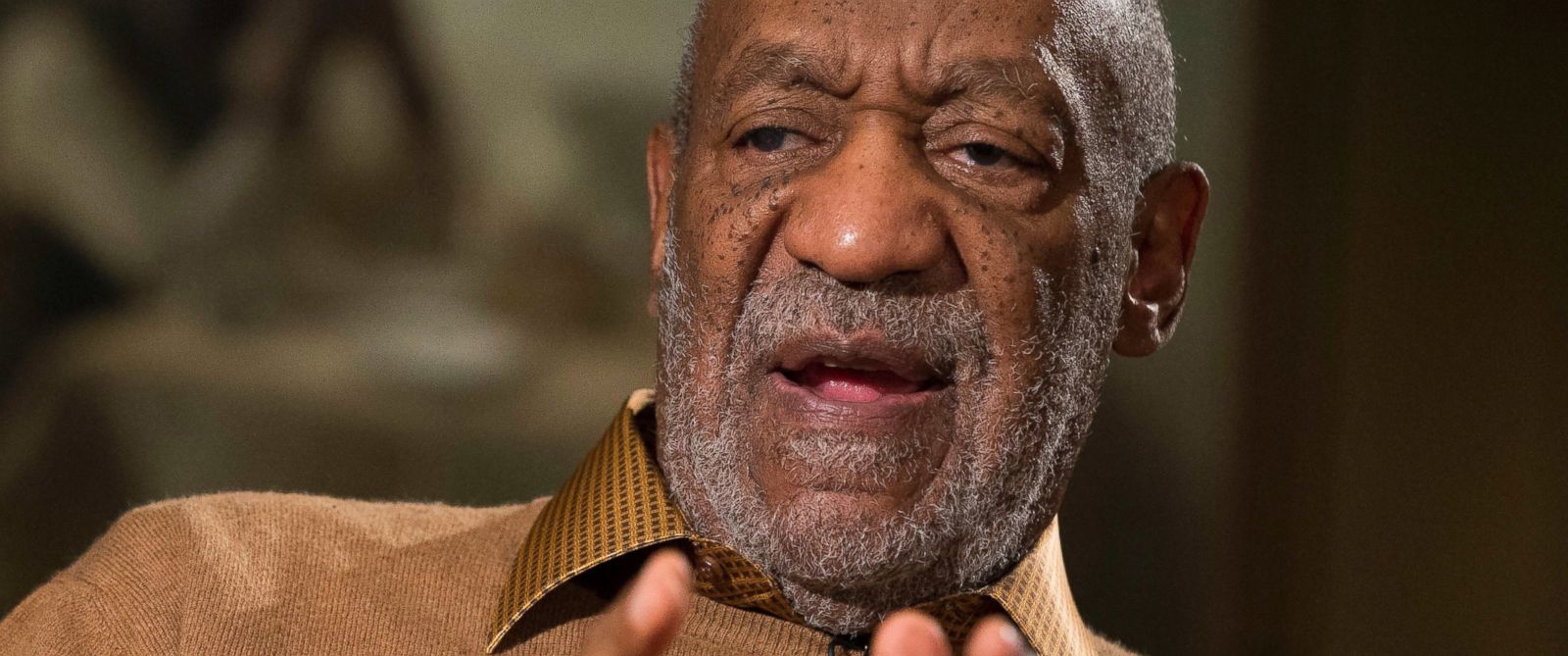
Comedian Bill Cosby responds to charges against him in September 2015. (A&E)

By Casey Bukro

Ethics AdviceLine for Journalists

Comedian Bill Cosby was released from prison in June after serving almost three years for drugging and assaulting a woman athlete.

In 2014, the Ethics AdviceLine for Journalists examined the Cosby case as the media were changing the ways they covered rape and the sexual conduct of celebrities and famous men, issues that continue to challenge media ethics and standards. Did media watchdogs do their jobs?

***********************************************************

The Ethics AdviceLine for Journalists was founded in 2001 by the Chicago Headline Club (Chicago professional chapter of the Society of Professional Journalists) and Loyola University Chicago Center for Ethics and Social Justice. It partnered with the Medill School of Journalism at Northwestern University in 2013. It is a free service.

Professional journalists are invited to contact the Ethics AdviceLine for Journalists for guidance on ethics. Call 866-DILEMMA or ethicsadvicelineforjournalists.org.

Sex, Dating and Reporters

albanianjournalism.com image

By Casey Bukro

Ethics AdviceLine for Journalists

Journalism sometimes is described as a sexy job, but there are limits.

The Ethics AdviceLine for Journalists got a call from a California editor who said his City Hall reporter was having an affair with the mayor.

A Massachusetts reporter asked how soon she should tell her editor about a growing relationship with an attorney she met while covering court cases. And a Washington, D.C., editor proposed a rule forbidding his staff from dating any person who is a news source, or might become a news source. A reporter complained that would mean reporters could not date anyone, since anyone might become news.

Is a rule against dating news sources going too far in the name of ethics, or is it simply recognition that journalism requires higher standards? Or should journalists have a chance at romance like everyone else?

If you were the editor, what would you decide in these cases? What would be fair?

*****************************************************************

The Ethics AdviceLine for Journalists was founded in 2001 by the Chicago Headline Club (Chicago professional chapter of the Society of Professional Journalists) and Loyola University Chicago Center for Ethics and Social Justice. It partnered with the Medill School of Journalism at Northwestern University in 2013. It is a free service.

Professional journalists are invited to contact the Ethics AdviceLine for Journalists for guidance on ethics. Call 866-DILEMMA or ethicsadvicelineforjournalists.org.

Foreign Ethics

http://www.acu.org.uk image

By Casey Bukro

Ethics AdviceLine for Journalists

The Ethics AdviceLine for Journalists gets inquiries from journalists all over the world about ethics quandaries. Here’s one:

The caller is a writer for a motorcycling magazine in Spain, where he is based. He has an offer to join the World Superbike organization team as an international press officer, but its contract requires journalists to treat the championships “with respect.” Meaning no criticism.

This raises the point that journalism ethics norms are not the same in all countries. While pondering this, the writer got an invitation to join another motorcycle magazine at a higher salary, with no strings attached and with no obligations to be “respectful” of any organization.

He wanted to know if he should stay where he is employed or go to one of the other two, based in part on Spain’s more relaxed attitude toward journalism ethics.

What would you do? What advice would you give to that journalist? Sometimes journalists have an answer in mind when they call AdviceLine. But they call for a second opinion to test their judgment. It helps to discuss such problems with someone else, especially with ethics.

**********************************************************

The Ethics AdviceLine for Journalists was founded in 2001 by the Chicago Headline Club (Chicago professional chapter of the Society of Professional Journalists) and Loyola University Chicago Center for Ethics and Social Justice. It partnered with the Medill School of Journalism at Northwestern University in 2013. It is a free service.

Professional journalists are invited to contact the Ethics AdviceLine for Journalists for guidance on ethics. Call 866-DILEMMA or ethicsadvicelineforjournalists.org.

BBC Apologizes

ABC57.com image

By Casey Bukro

Ethics AdviceLine for Journalists

Twenty-five years later, the British Broadcasting Corporation apologizes for one of its reporters, Martin Bashir, using fake bank statements to get a sensational interview with Princess Diana.

“It was a stupid thing to do and was an action I deeply regret,” said Bashir, who stepped down from BBC last week. He admitted the bogus bank statements used to gain the interview when he was a young reporter eager to make a name for himself were “mocked up.” BBC News called the interview “deceitful.”

“The BBC should have made greater effort to get to the bottom of what happened at the time and been more transparent about what it knew,” said Tim Davie, BBC’s current director-general. “While the BBC cannot turn back the block after a quarter of a century, we can make a full and unconditional apology.”

BBC has an ethics guide which says in part, “At the heart of ethics is a concern about something and someone other than ourselves and our own desires and self-interest.”

The Society of Professional Journalists code of ethics urges journalists to “abide by the same high standards to which they hold others.”

********************************************

The Ethics AdviceLine for Journalists was founded in 2001 by the Chicago Headline Club (Chicago professional chapter of the Society of Professional Journalists) and Loyola University Chicago Center for Ethics and Social Justice. It partnered with the Medill School of Journalism at Northwestern University in 2013. It is a free service.

Professional journalists are invited to contact the Ethics AdviceLine for Journalists for guidance on ethics. Call 866-DILEMMA or ethicsadvicelineforjournalists.org.

Fairness to the Dead

By Casey Bukro

Ethics AdviceLine for Journalists

Hikers find the body of a 36-year-old man drowned in the Adirondack wilderness.

The victim had Huntington’s disease, which also afflicted his mother and two brothers.

An Arizona reporter writing about the death discovers that the drowning victim had served eight years in prison for kidnapping a young woman in Arizona, and the man was listed as a sexual predator. The newspaper’s manager editor calls the Ethics AdviceLine for Journalists asking if it is necessary to tell about the man’s criminal history in his obituary.

Put yourself in the editor’s place. What would you do? What is most ethical? Mention the man’s criminal past or omit it?

*************************************************************

The Ethics AdviceLine for Journalists was founded in 2001 by the Chicago Headline Club (Chicago Professional Chapter of the Society of Professional Journalists) and Loyola University Chicago Center for Ethics and Social Justice. It partnered with the Medill School of Journalism at Northwestern University in 2013. It is a free service.

Professional Journalists are invited to contact the Ethics AdviceLine for Journalists for guidance on ethics. Call 866-DILEMMA or ethicsadvicelineforjournalists.org

Words That Hurt


McNeil — http://www.idnes.cz image

Ethics AdviceLine for Journalists

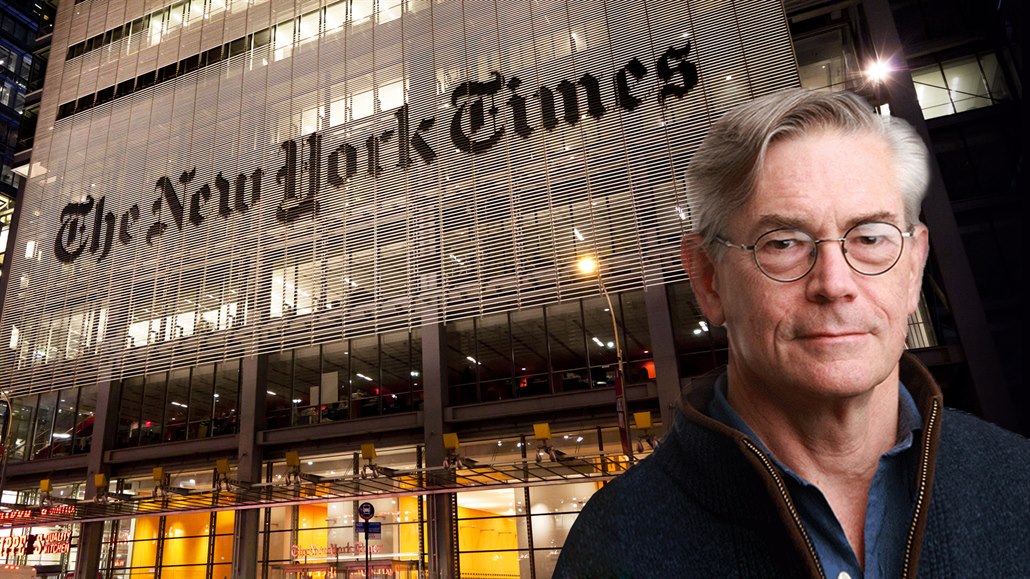
Two New York Times journalists got in hot water over ethics infractions; one was forced to quit his job and the other was not.

One of them erred in a way that was considered unforgiveable, the other did not. Let’s look at the differences.

In the first case, Donald G. McNeil Jr., the newspaper’s specialist on plagues and pestilences, including Covid-19, was accused of using a racial slur, the N-word, while serving as an expert guide on a Times-sponsored trip for high school students to Peru in 2019.

Racial slurs

At least six students or their parents, out of 26 on the trip, complained about McNeil’s comments. The Times confirmed, in a statement, that McNeil had used a racial slur during a conversation about racist language.

In an email to staff, Dean Baquet, the executive editor, said that when he first heard about the complaints against McNeil, “I was outraged and expected I would fire him.” After an investigation, though, Baquet “concluded his remarks were offensive and that he showed extremely poor judgment, but that it did not appear to me that his intentions were hateful or malicious.” Baquet concluded:

“I believe that in such cases people should be told they were wrong and given another chance. He was formally disciplined. He was not given a pass.”

An apology

But that second chance did not last long. McNeil wrote a long article for medium.com giving his side of the story. He said he had written a letter of apology when he got a conference call from Baquet and a deputy managing editor.

“You’ve lost the newsroom,” Baquet said, according to McNeil. “A lot of your colleagues are hurt. A lot of them won’t work with you. Thank you for writing the apology. But we’d like you to consider adding to it that you’re leaving.” It was an invitation to resign, igniting a controversy.

“What?” shouted McNeil. “Are you kidding? You want me to leave after 40-plus years? Over this? You know this is bullshit. You know you looked into it and I didn’t do the things they said I did. I wasn’t some crazy racist, I was just answering the kids’ questions.”

Newsroom lost

Baquet repeated: “Donald, you’ve lost the newsroom. People won’t work with you.”

The exchange continued, but that’s the gist of it, and what appears to be a verified case of journalists turning their backs on a fellow journalist over an ethical lapse with racial overtones, if Baquet is correct. It also comes at a time when newspapers are changing practices to focus on racial and social justice.

The second New York Times ethics scandal involves David Brooks, a Times columnist since September, 2003, and frequent commentator on newscasts.

Resignation

Brooks resigned from a paid position at the Aspen Institute, an international nonprofit organization headquartered in Washington, D.C., after BuzzFeed News revealed conflicts of interest. Brooks became involved with Aspen in 2018, when he launched a project called Weave, a “Social Fabric Project” aimed at establishing connections between communities to build relationships and offer care.

A spokesperson for the Times said Times editors approved of Brooks’s involvement with Aspen, but current editors were not aware that he was receiving a salary for Weave. They concluded that holding a paid position at Wave while writing in the Times about the project, donors or its issues was a conflict of interest.

Although Brooks resigned his position at the institute, he will remain a volunteer for the project.

Encourages support

BuzzFeed News also learned that Weave funders include Facebook, the father of Amazon founder Jeff Bezos, and other wealthy individuals and corporations. BuzzFeed said that Brooks, on a Meet the Press appearance, encouraged support for Nextdoor, a social network for neighborhoods, without mentioning that Nextdoor had donated $25,000 to Weave.

Brooks also appeared in a Walton Family Foundation video and did not disclose that the organization, run by the billionaire family that founded Walmart, also funds his project, according to BuzzFeed News.

“Brooks’s failure to disclose these conflicts of interest added to the string of ethically questionable actions by the columnist and author related to his work on Weave,” reported BuzzFeed News.

Building character

It’s fair to wonder at this point, “What was Brooks thinking?” He is the author of books on morality and building character. One of his books, The Second Mountain, is subtitled, “The Quest for a Moral Life.” Anyone who writes about “moral ecologies” might be expected to notice red flags springing up at questionable decisions, like drawing a second salary that is unknown to your bosses.

Ethical choices are a matter of the times in which they occur, and being sensitive to what is socially acceptable or not. This is not a time for using the N-word or for performing in black face because it can be hurtful throughout the society in which we live, and not an isolated case that affects a few people.

From that perspective, the McNeil case is more significant. The New York Times decided McNeil should leave the Times because of what he said. Journalists should study it and learn from it. More than the Brooks case, it shows how words matter, choosing the right words matters, especially when our society is wakening to words that hurt.

**************************************************

The Ethics AdviceLine for Journalists was founded in 2001 by the Chicago Headline Club (Chicago Professional Chapter of the Society of Professional Journalists) and Loyola University Chicago Center for Ethics and Social Justice. It partnered with the Medill School of Journalism at Northwestern University in 2013. It is a free service.

Professional Journalists are invited to contact the Ethics AdviceLine for Journalists for guidance on ethics. Call 866-DILEMMA or ethicsadvicelineforjournalists.org.

An Editor’s Dilemma


apply.dailycal.org image

By Casey Bukro

Ethics AdviceLine for Journalists

The editor-in-chief of an Idaho newspaper calls the Ethics AdviceLine for Journalists to say a county commissioner urged him to assign a reporter to a commission meeting where he expects some “monkey business” on the agenda as a result of a conflict with the county clerk.

The editor says he cannot afford to send a reporter to the meeting. The commissioner offers to arrange for a friend to pay for the reporter’s presence at the meeting.

Should the editor accept the offer so the reporter can attend the meeting and report on an issue that might be important to the public? What is the ethically correct course of action for the editor?

****************************************************

The Ethics AdviceLine for Journalists was founded in 2001 by the Chicago Headline Club (Chicago Professional Chapter of the Society of Professional Journalists) and Loyola University Chicago Center for Ethics and Social Justice. It partnered with the Medill School of Journalism at Northwestern University in 2013. It is a free service.

Professional Journalists are invited to contact the Ethics AdviceLine for Journalists for guidance on ethics. Call 866-DILEMMA or ethicsadvicelineforjournalists.org.

Sneak Journalism

http://www.ted.com image

By Casey Bukro

Ethics AdviceLine for Journalists

Journalists sometimes go undercover in search of information, or consider doing so in the public interest.

Journalists call the Ethics AdviceLine for Journalists asking about the wisdom of this practice. Here are some of those cases:

A Colorado broadcaster asked if there were any ethical problems with entering several schools in Colorado undercover with a concealed camera to see if he would be stopped and questioned. This would be in connection with recent school shootings.

In another case, a staff writer for an Arizona newspaper asked if it would be ethical to do a story showing how easy it would be to buy drugs by sending a reporter and a photographer out with $20 bills.

In a third case, a Canadian TV network asked about the wisdom of testing airport security by trying to sneak a weapon through security.

If you were an ethics advisor, what would you tell these journalists?

******************************************************************

The Ethics AdviceLine for Journalists was founded in 2001 by the Chicago Headline Club (Chicago Professional Chapter of the Society of Professional Journalists) and Loyola University Chicago Center for Ethics and Social Justice. It partnered with the Medill School of Journalism at Northwestern University in 2013. It is a free service.

Professional Journalists are invited to contact the Ethics AdviceLine for Journalists for guidance on ethics. Call 866-DILEMMA or ethicsadvicelineforjournalists.org.
Ethics Quiz

huffingtonpost.com photo

By Casey Bukro

Ethics AdviceLine for Journalists

Let’s start the year off right with a journalism ethics quiz, and a reminder that journalists contact the Ethics AdviceLine for Journalists because they want to get it right.

Maybe 2021 will be the year when American journalists are appreciated, rather than demonized.

Since 2001, professional journalists have called the Ethics AdviceLine for Journalists for guidance on ethics. Here’s one of those cases:

A freelance fashion writer was assigned to research skin care products and make recommendations. She asked a journalism intern from a local university to work with her to research products on the internet.

The intern found web sites with advertising and cut and pasted information into a word text file.

The fashion writer said she mistakenly submitted the intern’s work as her own. Her editor accused the fashion writer of plagiarism, saying he found copy identical to hers on web sites listed in her file.

The fashion writer said she promptly emailed the version she had written and intended to file. She asked AdviceLine if she acted unethically.

Was it just a mistake, or plagiarism?

What do you think?

********************************************************************

The Ethics AdviceLine for Journalists was founded in 2001 by the Chicago Headline Club (Chicago Professional Chapter of the Society of Professional Journalists) and Loyola University Chicago Center for Ethics and Social Justice. It partnered with the Medill School of Journalism at Northwestern University in 2013. It is a free service.

Professional Journalists are invited to contact the Ethics AdviceLine for Journalists for guidance on ethics. Call 866-DILEMMA or ethicsadvicelineforjournalists.org.