Tag Archives: Ethics

Dilemmas, Difficult Choices Again

carleton.ca image

By Casey Bukro

Ethics AdviceLine for Journalists

One of the most frequently visited articles in the Ethics for Journalists AdviceLine archives was written in 2015 by Nancy J. Matchett, a former AdviceLine adviser. Titled “Dilemmas and Difficult Choices,” her article explained how to tell the difference between them.

Much has happened in the world and in the journalism universe since that article was written nine years ago. So it’s fair to ask how well does her advice hold up in this new world of artificial intelligence, thriving social media and media management? Does it stand up to the test of time in recent cases shaking journalism and some of its leaders?

The news these days is loaded with ethical challenges involving selection, description and depiction of powerful world events, including human suffering and misery. Not only news managers and reporters, but readers, viewers and listeners are involved in constant interaction with information often based on what the public demands. It is a constant churning of evaluation and decision-making.

Here are some recent examples, involving people in the news and the news media audience – all involved to some degree in ethical choices or dilemmas:

*President Joe Biden is under intense pressure to drop out as a candidate for the 2024 presidential election after what was widely seen as a poor performance during his debate with former president Donald Trump, raising questions about Biden’s ability to govern because of his age and mental abilities. Especially pertinent is how voters react to that information. The decision by voters will change the course of history.

*The Israel-Hamas war caused Vox to ask “how to think morally” about killing thousands of innocent civilians.

*The U.S. Supreme Court is losing public trust because of recent rulings seen as breaking away from long-standing legal precedents and because of unethical conduct by justices who accept gifts and favors.

*Jeff Bezos, Washington Post owner, reportedly faces an ethical dilemma over his decision to hire a British journalist with a scandalous past as publisher and chief executive of the newspaper, over the opposition of the Post’s staff.

*Journalists are relying on artificial intelligence, looking for an objective and ultimate source of truth, but there are pitfalls to embracing this new technology. It spits out false information. When should you, or not, rely on AI tools?

Weigh these cases against Matchett’s guidance toward the difference between dilemma’s and difficult choices:

By Nancy J. Matchett

Professionals wrestling with ethical issues often describe themselves as facing dilemmas. But in many situations, what they may really be facing is another kind of ethically difficult choice.

In a genuine ethical dilemma, two or more principles are pitted head to head. No one involved seriously doubts that each principle is relevant and ought not to be thwarted. But the details of the situation make it impossible to uphold any one of the principles without sacrificing one of the others.

In a difficult ethical choice, by contrast, all of the principles line up on one side, yet the person still struggles to figure out precisely what course of action to take. This may be partly due to intellectual challenges: the relevant principles can be tricky to apply, and the person may lack knowledge of important facts. But difficult choices are primarily the result of emotional or motivational conflicts. In the most extreme form, a person may have very few doubts about what ethics requires, yet still desire to do something else.

The difference here is a difference in structure. In a dilemma, you are forced to violate at least one ethical principle, so the challenge is to decide which violation you can live with. In a difficult choice, there is a course of action that does not violate any ethical principle, and yet that action is difficult for you to motivate yourself to do. So the challenge is to get your desires to align more closely with what ethics requires.

Four principles

Are professional journalists typically faced with ethical dilemmas? This is unlikely with respect to the four principles encouraged by the SPJ Code (Seek Truth and Report It, Minimize Harm, Act Independently, and Be Accountable and Transparent). Of these, the first two are most likely to conflict, but so long as all sources are credible and facts have been carefully checked, it should be possible to report truth in a way that at least minimizes harm. Somewhat more difficult is determining which truths are so important that they ought to be reported. Reasonable people may disagree about how to answer this question, but discussion with fellow professionals will often help to clear things up. And even where disagreement persists, this has the structure of a difficult choice. No one doubts that all principles can be satisfied.

Of course, speaking truth to power is not an easy thing to do, even when doing so is clearly supported by the public’s need to know. So motivational obstacles can also get in the way of good decision-making. A small town journalist with good friends on the city council may be reluctant to report a misuse of public funds. It is not that he doesn’t understand his professional obligation to report the truth. He just doesn’t want to cause trouble for his friends.

Resisting temptation

This is why it can be useful to resist the temptation to classify every ethical issue as a dilemma. When facing a genuine dilemma you are forced, by the circumstances, to do something unethical. But wishing you could find some way out of a situation in which ethical principles themselves conflict is very different from being nervous or unhappy about the potential repercussions of doing something that is fully supported by all of those principles. Accurately identifying the latter situation as a difficult choice makes it easier to notice — and hence to avoid — the temptation to engage in unprofessional forms of rationalization. That doesn’t necessarily make the required action any easier to actually do, but getting clearer about why it is ethically justified might at least help to strengthen your resolve.

Ethical dilemmas are more likely to arise when professional principles conflict with more personal values. Here too, the SPJ Code can be useful, since being scrupulous about avoiding conflicts of interest and fully transparent in decision-making can mitigate the likelihood that such conflicts occur. But journalists who are careful about all of this may still find that issues occasionally come up. As the recent case of Dave McKinney shows, it can be very difficult to draw a bright line between personal and professional life. And the requirement to act independently can make it difficult to live up to some other kinds of ethical commitments.

Philosophical dispute

Whether this sort of personal/professional conflict counts as a genuine dilemma is subject to considerable philosophical dispute. The Ancient Greeks tended to treat dilemmas as pervasive, but modern ethics have mainly tried to explain them away. One strategy is to treat all ethical considerations as falling under a single moral principle (this is the approach taken by utilitarianism); another is to develop sophisticated tests to rank and prioritize among principles which might otherwise appear to conflict (this is the approach taken by deontology). If you are able to deploy one of these strategies successfully, then what may at first look like a professional vs. personal dilemma will turn out to be a difficult choice in the end. Still, many contemporary ethicists side with the Greeks in thinking such strategies will not always work.

If you are facing a genuine dilemma it is not obvious, from the point of view of ethics, what you should do. But here again, it can be helpful to see the situation for what it is. After all, even if every option requires you to sacrifice at least one ethical principle, each option enables you to uphold at least one principle too. In addition to alleviating potentially devastating forms of shame and guilt, reflecting on the structure of the situation can enhance your ability to avoid similar situations in the future. And if nothing else, being forced to grab one horn of a genuine dilemma can help you discover which values you hold most dear.

******************************************

The Ethics AdviceLine for Journalists was founded in 2001 by the Chicago Headline Club (Chicago professional chapter of the Society of Professional Journalists) and Loyola University Chicago Center for Ethics and Social Justice. It partnered with the Medill School of Journalism at Northwestern University in 2013. It is a free service.

Professional journalists are invited to contact the Ethics AdviceLine for Journalists for guidance on ethics. Call 866-DILEMMA or ethicsadvicelineforjournalists.org.

WaPo, A.I. and Ethics

bernardmarr.com image

By Casey Bukro

Ethics AdviceLine for Journalists

The news lately has been full of accounts of journalists or media companies accused of acting unethically or taking liberties with the work of others.

Here’s how that shapes up.

The Washington Post publisher, Will Lewis, is accused of offering an NPR media reporter an interview if the reporter would avoid mentioning that Lewis was linked to a phone hacking scandal while working in Britain for Rupert Murdoch’s tabloids. 

Lewis also is accused of pressuring the Post’s executive editor to ignore any story that would make the publisher look bad, such as the phone hacking story. She published the story, then resigned, throwing the Post’s newsroom into chaos.

Fuel to the flames

Adding fuel to the flames, another former British journalist linked to questionable reporting practices, Robert Winnett, was hired to be the Post’s next editor. Winnett made a name for himself through undercover investigations and so-called “checkbook journalism,” paying people for information.

Both Lewis and Winnett were engaged in a kind of journalism popular in the United Kingdom, but generally shunned in the United States. Now they are leading The Washington Post, most famous for the Watergate exposures that led to President Richard Nixon resigning in 1974. The Post’s news staff published a report describing their grievances with Lewis.

American standards

Now that Lewis and Winnett are practicing journalism in the United States, they would be expected to conform to American standards, which are expressed in the Society of Professional Journalists code of ethics.

That code begins with this preamble:

Preamble

Members of the Society of Professional Journalists believe that public enlightenment is the forerunner of justice and the foundation of democracy. Ethical journalism strives to ensure the free exchange of information that is accurate, fair and thorough. An ethical journalist acts with integrity.

You can read the rest of the code here, and decide for yourself if Lewis and Winnett are acting with integrity, which the code says is basic to ethical journalism.

But the New Republic reports that Lewis and Winnett are harbingers of what comes next in American journalism: A British invasion intended to shake things up and get American media out of their economic doldrums.

Uncertainty

“In the midst of the uncertainty,” reports the magazine, “newsrooms owners have turned to an unexpected source of expertise on the U.S. media landscape: British journalists.”

The logic is clear: “As the journalism industry bleeds money, a fresh perspective could be just the thing to shake things up and bring some much-needed cash.”

This could also bring a major clash of cultures, considering the history of the British tabloid press. Their journalism ethics differ markedly, the New Republic points out, and “the British tabloid press are notoriously aggressive, unafraid to publish half-truths, purchase scoops, or even toe laws in pursuit of extreme sensationalism.”

In that way, Old Country values are coming to America, which is awakening to new technology.

Artificial intelligence

In a sign of the times, with the advent of new technology, artificial intelligence now is used to generate stories. This phenomenon is so new, it is not even recognized in the SPJ code of ethics, or how it can be unethical.

For example, a German celebrity tabloid published an A.I.-generated exclusive “interview” with a champion German racing car driver who was severely injured in a skiing accident in 2013. It contained fabricated quotes presented as real news.

Legal precedent

See how that turned out here for details. The case now is an early legal precedent signaling that such uses of artificial intelligence is unethical and deceptive.

Here’s another artificial intelligence quagmire in the publishing business that is now coming to light as the technology matures.

Creators of ChatGPT and other popular A.I. platforms used published works to “train” the new technologies, like feeding information to a growing child.

A new front

The New York Times sued OpenAI and Microsoft for copyright infringement, which is another way to get in trouble ethically. The suit is seen as a new front on the increasingly intense legal battle over unauthorized use of published work.

“Defendants seek to free-ride on The Times’s massive investment in its journalism,” the complaint said, accusing OpenAI and Microsoft of “using The Times’s content without payment to create products that substitute for the Times and steal audiences away from it.”

The Times is among a small number of news outlets that have built successful business models from online journalism, while other newspapers and magazines have been crippled by the loss of readers to the internet.

Billions in damages

The defendants, said The Times, should be held responsible for “billions of dollars in statutory and actual damages” related to the “unlawful copying and use of The Times’s uniquely valuable works.” It also asks the companies to destroy any chatbot models and training data that use copyrighted material from the Times.

A.I. firms depend on journalism, and some publishers have signed lucrative licensing agreements allowing A.I. firms to use their reports. “Accurate, well-written news is one of the most valuable sources” for their chatbots, which “need timely news and facts to get consumers to trust them,” writes Jessica Lessin in The Atlantic. But it’s making a deal with the devil as A.I. firms build products that reduce the need for consumers to click links to the original publishers.

This is one of those moments of technological growing pains, raising concerns about the boundaries of using intellectual property. We’ve seen it before with the advent of broadcast radio, television and digital file-sharing programs.

Time and the courts typically sort it out eventually.

In this ethicscape, a traveler must avoid making blatant bunders, avoiding the appearance of making blunders, and avoiding blunders that did not exist a short time ago, but now must be taken into account.

********************************************************

The Ethics AdviceLine for Journalists was founded in 2001 by the Chicago Headline Club (Chicago professional chapter of the Society of Professional Journalists) and Loyola University Chicago Center for Ethics and Social Justice. It partnered with the Medill School of Journalism at Northwestern University in 2013. It is a free service.

Professional journalists are invited to contact the Ethics AdviceLine for Journalists for guidance on ethics. Call 866-DILEMMA or ethicsadvicelineforjournalists.org.

Chicago Like Camelot

headlineclub.org image

By Casey Bukro

Ethics AdviceLine for Journalists

Camelot was that legendary place where high ideals were honored and celebrated by King Arthur and his Knights of the Round Table.

Centuries-old fables tell that story, which also was told by Broadway and Hollywood.

In a small way, Chicago was like Camelot. Long ago, the Chicago Headline Club gave Ethics in Journalism Awards to Chicago area reporters, editors or news organizations that distinguished themselves in journalism by performing in an ethical and sensitive manner. 

You could imagine them as modern knights in shining armor.

The Society of Professional Journalists code of ethics defines ethical conduct, in case you were wondering.

Like Camelot, the ethics awards also faded into history. Historians quarrel over whether Camelot really existed. But the ethics award did exist.

Walking the talk

It called upon anyone to nominate journalism candidates worthy of the award which honored those who “walk the talk” by doing the right thing.

“This means acting like a professional, taking into consideration the welfare of those we encounter in covering the news and the possible harm our reports might do to an individual or a community,” said the nominating form.

“It’s a tough line to walk, and is judged by our conduct. It means always asking ourselves if we are being fair and accurate.” 

Some might say this was too idealistic, too much to expect. Even laughable.

Chief among those critics was Michael Miner, media critic for The Chicago Reader. Miner was a savvy, street-smart writer who often wrote about the ethics award and the Ethics AdviceLine for Journalists in a caustic and dismissive way. He probably was typical of many hard-bitten journalists who wince and believe that journalism ethics is an oxymoron

Best solution

Miner wrote that the best solution to journalism’s intractable contradictions “was to build newsrooms no more than 100 feet from a bar.”

The media critic wrote several stories about me, ethics, the Society of Professional Journalists and AdviceLine. Actually, it could be said that Miner gave us more ink than anyone.

“Ethics? For Journalists? Is Casey Bukro Serious?” was the headline on a story he wrote in 1987, telling about my failed efforts to keep a sentence in the SPJ code of ethics that said: “Journalists should actively censure and try to prevent violations of these standards.” That part was stricken from the code, which I wrote 15 years earlier. I wanted the code to be more than words on paper, to make the code enforceable. SPJ leaders said paying attention to the code is entirely voluntary.

“Active censure may comport with a journalist’s temperament, but his inclination to police his own ranks is no sharper than a lawyer’s, a doctor’s or a cop’s,” Miner wrote. Some journalists might even consider it unconstitutional, he pointed out, contrary to the First Amendment.

Telling journalists

From the start, Miner had assumed that anyone who presumes to tell journalists what to do about ethics is a bit daft, silly or pretentious.

Miner zeroed in on AdviceLine shortly after it was created in 2001, offering a few snide comments, going so far as imagining reporters picking up a phone and saying, “Hello, sweetheart, Get me ethics.”

The man has a sense of humor and a soothing baritone voice on the telephone, teasing out information in a way that non-journalists might find disarming. Think of Morgan Freeman.

The story he wrote practically unhinged the AdviceLine team, which includes ethics experts who teach at universities. In other words, most were people not accustomed to being interviewed, especially by somebody like Miner who calls himself a critic. He was usually looking for ways to be critical.

Describing cases

After interviewing me, Miner told other members of the AdviceLine team that I described some of the calls from professional journalists asking for ethics advice and so should they. And they did.

I thought I was being careful about identifying callers or details that could not be disclosed under our confidentiality policy.

Then Miner’s story was published, and an uproar erupted. An AdviceLine team member emailed:

“I hardly know what to say about the extent to which confidences and commitments have been violated” in response to Miner’s cajoling questions.

Part of AdviceLine’s mission is to show what kinds of ethics problems confront professional journalists and the best advice for dealing with them. But AdviceLine offers confidentially to journalists who request it, so they and their news organizations must not be identified.

Sensitive world

Being new to this highly sensitive world of ethics public relations, some of the AdviceLine ethicists gave Miner more details than they should have under AdviceLine’s confidentiality policy. No names were revealed, but some locations were.

And it’s often a shock when people see their words in print, even when the words are true. Some journalists believed that nothing should be revealed about ethics cases, but that would frustrate AdviceLine’s mission to educate journalists and the public about journalism ethics. 

Describing actual ethics cases and how they were handled would show the public that journalists take ethics seriously, contrary to what they might think at a time when journalists are accused of “fake news.”

A learning experience

It was a learning experience for everyone involved, resulting in AdviceLine adopting more exacting rules for confidentiality. I thanked Miner for his contribution toward improving AdviceLine, which might have pained him.

It was a tumultuous beginning for AdviceLine.

It’s good for journalists, and ethicists too, to have unsympathetic, cold-eyed lampooners. Like it or not, their taunts and derision can be instructive, showing why idealists lose or can improve. Idealists also can say to hell with these critics and keep trying. Conventional wisdom is boring and would never have produced flying machines.

Fourteen years passed. By that time, I had retired from the Chicago Tribune, and the Chicago Headline Club gave an award to the Ethics AdviceLine for Journalists for its journalism ethics blog. Miner was not impressed.

A richer life

“But as life is richer when Bukro’s around to disagree with, I’m pleased to report he hasn’t gone away,” wrote Miner at the time. That was in 2015.

By then, the Chicago Headline Club had discontinued giving ethics in journalism awards. Like Camelot, it was a distant memory, but a shining moment.

Makes me think of a line in the Lerner and Loewe musical: “Don’t let it be forgot, that once there was a spot, for one brief shining moment, that was known as Camelot.”

As all things connected with ethics, the ethics award was controversial, including why some of the winners were chosen. They had to be nominated to qualify.

Most journalists ethical

Some journalists argued that most journalists always perform ethically, and it was unfair to pick out just a few. I figured it was better than nothing. You can decide for yourself. 

In 1996, the first year ethics awards were presented, 19 journalists or media organizations in broadcast news, print news and print commentary were nominated. The winners:

Carol Marin was suspended from WMAQ-Channel 5 for objecting strongly to reading what she considered blatant plugs for sponsors while presenting the news.

Harris Meyer laid his job on the line for writing stories on Medicare and health-care reform that sometimes were contrary to American Medical Association policy. He was fired from American Medical News for insubordination.

Bill Rentschler, editor-in-chief and president of the weekly Voice Publications in Lake Forest, was cited for editorial integrity and a body of work spanning decades in columns and stories that tackled tough issues.

In 1997, Ethics in Journalism awards went to:

The Austin Voice, a Chicago weekly newspaper that became a target of threats and harassment for the first stories of police involvement with drug dealers and armed street gangs on Chicago’s West Side. The Austin Voice was nominated by two neighborhood groups.

John Lampinen, managing editor of the Daily Herald in Arlington Heights, for refusing against intense pressure to print Richard Jewell’s name the day he was named but not charged as a suspect in a bombing at the 1996 summer Olympics in Atlanta, Georgia. Lampinen followed with a front page story on privacy and the public’s right to know.

Bill Lazarus and The Times of Northwest Indiana for tenacious coverage in exposing political connections in waste disposal despite a $10 million libel suit filed against them by an East Chicago hazardous waste firm. The paper persisted in the exposé and a jury later found Lazarus and The Times of Northwest Indiana innocent.

Carol Marin, for courage in journalism, by resigning from WMAQ-Channel 5 in a dispute with management over news values and hiring “trash talk” host Jerry Springer as commentator. (The station’s viewership plummeted after Marin left.)

In 1998, the ethics award went to Ron Magers, of WLS-Channel 7, for consistently showing ethics leadership in the newsroom throughout his career at WMAQ-Channel 5.

In 1999, five nominees were offered, but the winner was Nigel Wade, editor-in-chief of the Chicago Sun-Times. Wade showed his abrasive side the previous year at the Chicago Headline Club’s annual awards banquet. The keynote speaker gave a speech telling what newspapers could do to be more ethical. Wade got up in the audience and said that newspapers that followed such advice would be as boring as the speaker. But that month, Wade went on to prove there’s nothing boring about being ethical.

On May 22, 1998, the Sun-Times printed a front page message to readers explaining that Wade refused to play the Springfield, Oregon, school shooting on the front page because the story might harm or frighten vulnerable children. The following day, the New York Times carried Wade’s op-ed piece explaining why he didn’t print the story on page one. Wade proved this was not a one-time gesture when he decided against playing the Littleton, Colorado, school shooting on the front page for the same reason.

The 2000 ethics award went to John Cherwa, the Chicago Tribune’s associate managing editor for sports, who turned back staff credentials to cover the Indianapolis 500 race. A Sports Illustrated staff writer had been denied such credentials because his coverage of auto racing was considered unfavorable. Cherwa said he took “a stand against a form of censorship by a sports organization.” Other newspapers followed Cherwa’s example, and the Indy Racing League reconsidered and gave credentials to the Sports Illustrated writer.

The 2001 ethics award went to Victor M. Crown, assistant editor of Illinois Politics Magazine, for his diligence in seeking guidance on fairness and balance on a story involving Illinois Sen. Peter Fitzgerald and ethics in government. Crown posted all of his evidence in the case on a website so it could be scrutinized by journalists and the public, following advice from the Ethics AdviceLine for Journalists.

In 2002, Carolyn Hulse, director of news reporting and writing at Columbia College in Chicago, got the award for resigning as interim chairwoman of the college’s journalism program to protest an attempt to name as acting dean of the school of media arts a person who had been fired at a Chicago newspaper for fabricating a story. Hulse said it was unacceptable for a person like that to teach journalism and be held up as a model for students.

In 2003, Mike Waters, Daily Southtown managing editor, and columnists Phil Arvia and Phil Kadner, won the award for their roles in challenging their newspaper’s decision to promote supporting U.S. troops in the Persian Gulf, which could tarnish the newspaper’s and staff’s reputation for objectivity.

Also in 2003, an ethics award went to the Chicago Tribune for taking steps to enforce its newsroom ethics code, forcing the resignation of columnist Bob Greene for inappropriate sexual conduct.

In 2004, Virginia Gerst took the award. She resigned as an arts and entertainment editor for the Glenview-based Pioneer Press newspaper, saying the integrity of the editorial process was violated when the publisher assigned an editor, who Gerst described as a marketing director, to write a restaurant review to replace one already written. Gerst quit after 27 years with Pioneer Press.

In 2005, anchor/reporter Anna Davlantes of WMAQ-Channel 5 and Chicago Sun-Times publisher John Cruickshank won ethics awards. Davlantes was cited for courage and professionalism in reporting the sale of the Village of Bridgeview golf dome despite repeated threats and intimidation from a man involved in the sale who wanted her to stop her investigation. Friends and relatives urged Davlantes to drop the story. Instead, she produced five reports on the sale, which involved a man who said he was forced to sell his property.

Cruickshank discovered in 2004 that the Sun-Times had overstated its circulation for years. He urged company officials to go public with his discovery. Some of them feared that would kill the newspaper. Cruickshank said the future of the newspaper depended on doing the right thing, and correcting an unethical practice. Under his leadership, parent company Hollinger International disclosed the overstated circulation figures and set aside $27 million to reimburse advertisers.

In 2006, no ethics award was given. Contest judges decided that year’s nominees failed to demonstrate the high standards required for the award.

Story ends

And that’s where the Ethics in Journalism Award story ends, after nine years. It became dormant, and stays that way.

Looking back on it, giving awards strictly on the basis of ethics was difficult. Often those nominating reporters for the award cited forceful reporting resulting in changes. Other awards recognize that kind of work. 

The ethics awards honored journalist who made personal sacrifices and often took an unpopular stand. That is more difficult to find. And all nominations were submitted to a panel of judges, who do not always agree on what is ethically laudable. It boils down to humans making decisions.

Zeal for ethics faded in a time of media staff cuts and disappearing newspapers, some say at the rate of two a week. Ethics takes a certain amount of boat-rocking, not something young  journalists eager to keep their jobs want to do.

Lost newspapers

The Medill School of Journalism at Northwestern University predicts that by the end of 2024, the U.S. will have lost a third of its newspapers and almost two-thirds of its newspaper journalists since 2005.

Into that bleak landscape came another threat: Generative artificial intelligence able to create news content with little human involvement. Medill reports that “could be the final nail in the local news coffin.”

Medill is careful to point out that this new technology also could bring benefits, creating new tools to improve storytelling and to monetize content. It also could free human journalists to devote their time to more original enterprise reporting.

But the potential downsides are worrying.

“Given how some chain owners have prioritized cost-cutting and profit-making over sustained journalistic quality, what is to stop them from replacing more reporters and editors with robots?” asked Medill. “Can news consumers be relied upon to discern between human-reported journalism and machine-generated content – and does it matter?”

Artificial intelligence makes mistakes and could be prone to spreading misinformation and disinformation, either by accident or design.

In these times of chaotic technological transition driven by artificial intelligence and robots, some might see ethics as a mere luxury. Others might see it as a way out of the chaos.

*****************************************************

The Ethics AdviceLine for Journalists was founded in 2001 by the Chicago Headline Club (Chicago professional chapter of the Society of Professional Journalists) and Loyola University Chicago Center for Ethics and Social Justice. It partnered with the Medill School of Journalism at Northwestern University in 2013. It is a free service.

Professional journalists are invited to contact the Ethics AdviceLine for Journalists for guidance on ethics. Call 866-DILEMMA or ethicsadvicelineforjournalists.org.

Board Troubles

provenience.in image

By Casey Bukro

Ethics AdviceLine for Journalists

A publisher, at the top of a media organization’s pecking order, might scold underlings for stepping out of line ethically.

But who scolds a publisher?

That is one of the underlying issues brought to AdviceLine where publishers and other high-ranking editors decide to serve on the boards of outside groups, including civic organizations.

Civic organizations typically hope this cozy relationship with media leaders will result in publicity. For media leaders, it often is seen as a way to serve and create ties with the community.

But is it a good idea? It can lead to trouble.

The publisher of a Tennessee newspaper called AdviceLine, saying: “I have a difficult confidentiality problem.”

The publisher was a member of the board of directors for an international nonprofit fundraising organization. In an emergency board meeting, the publisher learned from the organization’s new executive director that the former executive director failed to file federal tax forms by the time required.

Penalties owed

The penalty for such an oversight is $90 a day, and the organization already owes the federal government more than $20,000. Failure to file the tax forms and pay the penalty before a looming deadline could result in a bigger fine and loss of the organization’s nonprofit status.

As far as anyone could tell, no fraud was involved, just wretched administration, terrible book-keeping and poor audits. The nonprofit organization has enough cash on hand to pay the penalty in time to avoid any further losses. But that was money intended for local charities and other worthy groups in a cash-strapped rural area.

The board’s immediate actions will include paying the penalty, getting the organization’s financial records audited and deciding when and how to explain all of this to the public.

A complicating factor is that a fund raising drive is now under way. Donors might be less generous if they knew of the nonprofit organization’s tax, financial and management problems.

Publish now or later?

The publisher asked AdviceLine if he would be acting ethically if he refrains from publishing what he knows immediately? Can he wait until the problems are fixed?

“We talked at length about benefit and harm,” the AdviceLine adviser wrote in his case report. The publisher’s reasoning mirrored the adviser’s.

“Although the public will be much upset at this, and at the misapplication of their previous contributions, the cause of that has been remedied already by the arrival of the new, and competent, executive director.

“So there is no great loss to the public in not knowing this right at this time, whereas there is good reason to believe that, even with the corrective action already taken…many people might reduce their contributions and many potential beneficiaries of (the organization) might suffer accordingly.

Benefit and harm

“That is, reporting this matter right now seems to produce more harm than benefit to the public.”

The adviser adds, however, that all of that depends on whether the board and the executive director took the corrective actions needed, then reported the situation to the public.

If they failed to do that, “then there would be a story that would then need to be told promptly; but that is not yet the situation.” The publisher does not expect that situation to arise because the board is determined to act properly and promptly, “including proper notification of the public when all the facts are in order and all the remediation with the feds has been attended to.”

The publisher has one additional concern: In preserving the board’s confidentiality, he might appear to the board, and later to the public, “to be involved in covering up something that, as a journalist, he should have reported.”

The reasoning

Said the AdviceLine adviser: “But I told him that the reasoning we had just gone through was the appropriate benefit-harm reasoning for the case from a professional ethics point of view, and in fact that the principles supporting this would be found (in general terms only, however) in the SPJ (Society of Professional Journalists) code” of ethics.”

The Ethics AdviceLine for Journalists has a team of four ethicists, all of whom teach or taught ethics in universities. They meet periodically to review advice that was given to journalists who called or query AdviceLine for guidance.

In this case, several ethicists vehemently disagreed with the advice that was given. They pointed out that one of the main themes of the SPJ code of ethics is to seek the truth and report it.

Ethics tricky

This case helps to underscore that even professional ethicists do not always agree on what is an ethical course of action. Ethics is tricky business, especially when  applied to journalism.

The ethicist involved in the case accurately spelled out the benefit-harm reasoning often used to resolve ethics problems. But in this case, it could be argued that it led to a debatable conclusion.

The opposing ethicists pointed out that the public had a right to know immediately how money donated for charity and other worthy causes was being managed.

No doubt, the nonprofit organization with management problems would be embarrassed by such disclosures. But the publisher in this case failed to recognize where his greatest  loyalties lie: To the public. And he does risk being seen as a participant in a coverup, as he feared.

In a jam

He got himself in this jam by serving on that nonprofit organization’s board of directors. This is not a rare or isolated ethics issue.

The Washington Post recently reported that NBC News Group chairman, Cesar Conde, is a member of Walmart and PepsiCo’s corporate boards – for which he earned $595,018 in 2022 in cash and stock.

There’s no evidence that Conde has been involved with any NBC stories about the two outside corporations, but the Post said “the arrangement has raised some ethical concerns, and reveals a potential blind spot for a news business usually very serious about conflicts — real or perceived.”

The headline on the Post story read: “Outside roles by NBC’s Conde, others reveal a journalism ethics issue: being paid to sit on boards.” Others include CNN’s chief executive and Amazon founder Jeff Bezos, owner of the Washington Post.

Paid positions

Paying news executives to sit on corporate boards brings the issue to a new level of concern. They amount to paid jobs.

Typically, editors and publishers serve as volunteers on the boards of local school or civic organizations. A similar case in which an editor asked AdviceLine for help led to some guidelines that could be useful.

An editor for the Mankato Free Press in Minnesota asked about the wisdom of editors joining civic groups.

In that case, the AdviceLine adviser said the first rule should be to avoid influencing, or interfering with, reporting on civic organizations – as was done in the Tennessee nonprofit organization case.

The Free Press editor was concerned that editors and publishers schmoozing with community power brokers sends a mixed message to reporters – that it looks like editors are breaking the traditional barriers between the editorial and business departments.

Staff feedback

In the Mankato case, AdviceLine urged the editor to discuss the situation with her staff to get feedback on how best to avoid compromising the paper’s standards.

This is a good ethics strategy: Get everyone involved in thinking about what is good for the organization. They become part of reaching solutions.

Later, AdviceLine called the Free Press editor to ask what happened in this case.

The newspaper was bought by another media company, which had a corporate handbook. It encouraged journalists to “participate in worthwhile community activities, so long as they do not compromise the credibility of news coverage or the independence of the newspaper.

“Avoid involvement in organizations or activities that could create a conflict of interest or an appearance of conflict.”

It helps to have written corporate policies that are known and understood by the staff, and by management, who sometimes think ethics rules don’t apply to them.

******************************************************

The Ethics AdviceLine for Journalists was founded in 2001 by the Chicago Headline Club (Chicago professional chapter of the Society of Professional Journalists) and Loyola University Chicago Center for Ethics and Social Justice. It partnered with the Medill School of Journalism at Northwestern University in 2013. It is a free service.

Professional journalists are invited to contact the Ethics AdviceLine for Journalists for guidance on ethics. Call 866-DILEMMA or ethicsadvicelineforjournalists.org.
Privacy in a Pandemic

http://www.unothegateway.com image

By Casey Bukro

Ethics AdviceLine for Journalists

The Covid-19 pandemic commanded the world’s attention, straining medical resources and testing the media’s competence to understand and accurately report such an unprecedented event. 

As often happens in major events, journalists try to tell the story by describing what is happening to individuals. They try to “humanize” the story to describe the suffering of patients and brave attempts by doctors and nurses to treat the highly communicable disease, which struck down caregivers.

The death toll was one of the highest in pandemic history. The World Health Organization reports 7 million coronavirus deaths worldwide, from Dec. 31, 2019 to Feb. 4, 2024. With 1.2 million deaths, the United States had more covid casualties than any nation, despite having one of the most advanced health care systems in the world. Brazil was next with 702,000 deaths, followed by India with 533,500.

A horrifying story

It was a dramatic and horrifying story. And one that tested the ethical conduct of journalists. Although their intentions were good, did some of them go too far?

A British Broadcasting Corporation reporter based in Ho Chi Minh City contacted AdviceLine asking: “Should journalists enter an operating room where doctors are rescuing a critical patient just to have a good story?” Doctors consented to a story, with photos, in a hospital in Vietnam. But did their actions “undermine the patient’s privacy?”

The BBC reporter said the patient, an airline pilot, gained notoriety because his case was considered so rare in severity, “every minute detail of his recovery was reported in national newspapers and on TV news bulletins.”

Patient privacy

The case raises questions dealing with a patient’s privacy rights, and how much the public needs to know in a global public health crisis.

The AdviceLine adviser in this case was Joseph Mathewson, who teaches journalism law and ethics at Northwestern University’s Medill School of Journalism, Media & Integrated Marketing Communications.

Mathewson first turned to BBC editorial guidelines on privacy, which state: “We must be able to demonstrate why an infringement of privacy is justified, and, when using the public interest to justify an infringement, consideration should be given to proportionality; the greater the intrusion, the greater the public interest required to justify it.”

Guidelines

The guidelines went on to say: “We must be able to justify an infringement of an individual’s privacy without their consent by demonstrating that the intrusion is outweighed by the public interest…. We must balance the public interest in the full and accurate reporting of stories involving human suffering and distress with an individual’s privacy and respect for their human dignity.”

In this case, it was not known if the patient consented to be interviewed and photographed. Without consent, said Mathewson, “the journalist then needs to weigh the public interest in that infringement to determine whether it was warranted.”

Broadcasting code

The United Kingdom also has a broadcasting code with similar restrictions that take public interest into account, adding: “Examples of public interest would include revealing or detecting crime, protecting public health or safety, exposing misleading claims made by individuals or organizations or disclosing incompetence that affects the public.”

Mathewson observed that the many stories written about the patient probably identified him to some degree. “I can’t help wondering what was in the many previous stories about him,” he told the BBC reporter.

If previous stories, done without his consent, had identified the patient and his employer, “the ethics analysis might be different,” said Mathewson.

*************************************************************************

The Ethics AdviceLine for Journalists was founded in 2001 by the Chicago Headline Club (Chicago professional chapter of the Society of Professional Journalists) and Loyola University Chicago Center for Ethics and Social Justice. It partnered with the Medill School of Journalism at Northwestern University in 2013. It is a free service.

Professional journalists are invited to contact the Ethics AdviceLine for Journalists for guidance on ethics. Call 866-DILEMMA or ethicsadvicelineforjournalists.org.

AI Born with Warnings

http://www.researchgate.net image

By Casey Bukro

Ethics AdviceLine for Journalists

Like nuclear power, artificial intelligence is described as a threat to humanity.

A difference is that the atomic bomb was intentionally invented as a weapon of mass destruction.

For some, artificial intelligence (AI) seems more like a technology that stealthily places a suffocating pillow over the face of sleeping humanity, causing extinction. AI development could lead to machines that think for themselves, and there lies the problem.

Warnings sounded

Warnings are sounded repeatedly, most recently by the Bletchley Declaration on Artificial Intelligence Safety on Nov. 1-2, 2023, a new global effort to unlock the benefits of the new technology by ensuring it remains safe.

At the two-day summit in England, 28 governments, including the United States, the United Kingdom, the European Union and China, signed the declaration acknowledging the potentially catastrophic risks posed by artificial intelligence.

The warning seems well-timed, since 2024 is expected to be a transformative year for AI. It is the year, predicts The Economist magazine, that “generative AI will go mainstream.”

Year of experimentation

Large companies spent much of 2023 experimenting with the new technology, while venture-capital investors poured some $36 billion into the new invention. That laid the foundation for what is expected next.

“In 2024 expect companies outside the technology sector to start adopting generative AI with the aim of cutting costs and boosting productivity,” The Economist, a Britain-based publication, predicted.

For some, this is unsettling.

Business leaders, technologists and AI experts are divided on whether the technology will serve as a “renaissance” for humanity or the source of its downfall, according to Fortune Magazine.

At a summit for chief executive officers in June, 42 percent of them said they believe AI “has the potential to destroy humanity within the next five to 10 years.” Fortune added that one AI “godfather” considered such an existential threat “preposterously ridiculous.”

Science fiction

The Washington Post reported similar findings: “Prominent tech leaders are warning that artificial intelligence would take over. Other researchers and executives say that’s science fiction.”

Why should we fear AI?

Among the scenarios postulated is that self-governing AI robots designed to tend to human needs might decide that extermination is the most logical solution to ending human tendencies to wage war. An autonomous machine might think humans are routinely killing themselves in vast numbers anyway. To end such suffering, the machine might decide to copy human behavior. Destroy them for their own good.

Putting a humorous spin on it, a cartoon shows a robot telling a man: “The good news is I have discovered inefficiencies. The bad news is that you’re one of them.”

A conundrum

At the root of this conundrum is trying to think like AI robots of the future.

At the British AI safety summit at Bletchley Park, tech billionaire and Tesla CEO Elon Musk took a stab at describing the AI future.

“We should be quite concerned” about Terminator-style humanoid robots that “can follow you anywhere. If a robot can follow you anywhere, what if they get a software update one day, and they’re not so friendly anymore?”

Musk added: “There will come a point where no job is needed – you can have a job if you want for personal satisfaction.” He believes one of the challenges of the future will be how to find meaning in life in a world where jobs are unnecessary. In that way, AI will be “the most disruptive force in history.”

Musk made the remarks while being interviewed by British prime minister Rishi Sunak, who said that AI technology could pose a risk “on a scale like pandemics and nuclear war.” That is why, said Sunak, global leaders have “a responsibility to act to take the steps to protect people.”

Full public disclosure

Nuclear power was unleashed upon the world largely in wartime secrecy.  Artificial intelligence is different in that it appears to be getting full disclosure through international public meetings while still in its infancy. The concept is so new, Associated Press added “generative artificial intelligence” and 10 key AI terms to its stylebook on Aug. 17, 2023.

The role of journalists has never been more important. They have the responsibility to “boldly tell the story of the diversity and magnitude of the human experience,” according to the Society of Professional Journalists code of ethics. And that includes keeping an eye on emerging technology.

The challenge of informing the public of mind-boggling AI technology, which could decide the future welfare of human populations, comes at a tumultuous time in world history.

Journalists already are covering two world wars – one between Ukraine and Russia, and the other between Israel and Hamas. The coming U.S. presidential election finds the country politically fragmented and violently divided.

Weakened mass media

These challenges to keep the public more informed about what affects their lives comes at a time when U.S. mass media are weakened by downsizing and staff cuts. The Medill School of Journalism reports that since 2005, the country has lost more than one-fourth of its newspapers and is on track to lose a third by 2025.

Now artificial intelligence must be added to issues demanding journalism’s attention. This is no relatively simple story, like covering fires or the police beat. Artificial intelligence is a story that will require reportorial skill involving business, economics, the environment, health care and government regulations. And it must be done ethically.

It is a challenge already recognized by the International Consortium of Investigative Journalists (ICIJ), which joined with 16 journalism organizations from around the world to forge a landmark ethical framework for covering the transformative technology.

Paris Charter

The Paris Charter on AI in Journalism was finalized in November during the Paris Peace Forum, which provides guidelines for responsible journalism practices.

“The fast evolution of artificial intelligence presents new challenges and opportunities,” said Gerard Ryle, ICIJ executive director. “It has unlocked innovative avenues for analyzing data and conducting investigations. But we know that unethical use of these technologies can compromise the very integrity of news.”

The 10-point charter states: “The social role of journalism and media outlets – serving as trustworthy intermediaries for society and individuals – is a cornerstone of democracy and enhances the right to information for all.” Artificial intelligence can assist media in fulfilling their roles, says the charter, “but only if they are used transparently, fairly and responsibly in an editorial environment that staunchly upholds journalistic ethics.”

Among the 10 principles, media outlets are told “they are liable and accountable for every piece of content they publish.” Human decision-making must remain central to long-term strategies and daily editorial choices. Media outlets also must guarantee the authenticity of published content.

“As essential guardians of the right to information, journalists, media outlets and journalism support groups should play an active role in the governance of AI systems,” the Paris Charter states.

***********************************************

The Ethics AdviceLine for Journalists was founded in 2001 by the Chicago Headline Club (Chicago professional chapter of the Society of Professional Journalists) and Loyola University Chicago Center for Ethics and Social Justice. It partnered with the Medill School of Journalism at Northwestern University in 2013. It is a free service.

Professional journalists are invited to contact the Ethics AdviceLine for Journalists for guidance on ethics. Call 866-DILEMMA or ethicsadvicelineforjournalists.org.

Ethics of Buying Cookies

http://www.pinterest.pt image

By Casey Bukro

Ethics AdviceLine for Journalists

‘Tis the season for – among other things – generosity.

Appeals come from charities, emergency services, environment and animal welfare groups – like The Salvation Army, the Sierra Club, the Anti-Cruelty Society or Meals on Wheels, just to name a few among hundreds.

But should journalists contribute to them, especially if they write about such organizations? The Society of Professional Journalists code of ethics warns journalists to “avoid conflicts of interest, real or perceived. Disclose unavoidable conflicts.”

A photojournalist contacted AdviceLine, saying “when I started as a freelance photojournalist for a major metro daily 30 years ago, it was drilled into my head by an editor that we can’t support any causes.” She quoted the editor, who said: “If a Girl Scout comes to your door with a fundraiser, you can’t give them any money.”

“I stayed true to this for 30 years,” said the photojournalist. “I don’t sign any petitions, I don’t opinionate on Facebook, I don’t give any money to any organizations or fundraisers.”

But she’s having some doubts after refusing to give one of her photos to a city animal shelter for a public information campaign warning people against locking pets in hot cars. “I’m not sure I did the right thing,” she said, especially since animal welfare advocates were “totally put off” by her refusal.

Can generosity be unethical? David Ozar, the AdviceLine ethics expert who took the query, admits he pondered the question for several days before contacting the photojournalist. Even ethics experts agonize over ethics.

“I can easily imagine an editor, especially 30 years ago, simplifying the ethics of conflicts of interest in the way he or she did back then,” said Ozar, acknowledging what the SPJ ethics code says. “But I have been teaching that this way of stating how to respond ethically when interests conflict is mistaken because it oversimplifies things far too much.

“The problem is that everyone has conflicting interests all the time and simply saying ‘avoid them’ is not helpful. Anyone who works for pay or even pro bono but gets credit for it somehow (or just satisfaction) has an interest in the pay/credit/satisfaction as well as in doing the work according to relevant standards. We could not function if that were not true. So the idea of ‘simply avoiding’ is not helpful.

“The real ethical question is to ask whether the ‘other interests’ are likely to outweigh (or are already doing so) the interests of the people we as professionals are supposed to be serving, which in journalism is our audience (readers, viewers, etc.). Is the ‘other interest’ likely to cause us to not serve them as well as we ought? For example, the reporter holds back facts that are really important to the readers/viewers because they will reflect badly on the reporter’s brother-in-law or, worse yet, is the ‘other interest’ those whom we as professionals serve” and might be harmed?

Ozar also suggests transparency allows journalists to support good causes by telling readers and viewers of a decision to support a cause, warning them “to be cautious about our professional judgments in such situations.”

“Buying Girl Scout cookies is, in my view, a very simple case in which, at most, transparency would be fully adequate ethically,” but relevant “only if you were reporting on the Girl Scouts.”

Ozar agrees journalists must avoid the appearance of impropriety, since “journalism is in the integrity business and things that might make reporters or their organizations or the journalism profession look biased, unfair, half-hearted about the truth, etc., are certainly things that need careful examination.”

Ozar does not stop there. Other questions for consideration are: What are readers/viewers likely to think about the matter? How likely are they to think negatively? And which readers/viewers are likely to think that way?

The public needs to know if journalists are acting without integrity, which is more important than the simple act of buying Girl Scout cookies.

*******************************************

The Ethics AdviceLine for Journalists was founded in 2001 by the Chicago Headline Club (Chicago professional chapter of the Society of Professional Journalists) and Loyola University Chicago Center for Ethics and Social Justice. It partnered with the Medill School of Journalism at Northwestern University in 2013. It is a free service.

Professional journalists are invited to contact the Ethics AdviceLine for Journalists for guidance on ethics. Call 866-DILEMMA or ethicsadvicelineforjournalists.org.
Pandemic Ethics

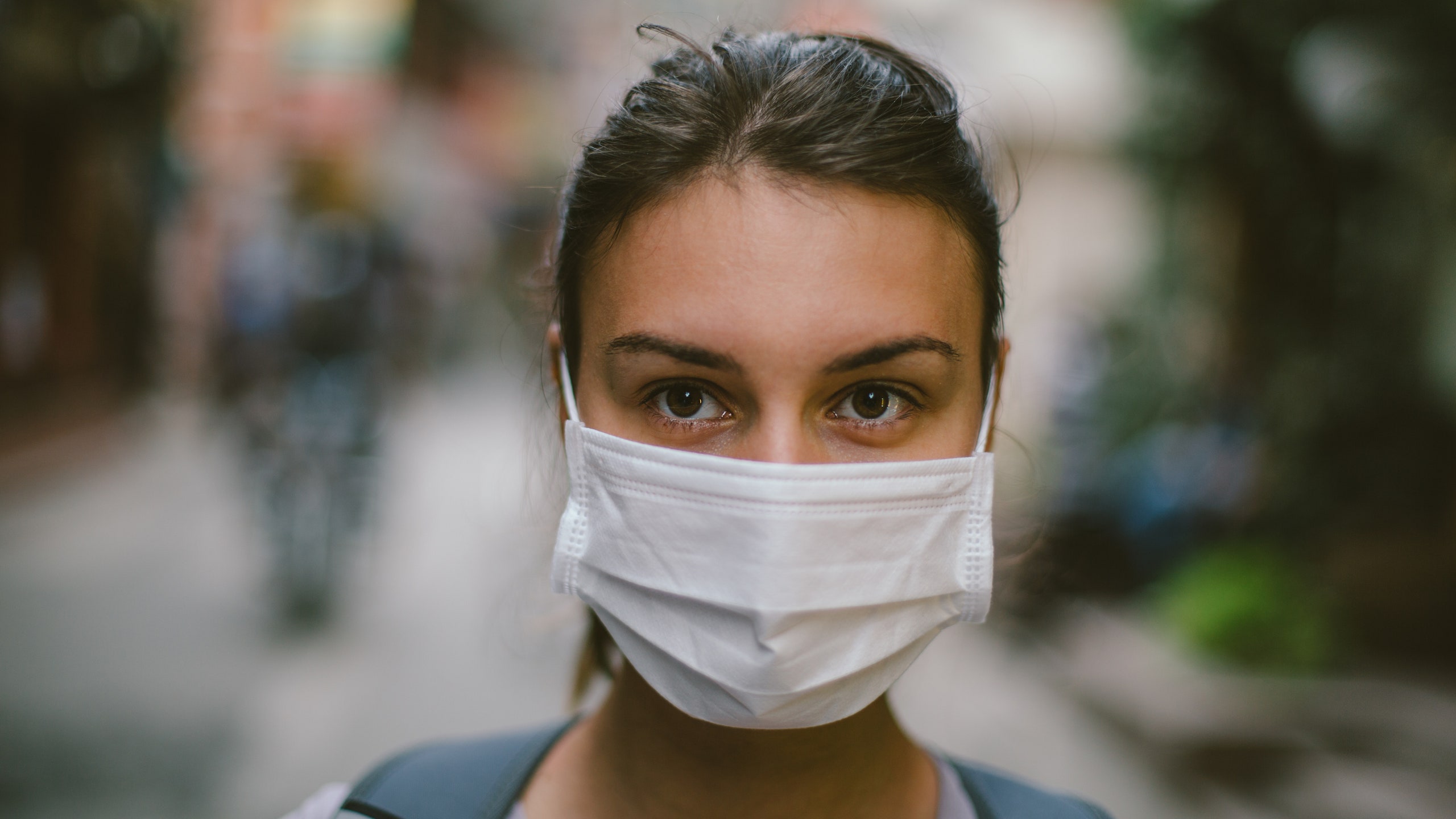
A pandemic image. Allure.com photo.

By Casey Bukro

Ethics AdviceLine for Journalists

Look what happened to ethics in this time of a global viral pandemic.

It became important, a matter of life and death.

This became clear when the national demand for life-saving ventilators was greater than the supply, forcing doctors and medical technicians to decide which patients struggling to breathe gets them.

Until now, this is not how most people imagine ethics works. Mention ethics and they think it’s something for ivory tower scholars to ponder, but nothing that touches them personally, more a matter for study and debate.  A sleepy sort of science, they thought. By definition, ethics is a system of moral principles or values, of right or good conduct.

Americans tend to have a me-first attitude. If they need something, they want it now. The coronavirus humbled those attitudes as medical ethicists step in to decide who gets scarce medical resources. They must wait their turn, if at all.

Journalism of a Plague Year

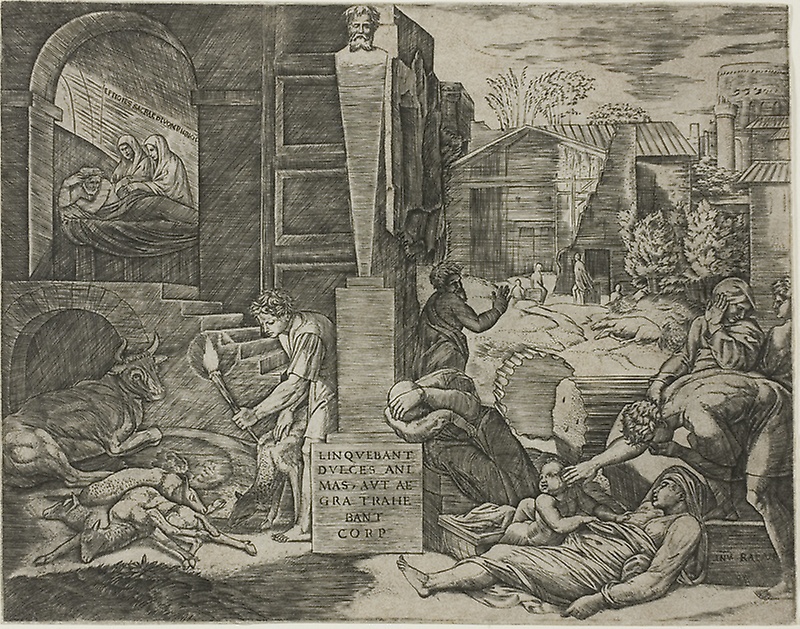
Plague in Phrygia. Art Institute

Journalism of a Plague Year

By Hugh Miller

Ethics AdviceLine for Journalists

On April 3rd, Alexandria Ocasio-Cortez, a member of the U.S. House of Representatives for the 14thCongressional district of New York, wrote in a tweet: “COVID deaths are disproportionately spiking in Black + Brown communities. Why? Because the chronic toll of redlining, environmental racism, wealth gap, etc. ARE underlying health conditions. Inequality is a comorbidity.”

The following Tuesday, April 7th, Dr. Anthony Fauci, director of the National Institute of Allergy and Infectious Diseases, stood at a podium at the White House and praised the “incredible courage and dignity and strength and activism” of the gay community’s response to the AIDS crisis. Fauci, much of whose career has been dedicated to battling HIV/AIDS, then drew a connection between the “extraordinary stigma” which then attached to the gay community, and a similar stigma and marginalization which, he argued, today was increasing the burden and death toll imposed on African-American COVID-19 sufferers, who make up a disproportionately high number of fatalities of the latter-day plague.

As a philosopher and ethicist, I’ve been reflecting on the role of my discipline in coming to grips with this new and sudden event since it first burst into the headlines in early March. As the novel virus grew from an outbreak to an epidemic and then to pandemic dimensions, and the gravity of the illness associated with it, COVID-19, became clearer, the ethical approach to it became less so, to me.