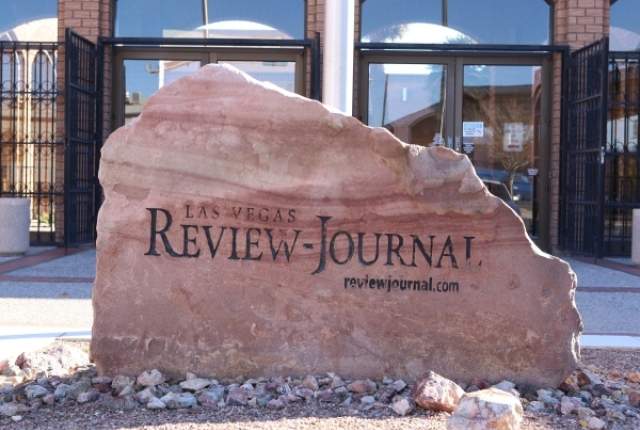
The proverbial other shoe dropped in the case of Las Vegas casino mogul Sheldon Adelson, who secretly bought the Las Vegas Vegas Review-Journal after days of denial.
The newspaper’s columnist John L. Smith resigned in protest after being told he could not write about Adelson or Steve Wynn, both Vegas casino magnates who unsuccessfully sued Smith for libel and drove him into bankruptcy through legal fees.
The paper’s editor, J. Keith Moyer, argued that it would be a conflict of interest for Smith to write about two of the most powerful men in town, who had sued him, not for his work on the newspaper, but for books he had written about them.
The one mentioning Adelson was titled “Sharks in the Desert.” The other book was titled “Running Scared: The Life and Treacherous Times of Las Vegas Casino King Steve Wynn.” Clearly, neither book offered much sympathy for either power player.
But this is a story about fabulous Las Vegas, a town with an explosive history of gambling, gangsters, show-business megastars, showgirls and entertainment. It’s in a constant state of drama or turmoil. All you have to do is walk through the downtown casinos at 3 a.m. and see the action on the roulette and blackjack tables to know things don’t slow down there.
Sources looking to go off the record often have little to contribute. (Stephen Rynkiewicz photo)
By Casey Bukro
After being seriously burned by false information from anonymous sources, the New York Times decided to be more cautious about accepting information from people who don’t want to be identified.
The Times issued new guidelines governing the use of anonymous sources, mandating that stories resorting to anonymity must be submitted to one of the paper’s top three editors for advance approval.
That’s a step in the right direction for a publication that long prided itself on knowing inside information, even if cloaked in anonymity.
A copy of the memo to the Times newsroom was forwarded to Politico anonymously. Hard to decide if that is ironic or hilarious.
The memo shows, among other things, that old habits at the publication known as “the Gray Lady” are hard to break. It begins by defending the use of anonymous sources as “sometimes crucial to our journalistic mission. But it also puts a strain on our most valuable and delicate asset: our trust with readers.”
The memo observed that readers “routinely cite anonymous sources as one of their greatest concerns about The Times’s journalism.”
Readers can see the practice as the Times “vouching for the information unequivocally – or worse, as carrying water for someone else’s agenda. As far as possible, we should explain the source’s motivation and how he or she knows the information.”
It appears that the Times is finally catching up on a rule generally accepted by many professional journalists: Information is only as good as its source. Credible and identifiable sources provide reliable information, or information that can be judged for reliability.
Departing from this rule can have serious consequences, as the Times public editor, Margaret Sullivan, pointed out. In several opinion page articles, she described how reliance on anonymous sources led to “two major front-page errors in a six-month period.”
One alleged a Justice Department criminal investigation against Hillary Rodham Clinton, which Sullivan called “fraught with inaccuracies.” The other involved jihadist social-media posts by one of the San Bernardino killers. The mass shooting killed 14 people and injured 22.
Too many Times articles rely on anonymous government sources, Sullivan wrote in December, 2015. She called for “systemic change” at The Times. “The Times needs to fix its overuse of unnamed government sources,” Sullivan wrote.
Normally, AdviceLine considers the Society of Professional Journalists’ code of ethics its highest source for guidelines and standards on ethics.
But we’re always willing to be open-minded about new and thoughtful ways to think about ethics and do the right thing in journalism.
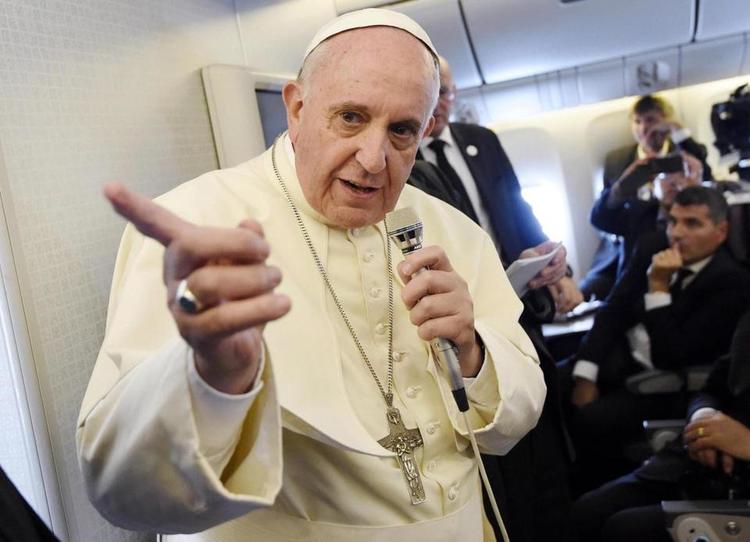
Take Pope Francis for example. The pontiff is unusually frank and quotable on his world tours, accompanied by media aboard the papal airliner. He gets involved in current and political issues that some popes might have shunned as too earthly, too secular.
On his way back to Rome from a six-day visit to Mexico, where he is known as Francisco, the pope weighed in on comments by Donald Trump, the Republican presidential hopeful. In a midair press conference, Reuters’ Phil Pullella asked for a response to Trump’s claim that the pope was a pawn in Mexico’s migration politics – an apparent reference to Trump comments on the pope’s trip airing on Fox Business. Pullella noted the candidate’s call to wall off the U.S.-Mexico border.
A transcript indicates the pope did not address Trump’s comments directly, but said that “a person who thinks only about building walls, wherever they may be, and not building bridges, is not Christian.”
Trump said the pope heard only one side of the story. In later comments, the pope clarified: “I say only that this man is not Christian if he has said things like that. We must see if he said things in that way and in this I give the benefit of the doubt.”
So now we have an ethical conundrum. If he is not sure what Trump said, and gives Trump the benefit of the doubt, are media free to tie the “not Christian” remark to Trump? Media reports on the event tend to say the link to Trump is stronger than the pope himself will admit. Trump has vowed to force Mexico to build a wall and increase deportations.
That night, on the PBS News Hour, John Allen, a Boston Globe reporter who covered the event, said it is possible that the pope does not know who Trump is, and was taking the word of reporters that Trump made the remark. Essentially, reporters coached the pope.
Moderator Judy Woodruff rightly pointed out that other politicians have asked for border walls, not just Trump. So was this a media-created conflict?
What should an ethical reporter do?
The answer might lie in the pope’s own comments during another in-flight press conference, when he touched on journalism ethics.
In the wake of the so-called Vatileaks scandal, in which the mainstream press reported on corruption in the Vatican, the pope was asked about his opinion of the importance of a free press in rooting out corruption.
“The professional press must tell everything, without falling into the three most common sins,” the pope responded. The sins he named were:
Misinformation – telling half the truth.
Calumny – dirtying another person, with or without the truth.
Defamation – to take away the good name of a person who has not done anything wrong.
“These are the three defects that are an attack against the professionally of the press,” the pope said. “We need professionally, what’s right. … And on corruption? To see the data well and say it. … If there is corruption, they should say it. And if a journalist, if they are truly professional, gets it wrong, he should excuse himself. Things go very well like this.”
Writer Terry Mattingly, reporting on that in-flight press conference, wrote: “To be honest, I think it would have been interesting to ask the pope to define the line that he sees between ‘calumny’ and ‘defamation.'”
Possibly all three “defects” apply in Trump case, since the controversy appears to stem from information fed to the pope, rather than from his own knowledge. This is a nuance that was not explained in many reports on the incident, although John Allen clarified that in his PBS News Hour appearance. And it could be argued that the pope was telling one side of the story.
The controversy did cast a shadow on the character of a political candidate, intended or not.
In the rough and tumble of American politics, even a pope may be dragged into the fray. It’s possible he was duped into commenting on something he was not familiar. Even a pope should be wary during election time in America.
The SPJ code of ethics says: “Take special care not to misrepresent or oversimplify in promoting, previewing or summarizing a story.”
Pitting the pope against Trump might have been a misrepresentation or oversimplification. How would you have handled the story?
All is fair in love, war and politics. But do they mix?
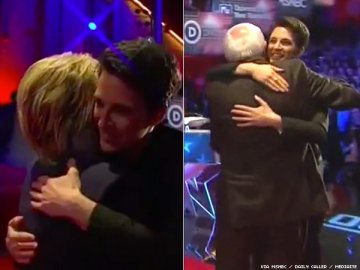
Critics say Rachel Maddow, MSNBC television host and political commentator, crossed a line when she hugged Democratic presidential contenders Bernie Sanders and Hillary Clinton after a televised debate.
Rachel Maddow hugs Hillary Clinton and Bernie Sanders.
Maddow says she’s a hugger, and probably will hug again if invited to host another debate regardless of political party.
Conservative Fox News analyst Howard Kurtz is among those who object. “She shouldn’t have been on that stage as moderator,” Kurtz writes on foxnews.com. “She is an unabashedly liberal commentator who rips the Republicans every night on her program. She should not have been put in that position.”
Kurtz acknowledges that Maddow is a smart lady, a Rhodes scholar with deep knowledge of the issues. But as Kurtz sees it, the hugs restrict MSNBC’s efforts to shed its left-wing label and rebrand itself as a news network.
Brit Hume, another political commentator, tweeted about the clutch play, saying “I don’t think I’ve ever seen a moderator do that before.”
Washington Post media critic Erik Wemple shrugs it off.
“Consider the hugs through the prism of journalism ethics,” writes Wemple. “Were they transparent? Yes, there’s a video of the hugs, which took place in front of the cameras; any clandestine backstage moderator-candidate hugging is strictly forbidden. Were they even-handed? Yes, both Sanders and Clinton received hugs of very comparable warmth, duration and hand-pats. Were they prejudicial? Nah, coming at the end of the event, it’s hard to say that the affection received by Maddow influenced the questions, which were solid.
“So, that’s the verdict, considering that there doesn’t appear to be a hug provision in the Society of Professional Journalists’ code of ethics.”
True, the code does not outlaw hugging specifically. But it does warn against conflicts of interest, “real or perceived.” And it urges journalists to “remain free of associations and activities that may compromise integrity or damage credibility.”
Those tenets apply to this case, which is why some journalists might do a double-take at Maddow’s embrace.
In a later blog post, Wemple returns to the debate-ending squeeze. “The industry’s orthodoxy dictates that those with opinions shouldn’t be running such straight-news events. Count me out of that strain of hollow thought. We’ll take Maddow over some ‘objective’ drone every time,” he writes.
Which is to say journalism standards and customs change over time. Lines are drawn and redrawn. And journalists will agree or disagree. It’s the nature of ethics.
That Herman Hupfeld song from the movie “Casablanca” comes to mind, “As Time Goes By.”
“You must remember this, a kiss is just a kiss, a sigh is just a sigh. The fundamental things apply as time goes by.” Nothing there about hugs.
In your view, was Maddow wrong? Leave a reply below.
David R. Daleiden said he misrepresented himself and falsified his identification while investigating Planned Parenthood because that’s what journalists do.
What an insult to journalists! Ethical journalists know that telling lies and deception while covering the news destroys their credibility. Who would believe a journalist who lies, cheats or steals?
That’s why the Society of Professional Journalists code of ethics clearly states: “Avoid undercover or other surreptitious methods of gathering information except when traditional open methods will not yield information vital to the public. Use of such methods should be explained as part of the story.”
True, there’s a qualification. And journalism lore is rife with tales of Hollywood-style derring-do, with reporters pulling off grand deceptions.
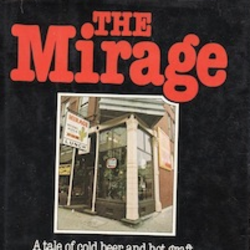
The Mirage tavern, a study in journalism deception.
In 1977, the Chicago Sun-Times bought a tavern and staffed it with reporters and photographers to show the extent of corruption and shakedowns by Chicago city inspectors and others who took $10 or $20 payoffs to ignore safety or health hazards. Then the Sun-Times published a 25-part series that documented the abuses and crimes in the Mirage tavern.
You’ll still get an argument from some journalists who say it was a terrific story and resulted in major city, state and federal reforms. The talk at the time, though, was that the series failed to win a Pulitzer Prize because the investigation was based on deception, and that was wrong.
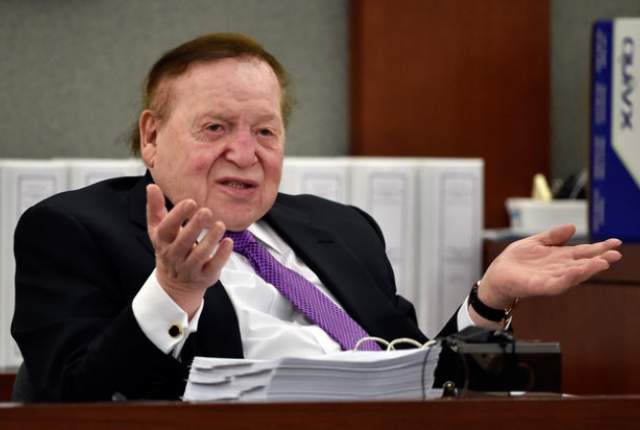
Sheldon Adelson, chairman and CEO of the Las Vegas Sands Corp. Photo by the Las Vegas Review-Journal.
By Casey Bukro
The stealth purchase of the Las Vegas Review-Journal by casino magnate Sheldon Adelson had journalists guessing for a week about the identity of the new owner and had some fuming over a lack of transparency, a prime tenet in media ethics these days.
But why should we be surprised by all this?
Very rich men often play by their own rules and get away with it. Even in media, top executives sometimes believe they are exempt from the ethics standards they hand down to their employees.
Journalists are warned against forming close personal ties with the sources they cover in case of conflicts of interest or an appearance of conflict. Publishers, however, party and play golf with the high and mighty covered by their staffs and call that good business.
They see themselves as business men and women, not journalists. In this case, we’re talking about a businessman in the Las Vegas casino business, where razzle-dazzle is the way the game is played. The house always wins.
Politics makes it more complicated. Adelson reportedly declined mentioning his purchase of the largest Nevada newspaper, even denying it as first, because he did not want it to distract from the fifth GOP presidential debate being held at the time in the Venetian resort hotel casino owned and operated by the Las Vegas Sands Corp., of which Adelson is chairman and CEO.
Clearly, politics took priority. And that might offer a clue into some of the leading questions in Las Vegas these days, such as what does Adelson want, and what does he intend to do with the newspaper?
Ombudsmen and public editors often are described as a dying breed, yet those who remain clearly take the job seriously.
A 2014 University of Nebraska graduate thesis finds there are about a dozen ombudsmen working now in U.S. news organizations, down from about 40 or 50 earlier in the decade. Internationally, however, the report finds ombudsmen growing in number and popularity.
In these times of job insecurity, ombudsmen seem to be taking more risks than most journalists. But they toil on.
In the U.S., Margaret Sullivan, the New York Times public editor, attracted attention for pointing to a conflict of interest Times editors failed to flag or apparently even to notice in an article titled “The Transformers.”
The article profiled five technology entrepreneurs, including Airbnb CEO Brian Chesky.
Tipped by readers, Sullivan discovered the article was written by the wife of a major investor in Airbnb, and that the writer was not a NYT staffer. The article appeared in T, the style magazine of the Times, and lauded entrepreneurs “harnessing goodness through technology.”
Sullivan came down hard on her employer in an article titled “Conflict of Interest in T Magazine’s Tech Article.”
Among readers who contacted Sullivan about the article, one wrote, “my question is about an undisclosed conflict” in an article that “reads as uncritical P.R.” for Airbnb without disclosing the relationship between the article’s author and the investor in Airbnb.
“This is a case in which the financial conflict is so clear, and the spousal tie so close, that a disclosure would not have been enough. A different writer altogether would have been a far better idea, and, to my mind, the only right one,” Sullivan wrote.
Sullivan found that T Magazine failed to live up to the Times’s high journalistic standards. Online, the article carries a disclosure about the conflict.
In South Africa, news24 reported that complaints to the Press Ombudsman faulted the Sunday Times for information it did not report, rather than what it did report about a tax-collecting agency of the South African government.
The Sunday Times published a series of reports on an alleged rogue unit in the agency accused of running a brothel and spying on President Jacob Zuma. Officials accused in the scheme resigned, but told the ombudsman “there is an alternative narrative” that contradicts the Times reports.” A lawyer said the Times had been selective and unbalanced in its reporting.
The Sunday Times of South Africa is a weekly newspaper. The ombudsman is pondering the case.
Despite the brain-twisting nature of the job, others still step up. ESPN recently named James M. Brady, formerly of the Washington Post, as its public editor. In making the announcement, company officials said his goal would be transparency and advocacy in an increasingly multimedia world.
Media ethics in nations around the globe can be as controversial, and thought-provoking, as they are in the United States. They are worthy of an occasional look, which is the goal of Ethics Scan.
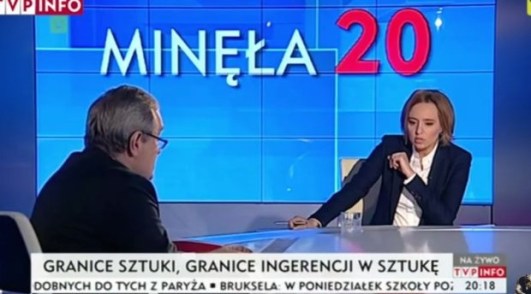
A Polish public broadcaster is back to work after a suspension stemming from her tough interview with Poland’s deputy prime minister over his attempts to block a controversial theater production. He accused TVP, the public broadcaster in Poland, of “manipulating” public opinion.
The interviewer was suspended hours after the interview when the minister complained that her aggressive techniques were contrary to the expected standards of public television. However, TVP’s ethics committee decided that the journalist did not violate network ethics standards and was justified in grilling the government official, whose comments about TVP and its journalist were considered “unjust and hurtful.”
In the United Kingdom, the British Broadcasting Corp. discovered from a viewer survey that they wanted “less bias and political opinion in journalism and news reports.”
The BBC Trust, the network’s governing body, also found that viewers wanted fewer game shows and cooking programs, but more high-quality drama. BBC is the world’s oldest national broadcaster, dating to 1920.
In its analysis of the survey results, BBC said it was not clear how it was biased, since respondents on both sides of the political spectrum complained the corporation was against them.
It’s hard to be good and ethical. Sometimes it comes at a cost.
Amelia Pang, metro reporter for Epoch Times in New York, discovered this when she called the Ethics AdviceLine for Journalists in 2012 and asked a question that AdviceLine gets sometimes:
When calling a news source, is it necessary for reporter to admit to being a reporter? That is, not say that she is a reporter, unless asked?
It is a question that arises among young reporters, those learning the ropes or those who work for organizations without printed standards or spelled out ethical guidelines that can leave a reporter wondering what to do.
In Pang’s case, she called AdviceLine on advice from a colleague.
“I am doing an article about a controversial homeless shelter in New York City,” Pang told AdviceLine adviser Hugh Miller, an assistant professor of philosophy who teaches ethics at Loyola University Chicago.
“The shelter is located in a very rich area, therefore many residents have been quite unhappy about it. The shelter has received a lot of bad press since they opened last year, and now they are reluctant to talk to any media.”
Killing the messenger takes new meaning when you see it live, in living color, as happened in the deaths of a Virginia television news reporter and her cameraman.
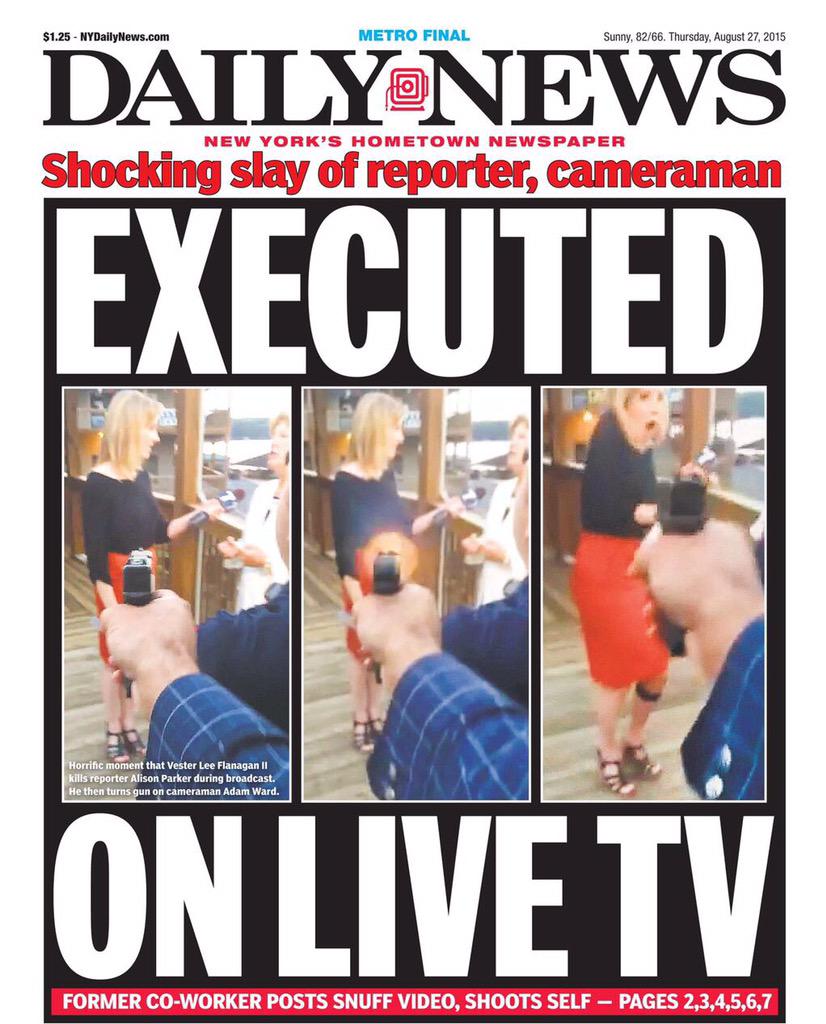
WDBJ correspondent Alison Parker was conducting an on-air interview in a Moneta, Va., shopping center when she and the photographer, Adam Ward, were shot and killed by a disgruntled former colleague who also videotaped the attack and put it on social media.
The New York Daily News gave the murders front-page display, in very graphic detail than some TV outlets shunned.
Killings on video are increasingly common these days. Journalists are among those targeted now, becoming victims and not just reporters of events. Parker and Ward’s names are now added to a list that included James Foley and Daniel Pearl.
Tech-savvy killers use social media and the internet these days to show their crimes.
The Islamic State group released a video in 2014 showing Foley, clad in an orange gown, kneeling on the ground next to a man dressed in black holding a knife. Foley makes a short statement and then is decapitated.
In 2002, Pearl, a correspondent for The Wall Street Journal, disappeared while on assignment in Karachi, Pakistan. Video shown around the world via the Internet showed Arab extremists cutting his throat, then decapitating the reporter.
In this world of social media, terrorists don’t need reporters to tell their message. Terrorists can do that themselves now, and one way of doing that is killing reporters.


 Ethics AdviceLine for Journalists