All posts by ethicsadviceline

Conflict of Interest: What Does it Mean?

By Nancy Matchett

A reporter who covers town meetings wonders whether it is appropriate to pursue a relationship with a councilmember’s daughter.

A community activist learns that the editor of the local newspaper plans to run for town supervisor, and asks whether this is OK.

An editor discovers that one of her reporters is covering an issue he previously wrote editorials about, and wants to check whether her instinct to give the story to someone else is correct.

And a publisher posts a notice that “no anti-fracking info [is] welcome,” overturning the paper’s previous policy of printing flyers on both sides of the issue. This prompts at least one reporter to resign, and she wants to know whether we share her concern that the new policy poses a threat to journalistic integrity.

All of these AdviceLine cases raise the general question, “What counts as a conflict of interest?” Interestingly, the SPJ code is relatively silent on this.

It does say that journalists should “avoid conflicts of interest, real or perceived,”and “disclose unavoidable conflicts.” But the code does not provide further details about what would make a conflict unavoidable, nor does it offer a precise definition of what it means to say a conflict of interest exists.

This is not a criticism of the code itself; it is a reason why ethical professionals sensibly seek advice from time to time.

Conflict of interest is an example of an “open concept.” While it’s possible to give some textbook examples, there is no single definition that adequately covers all cases.

At best, there is what the philosopher Ludwig Wittgenstein called a “family resemblance” among the various situations in which the concept is appropriately used. When dealing with an open concept, testing your thinking against other professionals’ reactions is one of the best ways to ensure that you have fully understood what the concept means.

Whether a real conflict exists will also depend on facts about the particular individual whose interests potentially conflict. All of us have different abilities to bracket off our emotional attachments and understand conflicting points of view. So while one reporter might be able to draw a bright line between objective reporting and editorial work, another might find it impossible to report seriously on the arguments made by those with whom he disagrees.

One of the things AdviceLine respondents try to do is make sure callers are attending to this kind of detail. But even when it’s plausible to say that only the journalist herself knows whether a real conflict exists (the first three cases above could be examples of this), the need to avoid perceived conflicts of interest remains.

Why should journalists avoid perceived conflicts of interest even when no real conflict exists? The answer comes from reflection about the profession’s societal role. The average citizen isn’t in a position to know which reporters and editors can fight which forms of temptation.

And even the most seasoned journalist occasionally might be mistaken about his or her own ability to resist. To protect the profession’s integrity, it’s better for everyone involved if journalists avoid anything that looks remotely like conflict of interest. Only then can journalists and readers alike be confident that the profession is fulfilling its broader obligation to seek and report the truth.

Conflict of Interest: The Perils of Journalists in Love

From the Ethics AdviceLine for Journalists archives.

By Casey Bukro

The managing editor of a California newspaper said one of his reporters has been having an affair with the mayor of one of the towns the paper covers.

The editor learned that she has sent her paramour at least two stories about his town prior to their publication. The editor intends to confront the reporter about this, but she is otherwise a fine reporter and writer and he doesn’t want to lose her.

A further complicating factor is the discovery that a competing newspaper has become aware of the relationship between the reporter and the mayor, and might run a story about it. The managing editor wanted to know the AdviceLine adviser’s take on this situation, for the reporter and for the editor.

The AdviceLine adviser pointed out that the reporter had violated two standards in the Society of Professional Journalists code of ethics – to “act independently” and “avoid conflicts of interests, real or perceived” – by concealing her relationship with the mayor from her editor, surreptitiously leaking stories in advance of their publication and then concealing that exchange.

“The other paper’s telling this story before you do anything about it might severely or even fatally impair your paper’s credibility and reputation. Imagine what a typical reader would think,” said the adviser.

The editor answered: “I can, alas.”

Here’s what the AdviceLine  adviser suggested:

“I think you should do something decisive, and promptly. Either reassign her to an utterly different beat or function, at the minimum. Or fire her. In either event, you might consider disclosing the matter in some form to the public before the competition gets a chance to do it for (or to) you.”

The editor answered: “That’s pretty much exactly what I thought was called for before I called you — I wanted confirmation of my instincts.”

Years after the editor called AdviceLine for guidance, AdviceLine called the editor to learn the outcome of this case.

“I wanted to fire her outright,” said the editor, who left the newspaper after 22 years in the news business. “She eventually got fired,” he added, but not for her affair with the mayor.

The case was brought before the newspaper’s human resources department for review. The HR managers decided that an employee could have a relationship with whomever she wanted.

“With regard to the conflict of interest (of sex with the mayor), HR was not interested in that,” said the former editor.

“There also was an issue of the same female reporter sending her copy to the mayor for review before she filed it to the editor,” he said. “If we had not found out that she was sending copy to the mayor in advance, I don’t think HR would have signed off on firing her.”

Though journalists are guided by ethics codes like the one adopted by the Society of Professional Journalists, HR departments are guided by a different set of standards.

There were “worries about litigation in a highly litigious state,” said the former editor. That was a deciding factor.

Ethics of Promoting Advertisers

From the Ethics AdviceLine for Journalists archives

By Casey Bukro

An assignment editor for a New York television station said that management is directing the news staff to give favorable “news” coverage to local advertisers.

The AdviceLine adviser said management’s mandate clearly is unethical, and the assignment editor recognizes that. But what to do about it?

The assignment editor was hoping to contact “some sort of ethics police.”

AdviceLine is not in the ethics policing business, but wanted to help the editor decide where to go next.

The assignment editor clarified his question by explaining that, while the station’s advertising sales department does not actually write “news” stories about advertisers, they pressure editorial staffers into creating stories about advertisers. The sales department has veto power over anything said on the air about an advertiser.

The Society of Professional Journalists code of ethics supports the assignment editor’s concerns, the adviser observed. The code says journalists should “deny favored treatment to advertisers.”

As for his next steps, the assignment editor was encouraged to contact the SPJ professional chapter in New York, which might be willing to pressure the caller’s superiors to stop promoting advertisers, or at least raise questions about it.

The assignment editor also wondered if there was any legal recourse. The adviser gave him the contact number for the Reporters Committee for Freedom of the Press, to check if they know of any legal recourse. The adviser also suggested checking Federal Communications Commission regulations.

“After this conversation about resources, we talked a little about his just leaving the job and about the ethical and practical issues related to whistle-blowing to competing TV stations,” said the AdviseLine adviser. The assignment editor “had begun to think about both of these things, even though he was hoping we could provide him with help in finding a less drastic way to address the matter.”

April Fools’ Journalism

From the files of the Ethics AdviceLine for Journalists

By Casey Bukro

The April 1, 1985 edition of Sports Illustrated magazine carried a story by the late George Plimpton saying that a New York Mets rookie pitcher named Siddhartha (Sidd) Finch could throw a baseball more than 160 miles an hour.

It was a hoax, and Sports Illustrated later admitted that the story was an April Fools’ joke. Plimpton was famous for taking turns as a Yankee baseball pitcher, a Baltimore Colts football player and boxing Archie Moore — then writing about the experience from an amateur’s viewpoint. It was an example of what today might be described as participatory journalism. Plimpton did a lot of that.

A sports publication journalist called the Ethics AdviceLine for Journalists, saying he had an idea for an April Fools’ Day story in the Plimpton tradition, but wanted to know if that would be ethical.

The AdviceLine adviser remembered the story about fireball pitcher Sidd Finch, and was skeptical at the time he saw it in 1985.

“This was due to the very well-known reputation of Plimpton as a writer who went in for bizarre experiences and writing having to do with sports,” said the adviser, who also recalled that Plimpton and Sports Illustrated at the time “came in for little serious criticism once the hoax was divulged.”

Most readers thought it was “fun” in keeping with the kind of work Plimpton did during his career. But the adviser suggested that, just like fastball pitchers, not all writers can deliver a change-up:

“Without this background and past reputation, a true journalist risks his/her reputation and the reputation of his/her news media using this device. A direct answer is, the creation or promulgation of a known false story is unethical, Plimpton notwithstanding.”

Going Undercover for Drugs

From the files of the Ethics AdviceLine for Journalists

By Casey Bukro

An Arizona community newspaper staff is considering sending a reporter/photographer team out with a few $20 bills to do a story on how easy it is to buy drugs, but fear they might be arrested if they do that.

What are the legal and ethical implications? A staff writer asked in an email to the Ethics AdviceLine for Journalists.

AdviceLine does not answer legal questions, but from an ethical perspective, said an AdviceLine adviser, the marginal issue is that the reporter would be acting as a buyer and misrepresenting himself.

If they went ahead with the plan to buy drugs, the staff writer added, would they be compelled to report it to the police? The adviser answered that they would have been a witness to a crime, and “it seems to me they would be obligated to do so.”

The assignment sounds more like police work than journalism, said the adviser, and “while I applaud the motive and the courage of the reporter, have you looked at other ways to accomplish the same thing?”

One possibility would be to cooperate with police, instead of embarrassing them, which an article about an undercover journalist might do.

Also, the Society of Professional Journalists Code of Ethics discourages undercover or other surreptitious methods of gathering information “unless traditionally open methods will not yield information vital to the public.”

The AdviceLine adviser summarized his views by saying: “First, the project is dangerous. Second, it should be left to the police. And third, as an alternative, contact the police and ask if a reporter might accompany an officer who might carry out the ‘bust’…”

The writer said he had not thought about working with police in that way.

When Media Are the News: Brian Williams’ Mistake


  • Brian Williams under fire: Cartoons of the day
            Bob Englehart, Hartford Journal


By Casey Bukro

The news has been the news in recent weeks, starting with Rolling Stone, then Charlie Hebdo and now NBC’s Nightly News anchor Brian Williams.

Usually, journalists try to avoid being the story, although Williams demonstrated that television celebrities might see no harm in a little self-promoting embellishment even if it’s  untrue.

After challenges from military witnesses, Williams now admits he was mistaken or had “gone crazy” when he said that he was in a helicopter that was shot down in 2003 while he was covering the Iraq war. Williams often repeated that scenario, making himself look intrepid.

Whoops. It was another helicopter that was forced down by a rocket hit, not the one Williams was riding. Williams and military witnesses give different accounts of the incident.

Williams apologized.

Caught in a fabrication that was widely mocked on the internet, Williams said he was stepping down for a few days from his post as managing editor and anchor of Nightly News, a post which ethics expert Kelly McBride of the Poynter Institute described as “the primary arbiter of the facts.”

Let’s get one thing straight: Williams was in a helicopter in a war zone, which was dangerous and laudable. Witnesses vouch for that. So I give the guy credit for doing a reporter’s job.

But he went a step too far and landed in the shoals of fabrication and deceit, which ended the careers of Jayson Blair of the New York Times, Janet Cooke of the Washington Post and Stephen Glass of The New Republic. Their careers crashed and burned.

Dan Rather left CBS News after 44 years for “a mistake in judgment.”

NBC management said they were considering “the best next steps.” They should consider the Society of Professional Journalists code of ethics. It says “journalists should be honest….” They also should not cast doubt on the credibility of other journalists working to gain the trust and respect of the public.

NBC suspended Williams for six months without pay.

For some people, Williams will be living proof that “reporters make it all up.”

Williams told the false story of his heroics often, and one unanswered question is whether NBC knew the story was fake and did nothing about it. Where were the editors? Or was Williams so untouchable that nothing he said could be challenged? Television crew members with Williams also witnessed the event. Did anyone bother to question them?

To complicate matters, Williams’ 2005 coverage of Hurricane Katrina also is being challenged since he reported seeing a body floating past his hotel room in the French Quarter of New Orleans.

A local newspaper reported that flood waters did surround the Ritz-Carlton where Williams was staying. And a former sheriff’s sergeant working with the anchor during the Katrina floods says he believes Williams.

Charlie Hebdo was a far more tragic story, in which two gunmen killed 12 people in or near the offices of the satirical magazine, which had published cartoons of the Prophet Mohammed.

Two philosophers who are staff members of the Ethics AdviceLine for Journalists wrote blogs about the event. You can read their comments at http://www.ethicsadvicelineforjournalists.org.

David Ozar and Hugh Miller agreed that no religion condones killing people over religious or philosophical differences.  But they saw the Charlie Hebdo massacre turning on the issue of offense, and what should be done to avoid offending the beliefs of others.

A step in that direction came when al-Jezeera English banned the use of certain words that could be offensive in other cultures, such as “terrorists,” “Islamists” or “jihad.”

Nancy Matchett, also an AdviceLine staff member, had this to say about Charlie Hebdo:

” I too think the most interesting and difficult issues raised by satire have to do with the concept of ‘offense.’  One thing I might emphasize a bit more (and here I would be paraphrasing Eleanor Roosevelt’s famous line) is that no one can offend another person without that other person’s consent.

“That does not, of course, obviate the point that a person can, through deliberate malice or carelessness or even cluelessness, say or do things that are extremely likely to be taken offensively by specific others (and here again, I agree with both Dave and Hugh that such sayings and doings constitute ethical failings).

“It is just to note that the mere fact that one person ‘took offense’ does not, by itself, show that the purportedly offensive action was the result of a clearly blameworthy motive like malice, etc. Applied very briefly to Charlie Hebdo, it’s my sense that the magazine was trying to deliberately provoke (if not outright offend) in ways that make the taking of offense by various communities justified. But of course a murderous response to even the most highly offensive speech act is inexcusable in any context.”

And I would add one more thought about Charlie Hebdo. And that is to be true to your standards about giving offense. Think hard about it, and decide on your standards. Then stick to them. Charlie Hebdo intentionally offended. It was their standard. Journalists should decide where they draw the line.

Enough time has passed to show that Rolling Stone magazine clearly shot itself in the foot by reporting a story based on a single source, with no attempt at in-depth investigation, about an unnamed woman who said she had been gang raped by seven men at a fraternity party on the University of Virginia campus in 2012.

The story began unraveling almost immediately after it was printed as times, dates, places and people mentioned in the story did not match reality.

The author, Sabrina Rubin Erdely,  said she had agreed with a request from the alleged rape victim to avoid interviewing anyone else who might have been involved, thereby violating a standard journalism practice to seek as many viewpoints as possible to check the validity of the allegations.

Erdely and Brian Williams have this in common: They should have checked their facts.

Rolling Stone editors later issued a statement saying that in light of new information, “there now appear to be discrepancies,” and the editors concluded their trust in the young woman’s story “was misplaced.”

“The truth would have been better served by getting the other side of the story,” tweeted Rolling Stone managing editor Will Dana.

The university and the fraternity mentioned in the story were seriously smeared by the allegations, and the legitimate cause of campus rape prevention was damaged.

Charlie Hebdo represented an assault on freedom of expression.

Brian Williams and Rolling Stone represent an assault on professional standards in journalism, and a subversion of simply telling the truth.


A Philosopher’s Thoughts on Charlie Hebdo


  • Cartoonists pay Tribute to Charlie Hebdo attack victims - 25 Cartoons

By David Ozar

I am a philosopher and ethics professor.

Some of what has been said about the murder of staff at Charlie Hebdo has seemed to me to make very good sense; but some of it has been muddled by treating together a number of ideas that are very different from each other. There are at least three sets of ethical or social-ethical issues that these events put on the table for careful reflection.

I began writing about these issues because I was pretty sure that drawing a clear conclusion about one of these issues does not lead us to clear conclusions about the others.  I offer my reasons for this point of view here in the hope that they will help others think carefully about these issues and, if I am correct, avoid muddling them together.

One set of ethical issues raised by the events at Charlie Hebdo focuses on whether killing people to prevent them from speaking their views is ever morally/ethically justifiable. Very few people in the world believe it is.

No philosophical and theoretical position, Islamic or otherwise, that affirms every human being has a value that does not depend on what the person believes or how he or she acts would ever support such killings as morally/ethically justifiable.

Clearly, committed terrorists of any religious stripe or of no religion view humans differently.  But I am assuming the fact that there are people who hold other views about human beings is not counter-evidence enough for the rest of us to withhold judgment about the value of a human being, or a reason to view terrorists as anything but profoundly mistaken and dangerous enough to the rest of us that ethically extraordinary measures may be necessary to prevent them from acting on their views.

But as I said, I don’t think being clear about this set of issues provides clarity to the other two.

A second set of issues concerns what is or is not required of Muslims who seek to act faithfully in accord with the Koran.  The fact that the jihadists we are dealing with say they read the Koran as justifying acts of terrorism — and let us assume this is genuine and not strategic posturing for the sake of grabbing power or whatever, though their being genuine in this is also something that would need evidence for us to be sure — tells us nothing at all about other strands of Islam and nothing dependable about the Koran and surely provides no evidence about Islam in general or Muslims as a group.

I have no detailed knowledge about Islam and its many varieties and all the Muslims I have known personally have been good people whom I would be happy to call my friends. My guess is that there are as many strands of Koranic interpretation as there are regarding interpretation of the Judaic and Christian Scriptures; and the news about the Paris massacre has evidenced many devout Muslims who condemn terrorist acts of all sorts as being clear violations of Koranic teaching.

In fact, while these terrorists and ISIS do use the word “jihad” to describe their efforts, this probably tells us nothing specific enough to draw conclusions about jihad itself as this idea occurs in the Koran or is understood by Muslims generally.

For I do not know – and we would need to listen carefully to Koranic scholars to draw any conclusions – whether the notion of jihad in the Koran or in various Muslim traditions of interpreting it always requires terrorism. Religion-based wars have been fought — by partisans of many different religions — without resorting to terrorism. That is, in accord with the rules of ethical war (articulated for example, but not exclusively, in the West’s understanding of “Just War Theory”). There could just as easily be Islamic traditions that interpret jihad this way rather than seeing it as requiring terrorism.

And ethical/moral questions about what justifies acts of mortal violence under any circumstances, much less circumstances having any relevance to the present situation of various peoples in the Middle East, is a huge set of questions I am not even attempting to say anything about here.

Anyone wishing to understand the ethical issues involved in justifying war’s violence will find a good, careful discussion in Michael Walzer’s book, Just and Unjust Wars. A good example of a discussion of the ethical issues involved specifically in addressing the threat of organized terrorism that our country learned it must deal with in the events of 9/11 is Jean Bethke Elshtain’s book, Just War Against Terror.

The third set of ethical issues raised by the events at Charlie Hebdo concerns journalists and their various appropriate professional roles.  In an essay entitled, “An Explanation and Method for the Ethics of Journalism,” which I co-authored with another philosopher/ethicist, Professor Deni Elliott, I proposed an answer to the question “What Values Do Journalists Bring About For Those They Serve (i.e. in their designated social role in our society)?”

The book is: Journalism Ethics: A Philosophical Approach edited by Christopher Meyers, pp.9-24. This is a central question to reflect on when asking about the professional ethics of any profession.

I argued there that Needed [by the public] Information comes first and Valued [by the public] Information comes second.

Clearly the creation and publication of humor, and more narrowly of satirical humor, is not part of the role of journalists to provide the public with needed information or even information which the public does not need but values having for one reason or another.

I argued that the other kinds of good that journalists can do may well be ethically appropriate to their professional role, at least in Western societies, and I think that producing humor is one of these, either as entertainment or as something valued for other reasons, perhaps including thoughtful social criticism.

But I take it for granted that every profession’s ethics are the product of a dialogue between that group and the specific larger society in which it functions. So I think that, in today’s world where the products of journalists’ work go far and wide, it is a complex question to know whether societies where other things besides these two are not part of journalists’ social role are ethically justified in those societies.  This is a question I will not try to comment on here, but which would make a great topic for discussion by those who care about journalism’s professional ethics in today’s digital world.

With that as background, I can pose the key question about journalism’s professional ethics that is at stake here: Is satirical humor sufficiently socially-ethically justifiable within the social-ethical role of a professional journalist or professional journalist organization that such humor continues to be ethically justifiable when it is highly offensive to large numbers of otherwise reasonable, not-fanatic, peace-loving and neighbor-caring people?

This is a very complex ethical question.  What a person finds offensive is, for want of a better word, painful to them, it hurts.  And in general we think hurting others’ feelings ought to be avoided unless there is a good reason for it. In addition, it is rare that we judge hurting someone’s feelings, offending someone, for no other reason than to entertain other persons (besides the one who is hurt) to be something that is morally/ethically justifiable if the situation is one in which the hurt party has little realistic opportunity of avoiding the hurt.

The great American philosopher, Joel Feinberg, determined that his examination of rights should include a careful discussion of the extent to which offense can ever be morally/ethically justified and if there are circumstances in which it should be legally prohibited.

The work ended up taking him a whole, complex book to sort out. [The book is: Joel Feinberg, Offense To Others.]

So it seems to me that well-thought-out answers to the question I just asked are going to take time and effort to sort out, especially in an international digital world in which “news” of all sorts is flashed on screens, billboards, etc., at least in many parts of the world.  For that means that the ethical issue is not resolved by just saying, “Well, if you think it will be offensive (or even know it because they said it would be), just refuse to buy Charlie.”

That is not a realistic answer to the opportunity-to-avoid question in a world where the line between information, entertainment, and advertising has been blurred so thoroughly (although this blurring has not been solely the result of the changes in journalism in recent decades, but on the other hand journalist organizations have certainly played a part in the process).

So I think there is a lot here that is worth discussing, especially if we are willing to assume that short, quick answers are almost certainly going to be too simple once we get past the “do not kill” part of the matter.  That’s my ‘two cents” on this. Well, to be honest, it’s quite a few cents! But then I am a philosopher and I am unwilling to pretend complex ethical things are simple !

The Steve Kroft Affair


By Casey Bukro

We here at Ethics AdviceLine for Journalists sometimes clash over what is ethical or not.

The Steve Kroft affair is the latest example.

The veteran “60 Minutes” correspondent admits he had a three-year fling with a New York City lawyer, though both are married.

“I had an extramarital affair that was a serious lapse of personal judgment and extremely hurtful to my wife and family, and for that I have nothing but regret,” Kroft said in a statement to the New York Post. Both the Post and the National Enquirer published salacious text messages between Kroft and his lover, proving once again that anything on the internet is not private.

A CBS spokesperson said “It’s a private matter.”

Soon after the scandal broke, an AdviceLine colleague wrote: “Are personal values/ matters the same as professional matters? Should I teach my students that I don’t care what they do in their personal lives as long as they make good ethical choices in their professional ones? Personally, this Kroft story does not interest me. His professional work does.”

Kroft is one of the most high-profile journalists in America. He has been a CBS newsman for 31 years, 26 of them as a correspondent with “60 Minutes,” which specializes in asking the high and mighty tough questions about their personal lives, their entanglements, their dalliances and the quality of their professional judgment.

Here’s what I say to my AdviceLine colleague: What people do in their personal lives reflects on their credibility and integrity. I don’t think you can separate personal and work lives that easily.

By your reasoning, we should have ignored Bill Clinton’s affair with Monica Lewinsky, as we did with JFK and his affairs. Looking back on JFK, journalists are criticized now for turning a blind eye to his dalliances. Now we’re more inclined to think about accountability.

Kroft is a very public figure by virtue of his role on “60 Minutes.” Part of his job is exposing the conduct of public officials. I would buy your argument if he were not a public figure. That is why, in ethics, we draw the distinction between public and private individuals.

Also, there is the issue of blackmail. Anyone involved in something he or she does not want the public to know is subject to the possibility of blackmail and manipulation.

Tell your students that they have to be smart enough to recognize that ethical values apply to all facets of people’s lives, especially to public figures, and that they, themselves, become public figures when they become very visible journalists. Think Woodward and Bernstein.

That’s why, these days, we encourage publishers and editors to avoid becoming involved in civic organizations, a practice that once was common, and to a degree still is. There is the public perception that if a publisher is an official on the board of a civic organization, he will favor that organization and give it favorable publicity. He also is seen likely to keep bad information about the organization out of the news.

The Society of Professional Journalists code of ethics warns journalists to avoid conflicts or interest, real or perceived.

All of this is in the realm of accountability, an issue we take more seriously these days. People with ethics issues should not be pointing fingers at others with ethics issues. “60 Minutes” sets very high standards and its correspondents should measure up to them.

Personally, I always thought my role as a journalist meant that I was forbidden from doing things others could do. When I covered finance, I avoided buying stock in companies I covered. I did not join organizations I covered. I did not take part in political campaigns.

You can argue that any American citizen is entitled to do those things, and you would be right. But I always believed that anything I did should be above reproach. Being a journalist was paramount. It is an honor, a privilege and a duty to be smart enough to avoid any activity that could tarnish my reputation, and the reputation of the journalism organization I worked for.

Too often, the public complains that the media gleefully write about the transgressions of politicians and others, while keeping silent about the transgressions of journalists. The “old boy” syndrome. They say we cover up for each other. It’s a double standard. We should report on the transgressions of journalists as vigorously as we do about the transgressions of others. It’s only fair.

Comments are welcome.

Rape, Cosby and UVA

A story in Rolling Stone featured the alleged gang rape of a University of Virginia student, launching calls for reform and more attention to the issue of sexual assaults on campus. Recent reporting by the Washington Post, however, has raised doubts about the veracity of the story.
Fraternity house named in alleged rapes (Ryan M. Kelly, The Daily Progress/AP file)

How aggressively did journalists pursue the facts?

By Casey Bukro

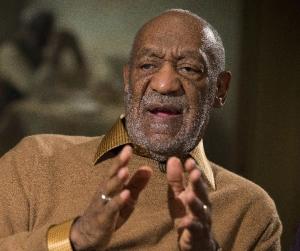
Rape became big news with allegations against Comedian Bill Cosby and an explosive Rolling Stone story describing a gang rape of a co-ed at a fraternity house on the University of Virginia campus, for which editors later apologized for “discrepancies.”

Both rape stories raised questions about how journalism works in America and whether it can be trusted.

Where were the editors while these stories were being covered? Tough editors ask tough questions, and demand answers from their own reporters about how they got the story and whether it’s supported by hard investigation.

Media are accused of failing to dig into serial rape accusations over decades against Cosby, who was seen as a popular father figure as he was portrayed on his television show.

About 20 women have accused Cosby of drugging them, and often raping them. But he has not answered to what he calls “innuendos.” Some of the accusers have been challenged. Cosby’s most recent comment is that his wife is dealing well with the controversy.

Pushing back, Cosby’s lawyer accuses a reporter of deception, and his wife, Camille, contends the media failed to take a close look at her husband’s accusers.

The Rolling Stone gang rape story by Sabrina Rubin Erdely is based on a single source, a woman identified only as “Jackie,” who claimed she was lured to a 2012 fraternity party by a man named “Drew,” and raped by seven men. The Washington Post described the story.

Good reporting usually involves getting all sides of the story. Erdely admitted that she made a deal with Jackie that no attempt would be made to find and interview anyone else involved in the alleged rape, or knew about it.  And her editors allowed her to get away with a violation of a basic tenet of good reporting – getting multiple sources to verify the accuracy of the story

The editors allowed this unusual dispensation from careful reporting because the story was “sensitive.” Yes, rape is a sensitive issue, but not a reason to suspend professional standards in reporting. Sensitive stories require more careful reporting, not less.

The Society of Professional Journalists code of ethics urges caution in reporting sex crimes.

The story was widely reported and put a spotlight on campus rape. Then came questions about its accuracy. The accused fraternity had no party on the night the rape allegedly happened, and issued a statement saying that sexual assault was not “part of our pledging or initiation process.” It appeared to be fabricated and continues to be called into question from many sources.

Media followed the story as a lesson in journalism and ethics. A defamation suit against Rolling Stone is a possibility.

Rolling Stone’s managing editor, Will Dana, issued a statement:  “In the face of new information, there now appear to be discrepancies in Jackie’s account, and we have come to the conclusion that our trust in her was misplaced.”

Other media noticed the discrepancies. Pittsburgh Post-Gazette Columnist Jack Kelly calls the story “an unforgivable breach of journalism ethics” and thinks the fraternity house should sue Erdely and Rolling Stone for libel.

Rolling Stone editors believed Jackie was credible, according to Leslie Loftis in the Columbia Journalism Review,  because of a bias – a willingness to believe Jackie because “everyone knows that there is an epidemic of rape on campuses around the country….”

It’s what you know, or want to believe, that can set a trap.

The editors at the Washington Post wanted to believe one of their bright and upcoming reporters, Janet Cooke. She wrote “Jimmy’s World,” a story about an 8-year-old heroin addict in a family of addicts. Narcotics addiction was a big issue in 1980.

That story was so good, it won a Pulitzer Prize in 1981.

Then came the questions. A Washington Post editor asked Cooke to get in a car and go with him to identify where Jimmy lived. They drove around and could find no Jimmy. Cooke eventually admitted she invented Jimmy.

Cooke said the Post’s high-pressure newsroom corrupted her judgement. She said she had heard about somebody like Jimmy. She decided to write the story, based on anonymous sources, to satisfy her editors, she said.

The Post’s ombudsman wrote a long critique on the “Jimmy’s World” story, and found that the editors bore heavy responsibility, adding that “everybody who touched this journalistic felony was wrong.”

Good editors are supposed to do the hard work of keeping stories honest.

“Don’t tell me what you think, chum. Tell me what you know!” said a fabled, crusty editor at the former City News Bureau of Chicago, once called the Devils Island of Journalism. He grilled his reporters as vigorously as he expected his reporters to grill their sources.

Cosby: When The Media Watchdogs Bark, Or Not


By Casey Bukro

The serial rape allegations against Comedian Bill Cosby have reached the stage where people are asking why the media failed to report them when they happened.

It’s complicated and messy, in part because Cosby denies the allegations and calls them “innuendos” from the distant past which he will not dignify with a response.

The public often blames the media for hounding celebrities, sometimes to the point of ruining their reputations. Other times, the media are accused of promoting popular celebrities to the point of being a cheering section.

Both true.

It could be argued that Cosby got the cheering section treatment for decades. But now that’s changing and causes observers to wonder if media watchdogs failed, professionally and ethically.

Especially troubling are media reports that, in exchange for an exclusive interview, Cosby made a deal with the National Enquirer to delay a story about a new rape accusation while the civil suit in another rape case was going on. That strikes to the heart of media responsibility to report the facts, and whether the media did that in Cosby’s case.

The Columbia Journalism Review  says the press is responsible for ignoring Cosby rape allegations, pointing out that People Magazine published an article in 2006 about five women who accused him of rape.

About 20 women have accused Cosby of assaults, most dating to the 1970s and 1980s.

From a wider perspective, rape is one of those issues where the media tend to reflect societal attitudes, which includes the issue of privacy for both public and private figures. And all of that is changing fast. Media always had a responsibility to lead public opinion, not just follow it.

Not so long ago reporters ignored the private peccadillos of powerful figures in the belief that what they did in private was their business, not the public’s. Their silence was called “a gentleman’s agreement.”

Think President John F. Kennedy and President Dwight D. Eisenhower.

Kennedy was a known cavorter, but the White House press corps ignored it, in part to stay in the president’s good graces.

Rumor had it that Eisenhower had an affair with his war-time chauffeur, Kay Summersby, who confirmed it in 1975 in a memoir titled “Past Forgetting: My Love Affair with Dwight D. Eisenhower,” before she died. The rumors stayed mostly under wraps until the memoir appeared.

But rape is far more complicated. In the past, police departments sometimes minimized it as a he said/she said sort of thing. Women were sometimes twice victimized by rape and then accused of bringing it upon themselves. Sometimes they were ashamed to talk about it, especially when alcohol was involved.

It is a topic coming out of the shadows as women are more inclined to talk about it, and the media more inclined to report on it partly as a result of that openness and changing social views. That comes at a time when other sensitive issues, such as gay rights and abortion, are discussed more openly.

The Cosby accusations  stretch over decades, enough time to show how differently the issue is treated, then and now.

The case against Cosby snowballed recently after supermodel Janice Dickinson publicly accused the entertainer of drugging then raping her in 1982 when she met with him, hoping he would help advance her career. Dickinson is one of about 20 women who tell similar stories, one of whom was 15 years old at the time.

Nostalgia is another time-related thing.

Entertainment is a fantasy, just as Cosby as Cliff Huxtable was a fantasy. But it was a fantasy that the public desperately wanted to believe, wrote Vox.com’s Amanda Taub. They wanted to keep happy childhood memories of the Cosby show.