Tag Archives: Covid-19

Privacy in a Pandemic

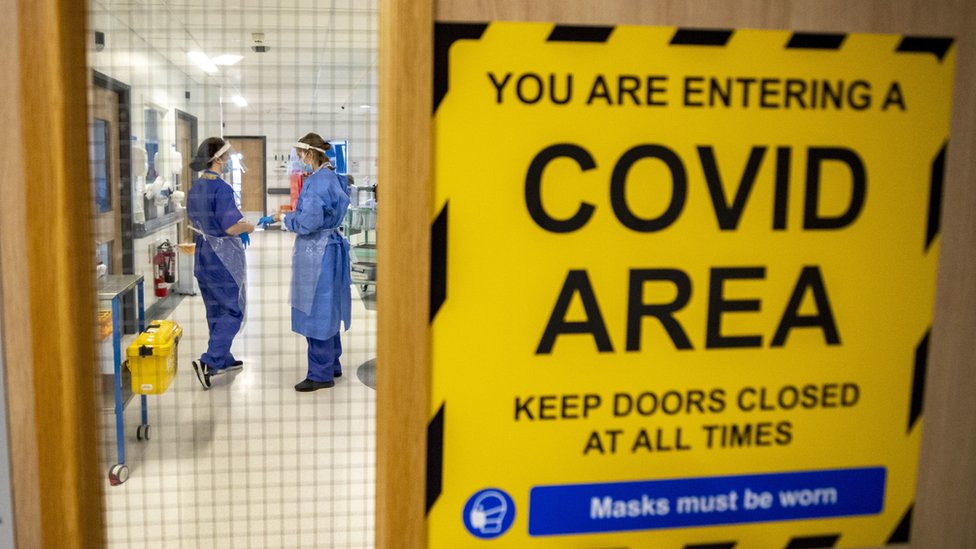
http://www.BBC.com image

By Casey Bukro

Ethics AdviceLine for Journalists

The email query came from a British Broadcasting Corporation reporter based in Ho Chi Minh City, Vietnam.

The question was short and to the point: “Does a story and photo, with the consent of the doctors, of a COVID-19 patient in hospital violate his right to privacy?”

The question came at a time when the entire world was grappling not only with the global pandemic itself, but also with how to report and explain it ethically and accurately. Those are controversial issues even now, including conflicting accounts on how the pandemic started.

Worldwide, more than 7 million COVID-19 deaths have been reported to the World Health Organization, 1.2 million of them in the United States. The pandemic was the worst world-wide calamity of the 21st century. The death toll is the highest since the 1918-20 Spanish Flu and World War Two.

Rights protected

The question from the BBC reporter demonstrates that even in the midst of a global health crisis, the rights and safety of every individual should be protected. It also shows that AdviceLine gets questions about ethics from journalists all over the world.

Joe Mathewson, who teaches ethics and law of journalism at Northwestern University’s Medill School of Journalism, was the AdviceLine advisor on duty the day the BBC reporter’s question arrived.

Responding to the reporter, Mathewson pointed out that BBC has editorial guidelines, including a section on privacy that states: “We must be able to demonstrate why an infringement of privacy is justified, and, when using the public interest to justify an infringement, consideration should be given to proportionality; the greater the intrusion, the greater the public interest required to justify it.”

Infringement

Further: “We must be able to justify infringement of an individual’s privacy without their consent by demonstrating that the intrusion is outweighed by the public interest….. We must balance the public interest in the full and accurate reporting of stories involving human suffering and distress with an individual’s privacy and respect for their human dignity.”

In this case, Mathewson asked the BBC reporter if he got the COVID-19 patient’s consent to be interviewed and photographed by the BBC or the press generally, understanding that the story would identify him?

If he did not, Mathewson told the reporter, “then the next question is, does your story constitute an infringement of his personal privacy? If so, was there a public interest in your story? Finally, was the infringement warranted by the public interest? I believe these are the questions that you should entertain and, as appropriate, answer to your own satisfaction.”

A discussion

The case did not end there. Periodically, the AdviceLine team, which includes four advisors with experience teaching ethics at the university level, have a Zoom meeting to discuss cases that come to AdviceLine. The sessions include veteran journalists who understand how newsrooms operate.

They are critique discussions intended to check whether the advice given to journalists was as good as it should be, or could have been improved. Occasionally there are disagreements, or praise for answering some particularly tough question.

Hugh Miller, another AdviceLine advisor, said he saw a parallel in the BBC case with a book about early coverage of the HIV/AIDS epidemic, which was not covered well by the media. There were few reports of the human suffering seen in AIDS hospital wards. Better coverage of the AIDS epidemic, said Miller, could have informed the subsequent coverage of COVID-19, which also was not covered well inside COVID hospital wards.

Not a hoax

“If we had been able to see more of that, it would have made people more cautious,” explained Miller. “COVID is not a hoax.”

David Ozar is a founding member of AdviceLine, and continues as an AdviceLine advisor.

The question has to be asked if it is necessary to pursue a person’s identification. “The answer is no,” Ozar insists. Patients should not be identified. He believes there were many COVID reports from hospital intensive care units.

Privacy needed

“You could not see them, could not see who they were,” said Ozar. Personal identification “needs to be private,” he insists. He is adamant on that. Ozar serves as a consulting ethicist to medical, hospital, nursing and dental groups.

Journalists  argue that stories of human suffering are told best with the help of people willing to be identified, to show that real people are involved and have personal stories to tell. That often creates sympathy and a public willingness to help the stricken.

Otherwise, disasters seem impersonal, too big to comprehend.

Another lesson here is that ethicists do not always agree on what is ethical. Miller believes media need to pay more attention to human suffering in a health crisis, while Ozar says those suffering should not be identified.

What do you think?

**********************************************************************

The Ethics AdviceLine for Journalists was founded in 2001 by the Chicago Headline Club (Chicago professional chapter of the Society of Professional Journalists) and Loyola University Chicago Center for Ethics and Social Justice. It partnered with the Medill School of Journalism at Northwestern University in 2013. It is a free service.

Professional journalists are invited to contact the Ethics AdviceLine for Journalists for guidance on ethics. Call 866-DILEMMA or ethicsadvicelineforjournalists.org.
Ranking Plagues

surrey604.com image

By Casey Bukro

Ethics AdviceLine for Journalists

It’s too early to tell where the current coronavirus-19 pandemic ranks among the world’s worst plagues.

At this writing, global cases stood at 160.6 million and global deaths at 3.3 million.

The United States led the world with 32,827,228 cases and 583,938 deaths, followed by India with 23,703,665 cases and 258,317 deaths.

The Seychelles leads there world in percent of its population vaccinated against Covid-19 with 70 percent, according to the New York Times. Israel follows with 60 percent. The U.S. ranks ninth in the world with 46 percent.

It appears the worst medical disaster in history was the 1918 Spanish Flu pandemic which infected a third of the global population and killed up to 50 million people.

********************************************

Following is an AdviceLine report from Aug. 5, 2020 on lessons gained from past plagues, to help make some comparisons as we work our way out of the Covid19- pandemic. Since this article appeared, effective vaccines were developed and used widely in an attempt to eradicate the disease.

Lessons from Plagues

The history of plagues and pandemics shows some similarities in the way they spread, and how people react.

Travelers, whether soldiers or traders, often were the super spreaders of their day.

Quarantine is a centuries-old strategy against pandemics. Wearing masks is an old defense too, including public resistance to wearing them.

Another similarity is that millions of people die. Survivors muddle through, sometimes with the help of modern medical treatment. But medicine often was useless against plagues. Blame it all on civilization.

“Plagues and epidemics have ravaged humanity throughout its existence, often changing the course of history,” writes Owen Jarus in livescience.com., offering a list of 20 of the worst epidemics and pandemics in history. At times, they signaled the end of entire civilizations.

The list starts with an epidemic 5,000 years ago that wiped out a prehistoric village in China. Bodies of the dead were stuffed inside a house that was burned down at a site called Hamin Mangha in northeastern China. Prehistoric mass burial sites dating to roughly the same time suggest an epidemic swept the entire region.

Jarus’s list ends with the Zika Virus epidemic dating from 2015 to the present. The impact of the Zika epidemic in South America and Central America won’t be known for several years. It is spread by mosquitoes and can attack infants still in the womb, causing birth defects.

 Learning From the Past

Focusing on what we’ve learned from past pandemics, Tim McDonnell in quartz.com starts with the Antonine plague beginning in 165 AD, one of the world’s first epidemics. A form of smallpox or measles, legionnaires returning from a siege in modern-day Iraq brought it to Rome. It devastated the Roman army, fueled the growing popularity of Christianity and was an early contributor to the empire’s eventual collapse. It also offered an early glimpse into a key tenet of virology: Disease outbreaks are deadliest when introduced to a population for the first time, when people lack immunity.

Genoese traders brought the plague known as the Black Death to Europe after escaping a siege in which a Mongol general used infected corpses as a weapon. Spread by fleas, the plague killed up to 23 million people, one-third of Europe’s population, from 1347 to 1351.

The first true flu pandemic appeared in the summer of 1580 in Asia, writes McDonnell, and quickly spread over trade routes into Europe and North America. Earlier cases might have occurred among Greek soldiers fighting the Peloponnesian War in 430 BC. The first reference to “influenza” in scientific literature dates to 1650 and comes from the Italian word “influence.”

Possibly the worst medical disaster in history, the 1918 Spanish Flu infected a third of the global population and killed up to 50 million people. It revealed how many lives can be saved by social distancing. Cities that cancelled public events had far fewer cases. The disease spread quickly in the United States and Europe through troop movements during World War I, infecting armies involved in the conflict.

A pandemic occurs when a disease turns into a global outbreak, writes M. David Scott in Listverse.com. Covid-19 is now considered a pandemic. It is causing countries to close their borders, urge people to stay indoors and order businesses to cease operations. Scott lists the top 10 deadly pandemics of the past. This list includes leprosy of the Middle Ages, a bacterial disease that can lead to damaged nerves, skin, eyes and respiratory tracts. Called “the living dead,” lepers were considered “unclean” and had to wear bells to signal their presence. It is believed Europe had about 19,000 leper houses about this time because lepers were forbidden in many locations.

Plagues Spawned By Civilization

Though plagues often are described as threats to civilizations, Andrew Sullivan writes in New York Magazine that plagues are spawned by civilization.

“Plague is an effect of civilization,” writes Sullivan. “The waves of sickness through human history in the past 5,000 years (and not before) attest to this, and the outbreaks often became more devastating the bigger the settlements and the greater the agriculture and the more evolved the trade and travel.”

We live in a genocidal graveyard, he contends, and plagues remind humans of their mortality. The story is far from over.

“As the human population reaches an unprecedented peak, as cities grow, as climate change accelerates environmental disruption, and as globalization connects every human with every other one, we have, in fact, created a near-perfect environment for a novel pathogen-level breakout. Covid-19 is just a reminder of that ineluctable fact and that worse outbreaks are almost certain to come.” He calls Covid-19 “mercifully, relatively mild in its viral impact, even though its cultural and political effects may well be huge.” It could serve as a harbinger.

At times like this, humans scramble for cures and defenses. And those have histories of their own.

Centuries-old Strategy

“In the new millennium, the centuries-old strategy of quarantine is becoming a powerful component of the public health response to emerging and re-emerging infectious diseases,” writes Eugenia Tognotti of the University of Sassari in Italy.

“During the 2003 pandemic of severe acute respiratory syndrome, the use of quarantine, border controls, contact tracing and surveillance proved effective in containing the global threat in just over three months. For centuries, these practices have been the cornerstone of organized responses to infectious disease outbreaks.”

But these methods are controversial and raise political, ethical and socioeconomic conflicts.

Even during the 1918 Spanish Flu epidemic more than a century ago, resistance to wearing face masks was as controversial as it is today, writes Christine Hauser in the New York Times. Those who objected to the practice were called “mask slackers” and fined or jailed.

“The masks were called muzzles, germ shields and dirt traps,” wrote Hauser. “They gave people a ‘piglike snout.’ Some people snipped holes in their masks to smoke cigars. Others fastened them to dogs in mockery. Bandits used them to rob banks.”

Masks Stoke Division

As the 1918 influenza pandemic raged in the United States, masks of gauze and cheesecloth became the facial front lines in the battle against the virus, she wrote. “But as they have now, the masks also stoked political division. Then, as now, medical authorities urged the wearing of the masks to help slow the spread of disease. And then, as now, some people resisted” while thousands of Americans were dying in a deadly pandemic.

The Covid-19 pandemic behaves in unexpected ways, writes Laura Helmuth in scientificamerican.com, making it difficult to keep up with current findings. People tend to remember the first things they learned of the disease, making it psychologically difficult to replace old information with new knowledge. Helmuth listed nine of the most important things we’ve learned in the past seven months. Among them:

*Covid-19 outbreaks can happen anywhere. Chinese people got it where they buy groceries. Italians got it through their habit of greeting each other with kisses on the cheeks. People on cruise ships got it because of the buffets. People in nursing homes got it because they are frail. People in New York got it because the city is crowded.

*Covid-19 can sicken and kill anyone, not just the elderly but teenagers and children too.

*Contaminated surfaces are not the main danger.

*It’s in the air. When people cough or sneeze, they expel droplets or particles of mucus and saliva that carry the virus.

*Many people are infectious without being sick.

*Warm weather will not stop the virus.

*Masks work.

*Racism, not race, is a risk factor.

*Misinformation kills.

  Infodemic of Misinformation

As governments fight the Covid-19 pandemic, snopes.com is fighting an “infodemic” of rumors and misinformation about the pandemic.

A common phenomenon during crises, said the fact-checking organization, is attempts by people to find patterns in them as a way to control or understand events.

A common misperception, said Snopes, is that plagues happen every 100 years by citing those in 1720, 1820, 1920 and 2020.

“It’s an example of the common technique of creating the impression of a regular pattern by cherry-picking a small amount of (not necessarily relevant) data, while completely ignoring a much larger body of related data that doesn’t fit the desired pattern,” said Snopes. The misperception ignored pandemics in years that did not end in 20.

At this writing, the medical community is struggling to find a vaccine to cure or treat Covid-19. That is another history in the making, likely to be filled with misconceptions and misinformation before it all plays out.

********************************************************

The Ethics AdviceLine for Journalists was founded in 2001 by the Chicago Headline Club (Chicago professional chapter of the Society of Professional Journalists) and Loyola University Chicago Center for Ethics and Social Justice. It partnered with the Medill School of Journalism at Northwestern University in 2013. It is a free service.

Professional journalists are invited to contact the Ethics AdviceLine for Journalists for guidance on ethics. Call 866-DILEMMA or ethicsadvicelineforjournalists.org.