New ESPN social media guidelines tell staff to “think before you tweet,” writes Sydney Smith. Leave politics and social issues out, especially in hard news reporting.
Category Archives: Case Study
Anti-Doxxing
Anti-doxxing strategies: Decca Muldowney tells how to avoid online weapons that attack people.
Saving Local Newsrooms
Saving local newsrooms: Focus on original reporting, write Christopher Ali and Damian Radcliffe. Avoid saying newspapers are a dying industry.
Misinformation about Texas Shooting
News breaks and the hyperspeed news cycle bring misinformation, reports Columbia Journalism Review. BuzzFeedNews lists examples about the Texas church shooting.
Visual Forensics
Visual forensics distinguished the New York Times from its competitors, writes Pete Vernon, about the Las Vegas shooting.
Millions of posts to social media are “acts of journalism” if accurate.
Gossip First Draft of News
Gossip is a tool of the powerless, writes Nick Denton. Gossip is the first draft of news, he says.
“The official channels have long failed those with allegations of harassment….”
Media Literacy Road to Credibility
Media literacy training is needed to help the public detect lies and truth, writes Jack Lessenberry of the Toledo Blade. Media are “losing credibility with the public in a way never seen in modern times.”
Does Justice Prevail in Sexual Harassment?
Justice does not often prevail when sexual harassment is the issue at stake, writes Jill Abramson.
Women won’t talk on the record because they’ve signed non-disclosure agreements or fear becoming unemployable if they talk.
Publish unverified documents? Consider these ethical questions
By David Craig
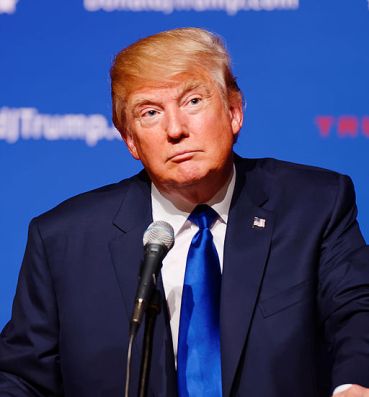
BuzzFeed’s decision last week to publish a 35-page dossier containing allegations about President-elect Donald Trump’s relationships with Russia has prompted a great deal of discussion among journalists and journalism organizations about the ethics of the decision.
A number of those weighing in – such Washington Post media columnist Margaret Sullivan and Poynter Institute for Media Studies ethicist Kelly McBride – have argued that BuzzFeed was out of line for publishing unverified information. But some – including Watergate reporter and now CNN analyst Carl Bernstein and Columbia Journalism Review managing editor Vanessa M. Gezari – supported the decision.
I have been thinking beyond this situation to similar ones that may arise in the future and the ethical questions involved.
Below is a list of questions I’m suggesting to help in thinking through the ethical issues in these situations. I have grouped the questions under the headings of the principles of the Society of Professional Journalists ethics code, as well as other considerations – public relevance and journalistic purpose – that relate to the mission of journalism.
In writing these questions, I’m inspired by some lists that Poynter has done to help journalists in other areas of ethical decision-making such as going off the record and, recently, using Facebook Live. Two co-authors and I also raised some of these issues in a question list in an academic study on data journalism.
I welcome any comments from readers on how these questions might be used or revised.
Questions to consider in deciding on whether and how to publish unverified documents involving public officials:
Public relevance and journalistic purpose
Have the documents been discussed or used in any official settings (e.g. intelligence briefings, committee hearings)? Have they otherwise been discussed on the record by any public officials?
Is there a compelling reason for the public to know about the information in the documents?
Seeking truth and reporting it
Have you or others tried to verify the information? Where verification has been possible for specific pieces of information, has the information proved to be true?
Are the sources of the documents reliable? Why or why not?
Acting independently
Is your decision to publish based on your own independent judgment of the ethics of publishing or on competitive pressures or other considerations?
Minimizing harm
If the documents contain sensitive allegations, what potential harms could result if you release the documents in their entirety or publish those details and they prove to be false or impossible to verify?
If potential harm is a valid concern if you release the documents in their entirety or report details such as these, how could you minimize harm (e.g. redacting some details, summarizing)?
Being accountable and transparent
Are you explaining the process you used in your decision-making including any conflicting ethical considerations and the ethical reasons for making the decision you did?
Are you explaining any efforts you made to verify the content of the documents and the outcome of those efforts?
By thinking through these questions, journalists can uphold the importance of verification while also considering when and how to report on unverified documents there may be a compelling reason for the public to see.
Reporter’s Dilemma: Naming Owners of Tainted Water Wells

By Casey Bukro
Ethics is not only a matter of what a journalist should do, but also what she should not.
That was the dilemma facing Jennifer Martin-Romme, co-owner with her husband Taylor of the Zenith News in Duluth, Minnesota.
Back in 2012, a trusted source leaked a report to Martin-Romme showing that the drinking water wells of eight families in northern St. Louis county were tainted with manganese, a chemical that in high concentrations potentially could cause nerve and brain damage, especially in children.
“It seems almost impossible to publicize this information without identifying the affected individuals,” Martin-Romme said when she called Ethics AdviceLine for Journalists for guidance. “Even if they weren’t named, this pollution is fairly contained geographically in a low-population rural area. It would be easy to identify them and such a story is essentially branding them as at-risk for mental deficiencies or retardation. The negative impact that could have on their lives is obvious and enormous. What do I do? Help!”
Today, lead in the Flint, Michigan water supply has made water safety a national concern. This follow-up story reports the outcome of her dilemma, and whether the call to AdviceLine was helpful. Since it started taking calls from journalists in 2001, AdviceLine has handled more than 900 inquiries. Periodically, we contact journalists who called us to learn the rest of the story.
Continue reading Reporter’s Dilemma: Naming Owners of Tainted Water Wells
 Ethics AdviceLine for Journalists